4-2. Fire Service Act Regulations for Logistics Facilities
The Fire Service Act applied to logistics facilities establishes mandatory statutory rules to prevent fire outbreaks and flame spread while ensuring worker evacuation pathways and rapid firefighting operations[cite: 20].
Because logistics centers feature massive floor plates and store extensive combustible inventory (corrugated packaging, plastic totes), strict equipment standards and ongoing maintenance are legally enforced[cite: 20].
1. Fire Code Occupancy Classification: Category 14 (Warehouses)
Logistics facilities are legally classified under "Category 14 (Warehouses)" within the Fire Service Act Enforcement Order[cite: 20]. Interlocking with municipal zoning, statutory requirements for fire suppression, alarm, and evacuation systems scale up based on floor area and story count[cite: 20].
2. Primary Fire Protection Systems Required in Logistics Facilities
Based on facility scale and structural design, installing the following fire protection systems is legally mandated[cite: 20]:
① Automated Fire Suppression Systems (Sprinklers, etc.)
-
Sprinkler Systems:[cite: 20]
- Mandated for rack-supported warehouses with floor areas ≥500 m², or general warehouses with floor areas ≥1,500 m²–3,000 m²[cite: 20].
- ESFR (Early Suppression Fast Response): Mainstay in high-ceiling modern hubs[cite: 20]. Delivers high water density and droplet momentum, eliminating in-rack pipe networks[cite: 20].
- Pre-Action Systems: Deployed in cold storage and freezer facilities[cite: 20]. Uses dual-sensor activation (fire detector + thermal sprinkler head) before filling pipes, eliminating accidental water damage risks[cite: 20].
- Indoor & Outdoor Fire Hydrants: Stationed around facility perimeters and floor levels to support early response and fire brigade operations[cite: 20].
② Fire Alarm & Emergency Communication Systems
- Automatic Fire Alarm Systems: Deploys smoke and heat detectors across all warehouse zones[cite: 20]. High-bay clear heights (≥10 meters) utilize projected beam-type smoke detectors or aspirating smoke detection systems[cite: 20].
- Emergency Public Address Systems: Instantly locates fire origin zones and broadcasts multi-lingual evacuation instructions (Japanese, English, etc.) across the facility[cite: 20].
③ Evacuation & Guidance Facilities
- Exit Signs & Photuminescent Signage: High-luminance LED exit signs are installed along primary travel aisles to ensure clear egress visibility in large floor plates[cite: 20].
- Smoke Exhaust Systems: Natural smoke vents or mechanical exhaust fans are installed near ceilings to clear smoke and maintain egress pathways[cite: 20].
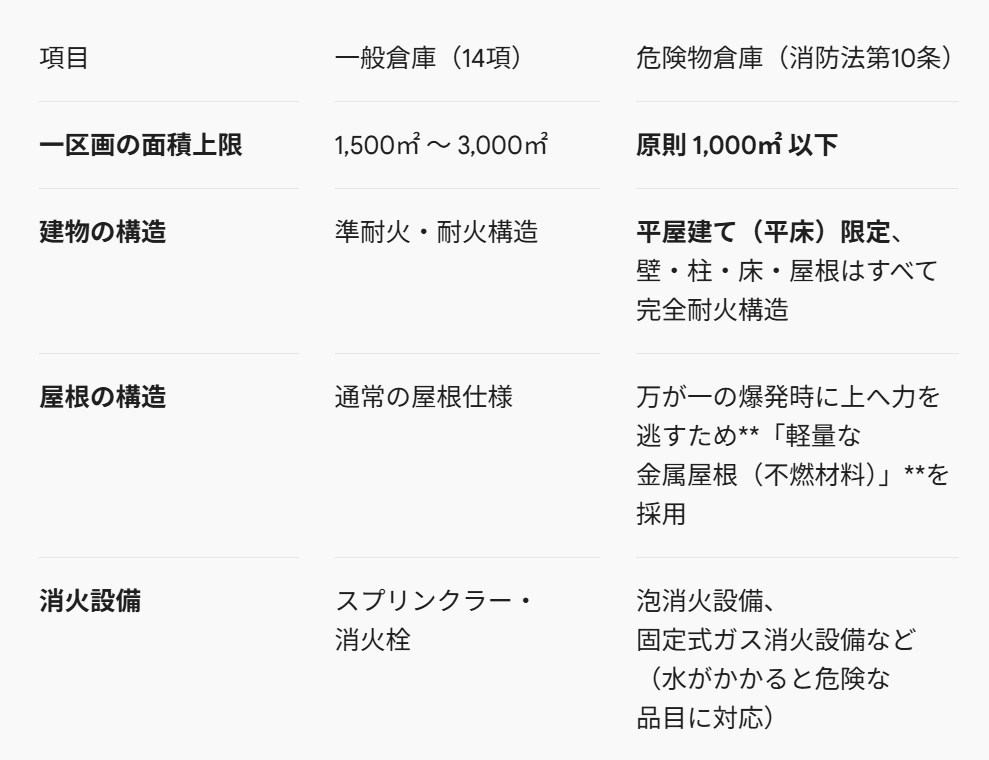
3. Strict Special Regulations for "Hazardous Material Warehouses"
Under Article 10 of the Fire Service Act, storing hazardous materials (e.g., alcohols, paints, lubricants, lithium-ion batteries) exceeding designated threshold quantities mandates constructing dedicated "Hazardous Material Warehouses" subject to specialized fire safety filings[cite: 20].
4. Operational & Managerial Legal Obligations (Fire Safety Plans)
Beyond installing physical hardware, the Fire Service Act strictly enforces ongoing operational management[cite: 20]:
-
Appointing Fire Safety Managers & Filing "Fire Safety Plans":[cite: 20]
- Facilities meeting employee headcount thresholds must appoint a certified Fire Safety Manager, conduct regular fire drills, organize emergency response teams, and file official Fire Safety Plans[cite: 20].
-
Periodic Equipment Inspection Reporting:[cite: 20]
- Statutory requirements mandate semi-annual equipment inspections (every 6 months) and annual comprehensive functional testing (every year), with formal reports submitted to the local fire department[cite: 20].