Fire Sprinkler Systems in Logistics Warehouses
Automated fire suppression systems in logistics warehouses utilize specialized design standards compared to standard office buildings to prevent rapid fire spread caused by high ceiling clearances and dense combustible storage loads (corrugated boxes, plastics)[cite: 20].
Sprinkler heads automatically activate when ambient temperatures reach thermal threshold limits (typically 72°C–96°C), melting or shattering heat-sensitive elements to discharge pressurized water[cite: 20].
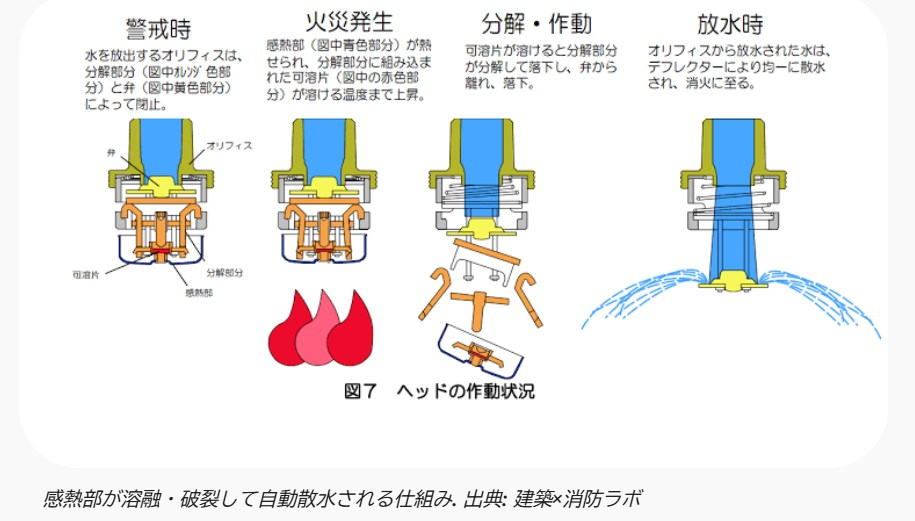
Primary Operational Configurations of Sprinkler Systems
-
Wet-Pipe Systems (Most Common):
Piping is continuously charged with pressurized water[cite: 20]. Heat activation immediately discharges water, providing simple and highly reliable operation[cite: 20]. -
Dry-Pipe Systems (Cold Storage & Freezing Zones):
Piping is charged with compressed air to prevent pipe freezing[cite: 20]. Heat activation exhausts air first before water enters the distribution network[cite: 20]. -
Pre-Action Systems (Accidental Discharge Protection):
Water discharges only when both automatic fire detectors AND thermal sprinkler heads trip simultaneously[cite: 20]. Deployed in high-value warehouses to eliminate accidental water damage[cite: 20].
Logistics Warehouse Installation Factors
| Installation Configuration | System Overview & Primary Objective |
|---|---|
| In-Rack Sprinklers | Installs sprinkler heads directly within high-bay pallet racking levels where ceiling-mounted heads cannot penetrate dense lower tiers[cite: 20]. |
| ESFR (Early Suppression Fast Response) | Ceiling-mounted high-output sprinklers discharging large water droplets at high velocity directly onto the fire plume, often eliminating in-rack piping[cite: 20]. |
| High-Ceiling (>10m) Criteria | High-bay open volumes delay thermal plumes from reaching ceiling sensors, mandating fast-response heads or early-warning smoke detection integration[cite: 20]. |
Statutory fire code requirements vary based on whether stored goods classify as "Designated Flammables" and the height/density of pallet racking[cite: 20].
Fundamental System Differences: In-Rack vs. ESFR
While both In-Rack and ESFR (Early Suppression Fast Response) systems protect high-bay distribution centers, they utilize fundamentally different fire suppression philosophies, cost profiles, and layout flexibilities[cite: 20].
-
In-Rack Sprinkler Systems:
Positions heads inside every racking tier to extinguish fires locally at close proximity[cite: 20]. Guarantees water delivery in high racks, but requires complex, rigid internal pipe networks[cite: 20]. -
ESFR Sprinkler Systems:
Mounted exclusively at ceiling level, using ultra-fast response thermal elements[cite: 20]. Discharges heavy, high-momentum water droplets that penetrate rising thermal plumes to suppress fire at the floor/rack core (aiming for total "Suppression" rather than "Control")[cite: 20].
Comparative Specification & Cost Analysis
| Comparison Factor | In-Rack Sprinkler Systems | ESFR Sprinkler Systems |
|---|---|---|
| Head Locations | Ceiling + Every Racking Tier Level[cite: 20] | Ceiling Level ONLY[cite: 20] |
| Suppression Strategy | Localized containment by nearest in-rack head[cite: 20] | Heavy high-momentum ceiling-to-floor deluge[cite: 20] |
| Layout Reconfiguration | Difficult (Racking changes require pipe re-plumbing)[cite: 20] | Flexible (Floor remains clear for rack changes/AGVs)[cite: 20] |
| Water Damage Risk | Confined to immediate fire vicinity[cite: 20] | Broader water discharge footprint[cite: 20] |
| Pump & Water Supply Specs | Standard pressure & volume requirements[cite: 20] | High-pressure, high-volume pumps & large tanks required[cite: 20] |
| Initial CAPEX Cost | High piping installation labor costs[cite: 20] | Simpler piping, but high pump and reservoir CAPEX[cite: 20] |
| Ongoing Maintenance | High maintenance due to forklift damage risks[cite: 20] | Low maintenance; ceiling-mounted away from forklifts[cite: 20] |
System Selection Guidelines
-
When ESFR is Recommended:
- Multi-tenant or leased logistics hubs requiring flexible floor layouts for future rack shifts or AGV deployments[cite: 20].
- Facilities with clear ceiling heights up to 12.0m–13.7m[cite: 20].
-
When In-Rack Systems are Recommended:
- Ultra-high fixed automated warehouses (heights exceeding 15m+, beyond ESFR limits)[cite: 20].
- Facilities with limited land area for large ESFR fire water reservoirs or high-capacity pump rooms[cite: 20].