Commercial Warehouses (Contract Storage) vs. Private Warehouses
Warehouses are strictly divided into "Commercial Warehouses" (charging fees to store third-party cargo) and "Private Warehouses" (storing proprietary goods exclusively) based on statutory application under the Warehousing Business Act[cite: 21].
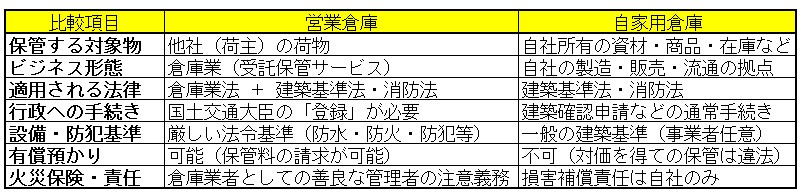
Core Overview of Commercial vs. Private Warehouses
Commercial Warehouses (Contract Storage)
Operated by warehouse enterprises storing third-party cargo for commercial compensation (storage fees)[cite: 21]. Requires official "Registration" with the Minister of MLIT under the Warehousing Business Act and must satisfy strict structural standards for fire prevention, load capacity, and waterproofing[cite: 21].
Private Warehouses (In-House Storage)
Operated exclusively to store a company's own raw materials, products, or inventory[cite: 21]. Storing third-party goods for fee is strictly prohibited; governed solely by general building and fire codes rather than the Warehousing Business Act[cite: 21].
Primary Comparison Matrix
Practical Compliance & Penalties for Unregistered Operations
⚠️ Legal Risk of Unregistered Commercial Operations ("White Warehousing"):
Storing third-party cargo for compensation within a facility built as a private warehouse constitutes illegal unregistered warehousing under the Warehousing Business Act, punishable by imprisonment up to 1 year or fines up to 1,000,000 JPY[cite: 21].Executing third-party 3PL or logistics storage operations strictly mandates fulfilling commercial warehouse registration requirements[cite: 21].