3-9. Understanding Milk Run Logistics (Routed Collection)
Milk run logistics (routed collection) is a transportation method where a single truck makes scheduled rounds across multiple suppliers (component manufacturers, etc.) to collect cargo (derived from dairy collection routes where a single vehicle collected milk from multiple dairy farms).
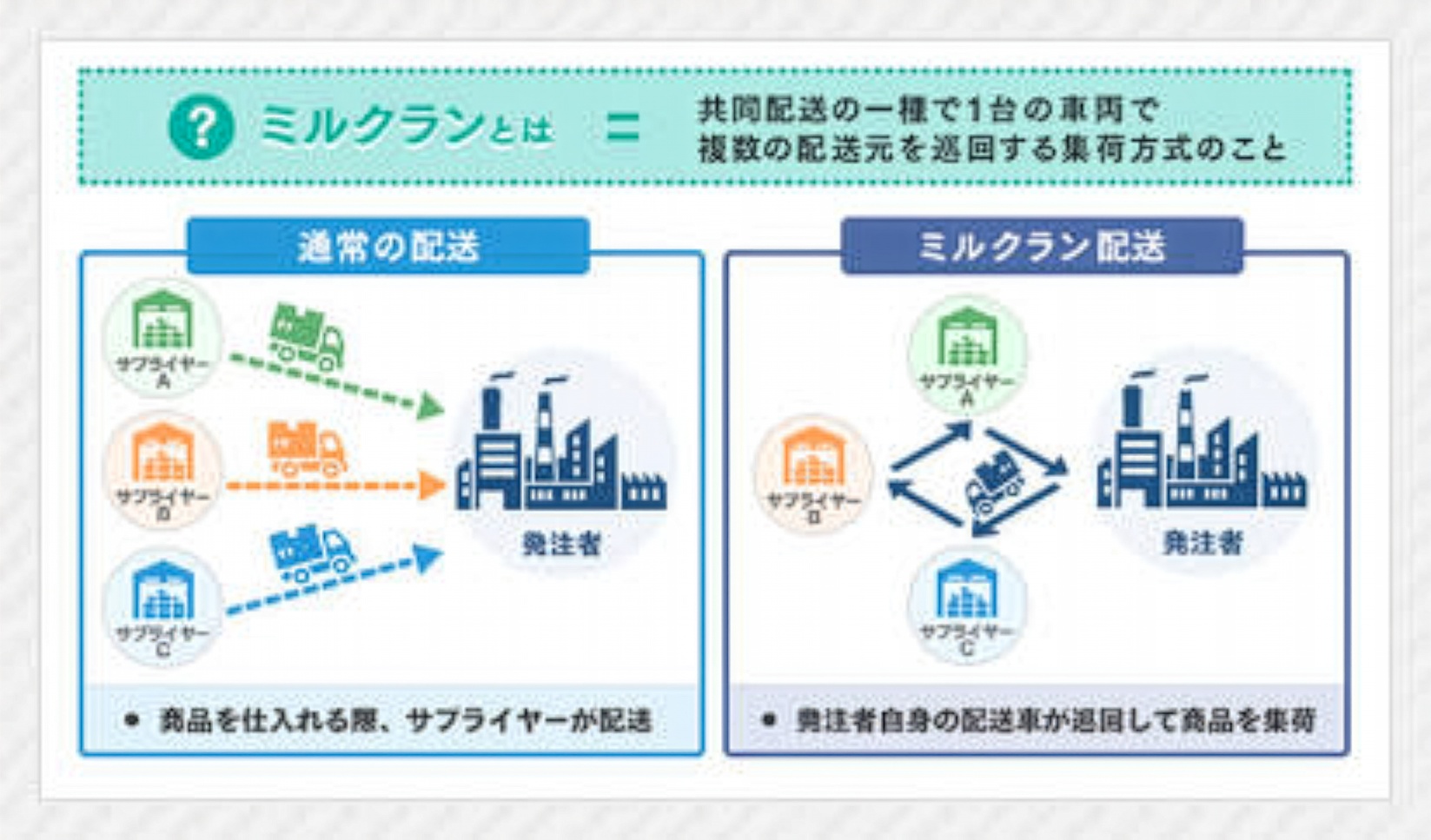
1. Basic Workflow of Milk Run Logistics
In this architecture, material flows through three primary sequential steps:
Within designated geographical zones (Area A, Area B, Area C), dedicated vehicles make scheduled rounds across multiple Suppliers to collect component cargo.
Cargo collected across regional routes is consolidated at a centralized Distribution Center (DC).
Consolidated cargo staged at the DC is delivered to manufacturing plants via bulk agency transport.
2. Operational Planning & Execution Workflow
To execute efficient milk run routes, shippers (client firms) and logistics providers collaborate to optimize dispatch schedules, route capacity, and pickup quantities:
| Stakeholder | Operational Responsibilities |
|---|---|
| Client / Shipper |
• Procurement Planning: Formulates component demand master schedules (quantities and timelines). • Supplier Coordination: Aligns pickup readiness and delivery windows with component suppliers. |
| Client + Logistics Partner |
• Load Quantity Optimization: Balances order volumes to maximize vehicle fill rates. • Route & Dispatch Scheduling: Engineers optimal pickup routing, time windows, and vehicle assignments. |
| Transport Execution |
• Executes milk run collections and plant deliveries based on optimized dispatch schedules. |
3. Key Benefits of Milk Run Logistics (Inbound Procurement)
Compared to traditional direct supplier delivery models (where each supplier dispatches separate trucks to the plant), milk run logistics offers significant operational advantages:
📈 Higher Fill Rates & Transport Cost Reduction
Even with low volume per supplier, touring multiple sites fills truck capacity, dramatically raising load factors and reducing unit freight costs.
🏭 Congestion Relief & Dock Efficiency at Plants
Consolidating cargo at the DC prevents dozens of individual supplier trucks from crowding plant docks, eliminating berth congestion and unloading delays.
🌱 Carbon Footprint Reduction (Sustainability)
Significantly reduces total vehicle miles traveled and empty running, contributing to sustainable, eco-friendly logistics.
📦 Small-Lot, High-Frequency Deliveries (JIT)
Enables frequent pickups of exact required quantities, supporting Just-in-Time (JIT) production while minimizing plant raw material inventory.