3-10. Logistics Facility Planning & Hub Type Comparison in Supply Chains
To optimize advanced logistics facility planning, understanding domain differences between "Production Logistics" and "Sales Logistics," as well as operational shifts across B2B, B2C, and C2C models, is essential[cite: 25].
Target hub types—whether manufacturer product warehouses or retail/wholesale distribution centers—dictate distinct capital investment strategies and cost reduction approaches[cite: 25].
👉 Internal Distribution Center Functional Levels & System Architecture
1-1. Types and Domains of Logistics in Supply Chains
Across end-to-end supply chains, logistics flows are broadly categorized by operational role[cite: 25]:

🔍 Detailed Diagram Breakdown: Production vs. Sales Logistics Domain Boundary (image2151_2.jpg)
The diagram illustrates how logistics breaks down into Production Logistics and Sales Logistics within broader supply chain management[cite: 25]:
- Procurement & Production Domain (Production Logistics / Material Flow): Material movement centered around manufacturing plants and raw material warehouses[cite: 25]. Driven by structured "Production Plans," demand fluctuations remain stable, allowing straightforward planning and full pallet unit load transfers[cite: 25].
- Sales Domain (Sales Logistics / Physical Distribution): Material movement directed toward distribution centers, wholesalers, retail stores, and end consumers (B2B/B2C/C2C)[cite: 25]. Triggered by customer "Purchase Orders," this domain faces multi-SKU small-lot orders, strict delivery time windows, and severe demand spikes[cite: 25].
Facility Planning Insight: As shown by the central boundary line, production warehouses prioritize "Storage Density & Bulk Transport," while sales distribution centers prioritize "Fulfillment Accuracy & Picking Speed (WMS-Driven)"[cite: 25].
1-2. Five Core Logistics Classifications & Domain Characteristics
① Five Core Logistics Classifications in Supply Chains
1. Procurement Logistics
Inbound movement supplying raw materials, components, and parts from global or domestic suppliers to manufacturing plants[cite: 25].
2. Production Logistics
Internal factory transfers of raw materials between processes, work-in-progress storage, and finished goods transfers to central warehouses or Distribution Centers (DCs)[cite: 25].
3. Sales Logistics
Outbound fulfillment transferring finished products from distribution centers to wholesalers, retail stores (B2B), or end-consumer households (B2C)[cite: 25].
4. Waste Logistics
Collecting and transporting discarded packaging materials, corrugated boxes, and defective products to disposal or recycling centers[cite: 25].
5. Reverse Logistics (Recycling)
Managing returns processing for defective/canceled orders and collecting reusable transport items (pallets, plastic totes) for re-entry into distribution[cite: 25].
② Production Logistics (Plan-Driven) vs. Sales Logistics (Demand-Driven)
-
Production Logistics = Controllable & Plan-Driven Domain
Operates on factory production schedules, allowing precise forecasting and volume smoothing[cite: 25]. Low demand variance makes automated storage (AS/RS) and unit-load material handling investments highly cost-effective[cite: 25].
-
Sales Logistics = Uncontrollable & Demand-Driven Domain
Triggered by unpredictable end-consumer order volume spikes driven by seasonality, promotions, or weather[cite: 25]. Demands accurate real-time data analytics and flexible WMS software workflows[cite: 25].
③ B2B, B2C, and C2C Logistics Shifts & Cost Structure Impacts
B2B (Business-to-Business)
Features: Ships to corporate destinations or retail stores in bulk pallet or master carton lots[cite: 25]. High operational efficiency keeps handling costs per unit low[cite: 25].
B2C (Business-to-Consumer / E-Commerce)
Features: Ships to individual consumer households in 1-to-2 piece orders[cite: 25]. Requires piece-picking, individual inspection, and single-unit packaging, increasing labor hours[cite: 25].
CtoC (Consumer-to-Consumer / Marketplace)
Features: Direct consumer-to-consumer exchanges[cite: 25]. Highly non-standard packaging collected via convenience stores and parcel lockers (PUDO), driving new hub-and-spoke sorting operations[cite: 25].
④ Operational Impacts of C2C E-Commerce Logistics
-
Non-Standard Packaging & Automated Sorting Challenges
Unlike standard B2B/B2C cartons, C2C parcels vary widely (envelopes, reused boxes, pouches)[cite: 25]. Standard high-speed sorters struggle to scan or convey non-standard parcels, requiring specialized vision sensors and manual sorting assistance[cite: 25].
-
Dispersed First-Mile Pickups & Locker Integration
First-mile collection points are scattered across residential areas, convenience stores, and station lockers[cite: 25]. Carriers must consolidate fragmented parcels at regional hubs before linehaul transport, raising first-mile collection costs[cite: 25].
-
Anonymous Shipping & System API Integration
Protecting consumer privacy requires anonymous shipping via QR codes[cite: 25]. Logistics facility planning must integrate advanced WCS control systems to match privacy labels with physical parcels contactlessly[cite: 25].
💡 Why Small-Lot Parcel Fulfillment (B2C/C2C) Drives Up Costs
1. Explosive Labor Hours: Picking individual items (piece picking), custom packing, and printing individual shipping labels dramatically increases labor expenses[cite: 25].
2. Lower Delivery Density & Redelivery Overhead: Dispersed residential deliveries lower truck drop density, while missed deliveries create costly redelivery cycles[cite: 25].
2. Sales Logistics Hub Characteristics: Manufacturer vs. Retail/Wholesale DCs
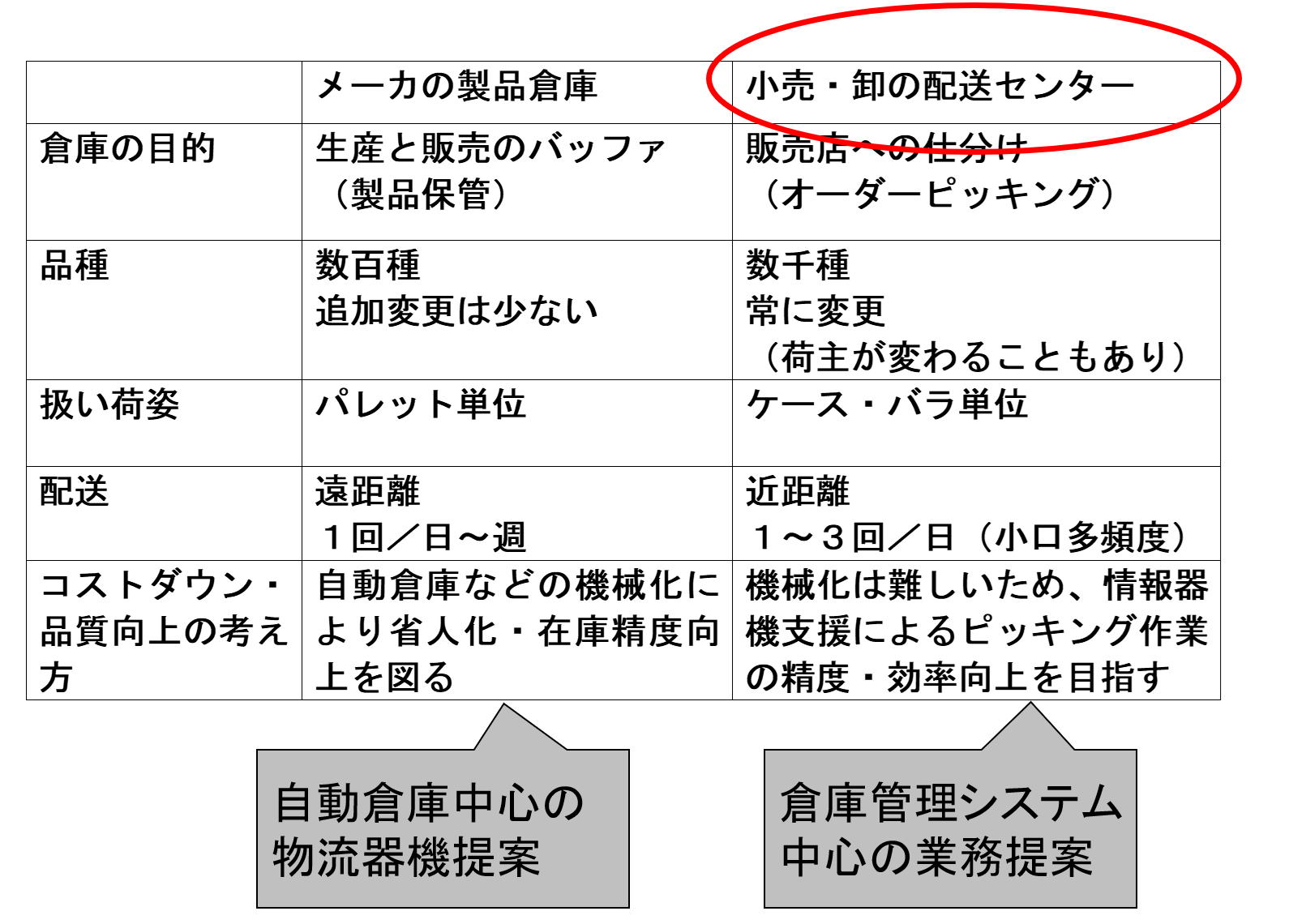
🔍 Detailed Diagram Breakdown: Manufacturer Warehouses vs. Retail/Wholesale DCs (image151.jpg)
The diagram compares operational characteristics and proposed solution approaches between Manufacturer Product Warehouses and Retail/Wholesale Distribution Centers (TC/DC)[cite: 25]:
- Manufacturer Product Warehouses (Left Column): Functions as production-sales buffer storage[cite: 25]. Handles low SKU counts in full pallet (P) units for long-distance transit[cite: 25]. Fixed packaging styles favor "Hardware-Driven Mechanization (Automated Warehouses / AS-RS)"[cite: 25].
- Retail & Wholesale DCs (Right Column): Functions as rapid order sorting hubs[cite: 25]. Manages tens of thousands of SKUs in case/piece (C/B) units for local high-frequency delivery[cite: 25]. High manual variability favors "Software-Driven WMS Optimization (Picking Accuracy & Workflow Optimization)"[cite: 25].
Hub Type Comparison Matrix
| Comparison Factor | Manufacturer Product Warehouse | Retail / Wholesale DC (TC/DC) | Facility Planning Structural Difference |
|---|---|---|---|
| Primary Objective | Production-sales buffer (inventory holding) | Store/consumer order sorting (picking) | Manufacturers prioritize long-term storage, whereas retail/wholesale DCs focus on high-speed cross-docking and throughput[cite: 25]. |
| Managed SKUs | Hundreds to thousands (Proprietary SKUs) | Tens of thousands to hundreds of thousands | Retail/Wholesale DCs handle massive SKU turnover, making dynamic free-location WMS management mandatory[cite: 25]. |
| Handled Load Units (PCB) | Pallet Units (P) Dominant | Case (C) & Piece (B) Units Dominant | Manufacturers focus on bulk forklift pallet handling, whereas retail DCs demand intensive piece-picking labor[cite: 25]. |
| Delivery Frequency | Medium/long-distance inter-hub transport | Short-distance local route deliveries (multiple times/day) | Retail DCs must strictly meet retail store delivery time windows, requiring high dock berth turnover[cite: 25]. |
| Improvement Approach | Hardware automation (AS/RS, AGVs) | Software optimization (WMS, Pick-to-Light, DAS) | Standardized manufacturer loads suit hardware automation, whereas retail DCs require flexible WMS software[cite: 25]. |