4-1. About methods and utilization of logistics analysis
1.Background of DATA analysis
1-1.Why is DATA analysis necessary?
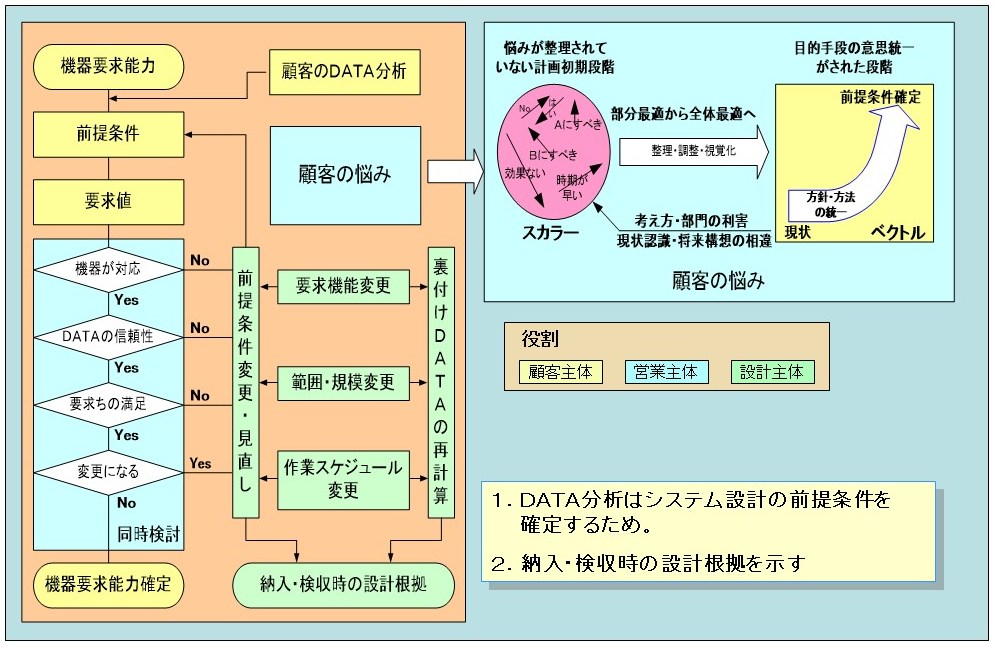
1-2.Who performs DATA analysis?
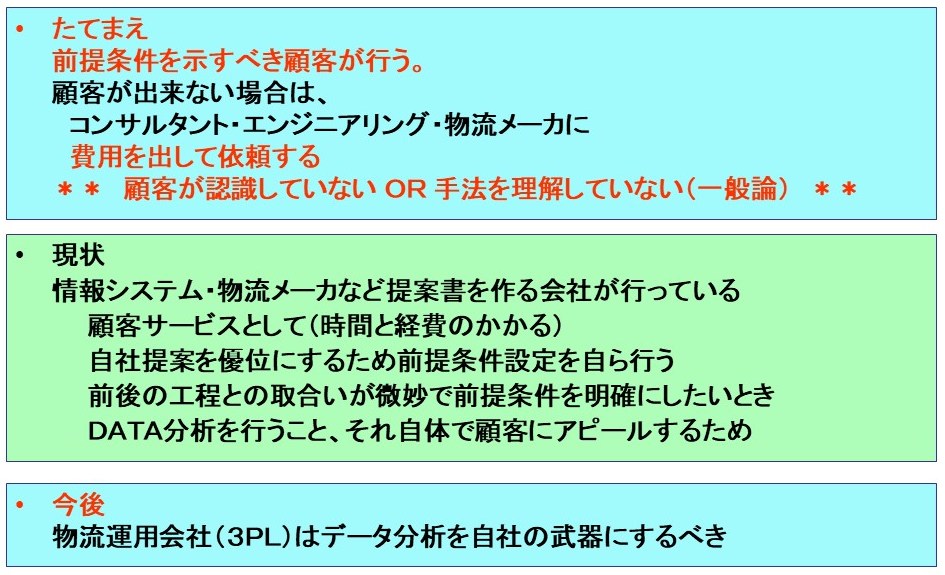
1-3.When should DATA analysis be performed?
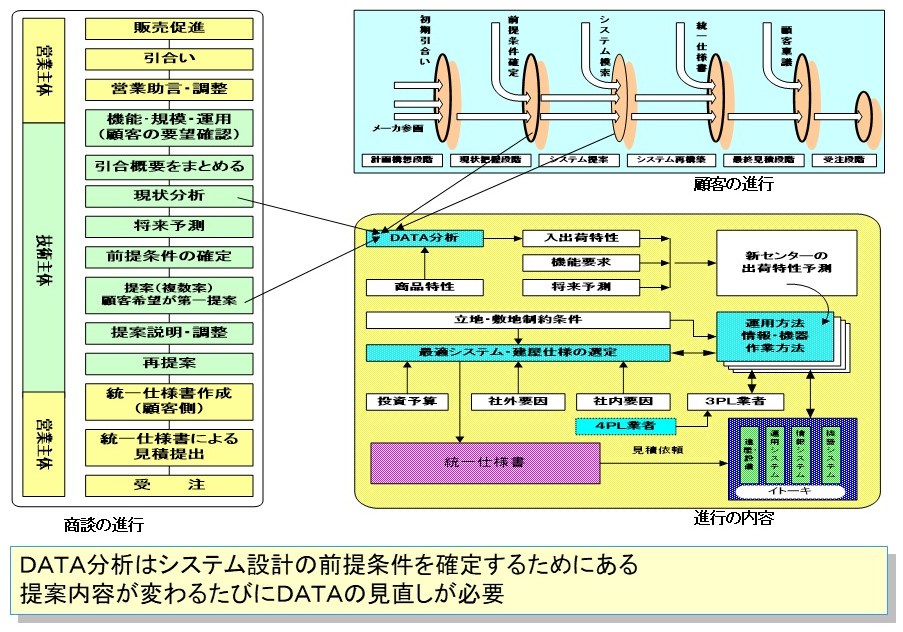
1-4.Information required for DATA analysis
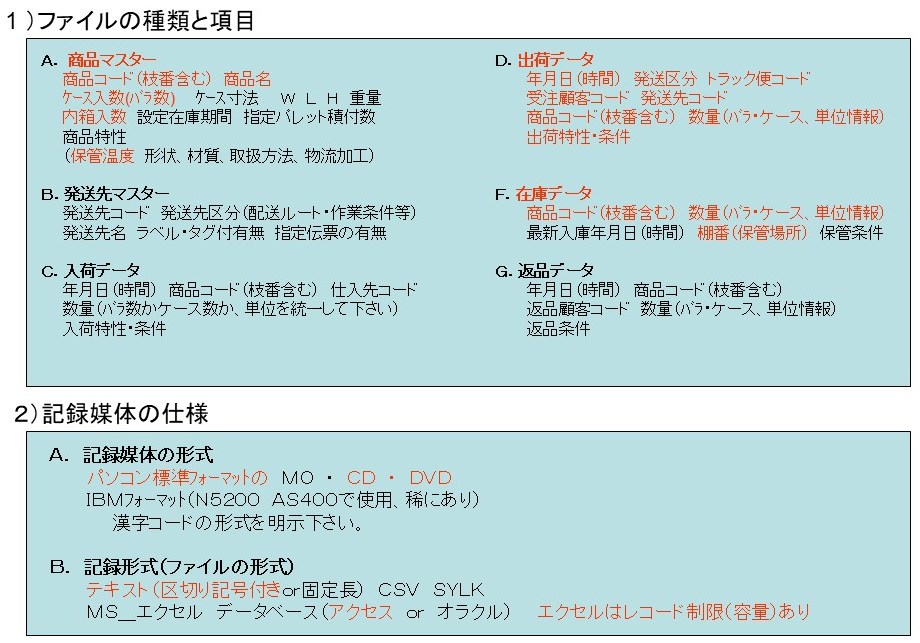
1-5.Knowledge and tools required for DATA analysis
2-1.ABC analysis and EIQ analysis
1) ABC analysis
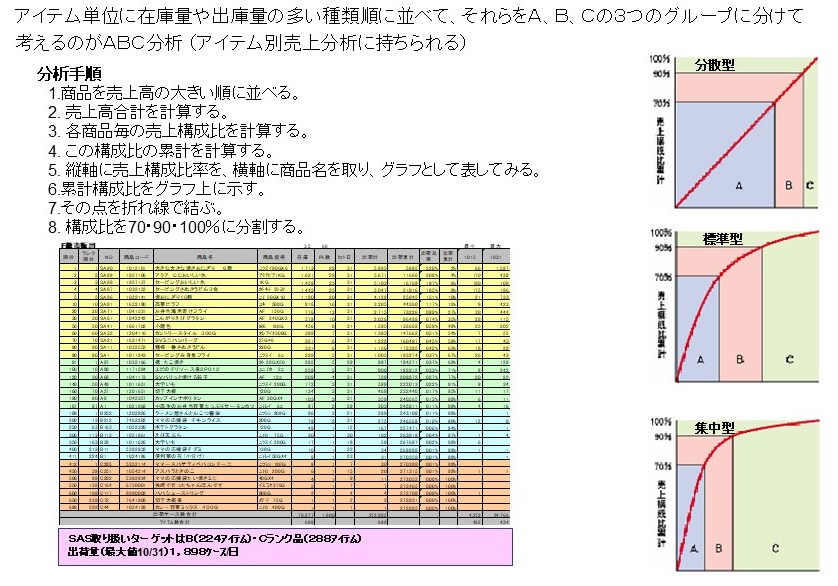
The best way to think about it is to arrange each item in order of the type with the highest amount of inventory and quantity of goods out, and divide them into three groups: A, B, and C.ABC analysis(Mainly used for sales analysis by item).
Analysis procedure
- Sort products in descending order of sales.
- Calculate total sales.
- Calculate the sales composition ratio for each product.
- The cumulative total of this composition ratio is calculated.
- Let's represent it as a graph with the sales composition ratio on the vertical axis and the product name on the horizontal axis.
- The cumulative composition ratio is shown on the graph.
- Connect the points with a polygonal line.
- Composition ratio70%・90%・100%Divide into.
2) EIQ analysis
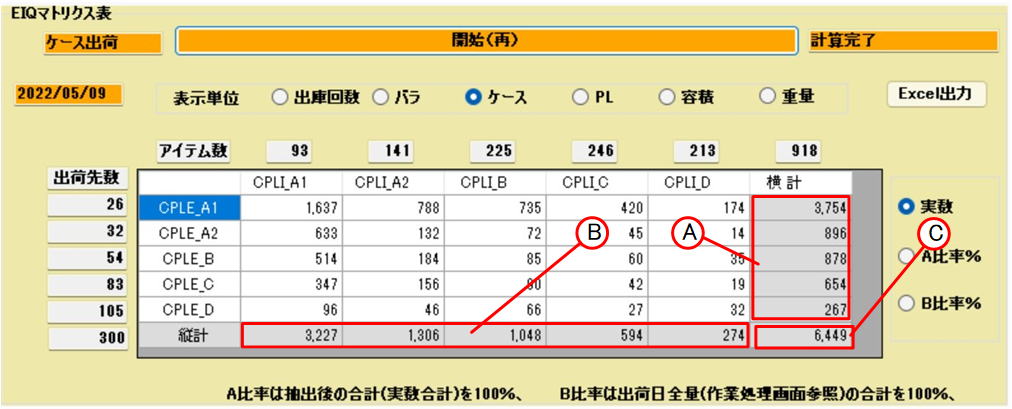
Aggregation in practice (on-site) is output in EIQ matrix table (TCalc 1)
2-2.To what extent do customers understand shipping characteristics?
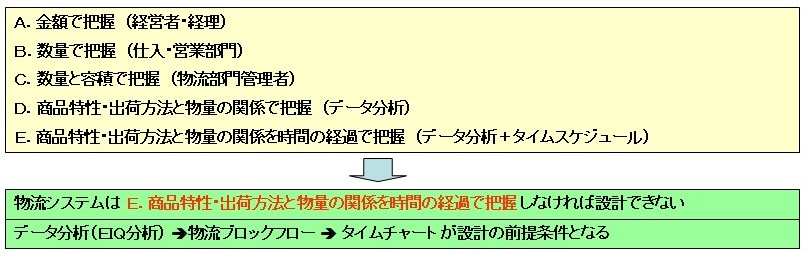
2-3.Items required for DATA analysis
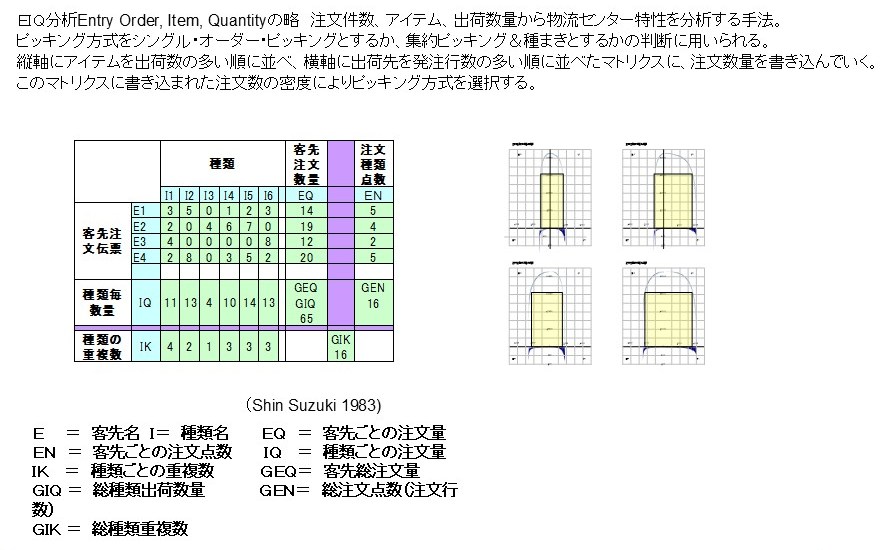
1) What is EIQ analysis?
The EIQ method was developed and named by logistics consultant Shin Suzuki and consists of system thinking and EIQ analysis.
We base our analysis on the following three elements (key factors) that are the basis of logistics:
- E (Entry/Order):Number of orders (number of orders placed)
- I (Item):Number of types (number of items/number of SKUs)
- Q (Quantity):Quantity (number of items shipped)
* Also indicates the shape, dimensions, and weight of the product.S (Size/Shape)In some cases, it is treated as "SEIQ" with the addition of "SEIQ".
2) EIQ graph/scatter chart
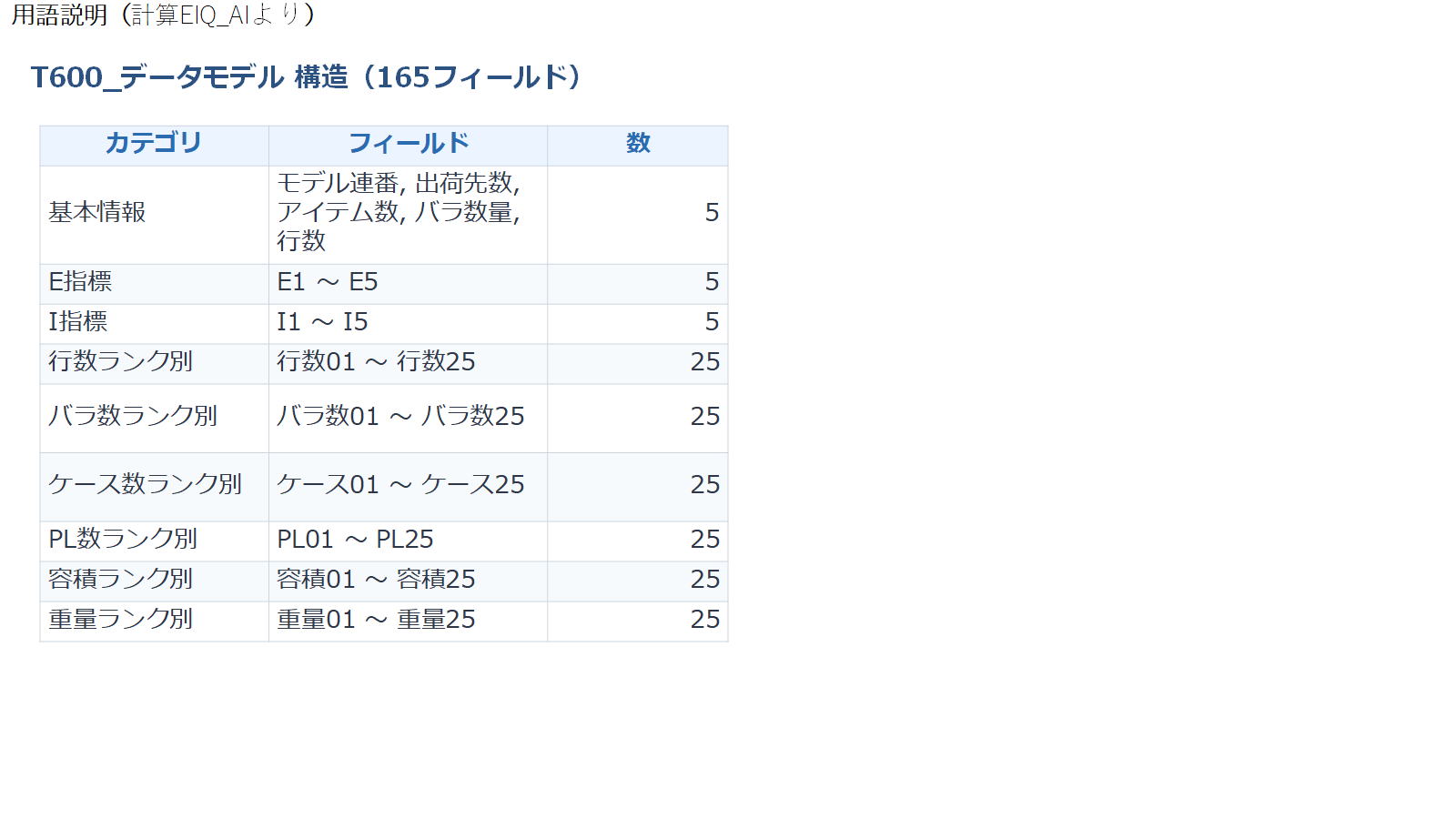
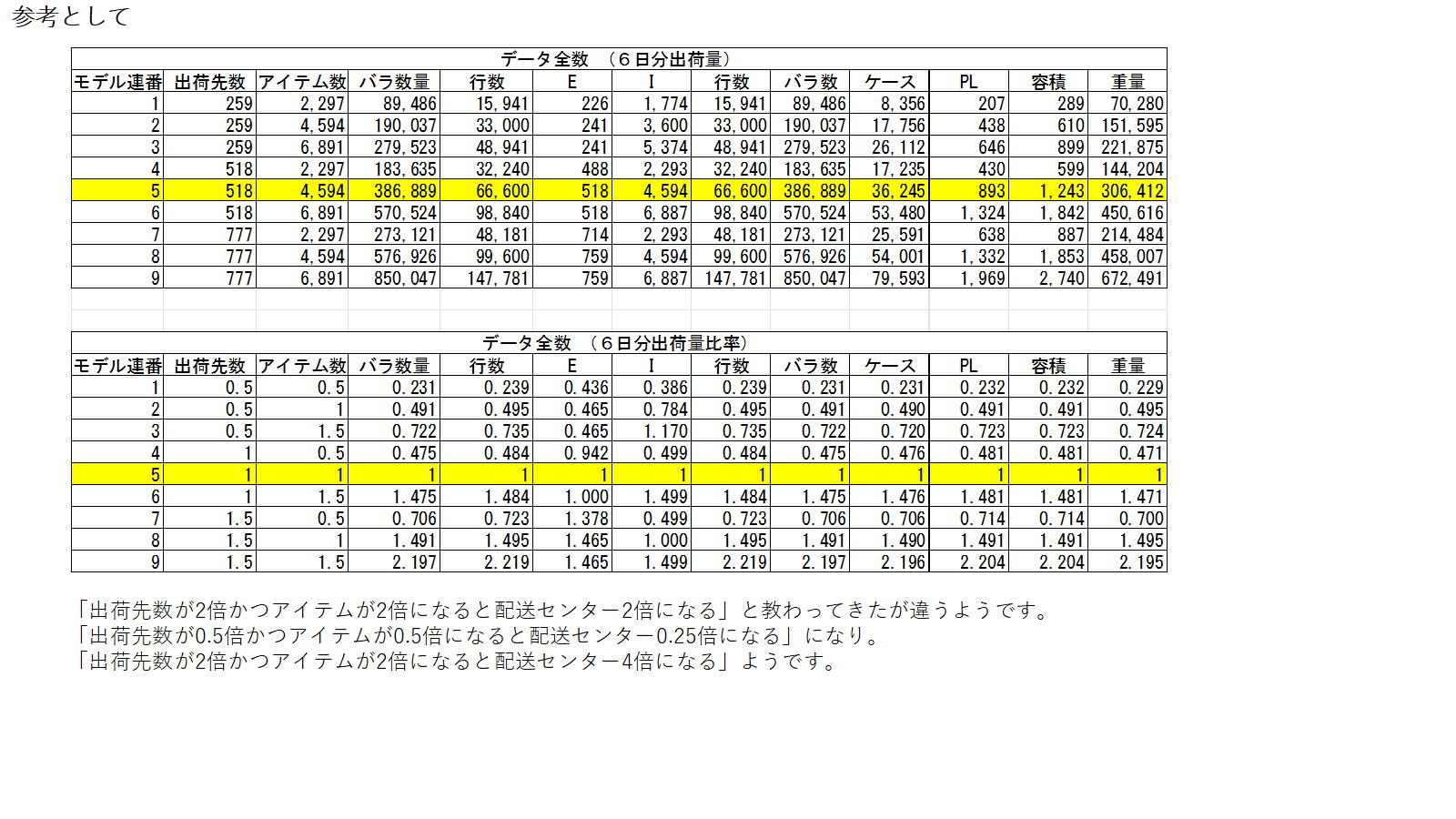
2-4.EIQ scatter plot
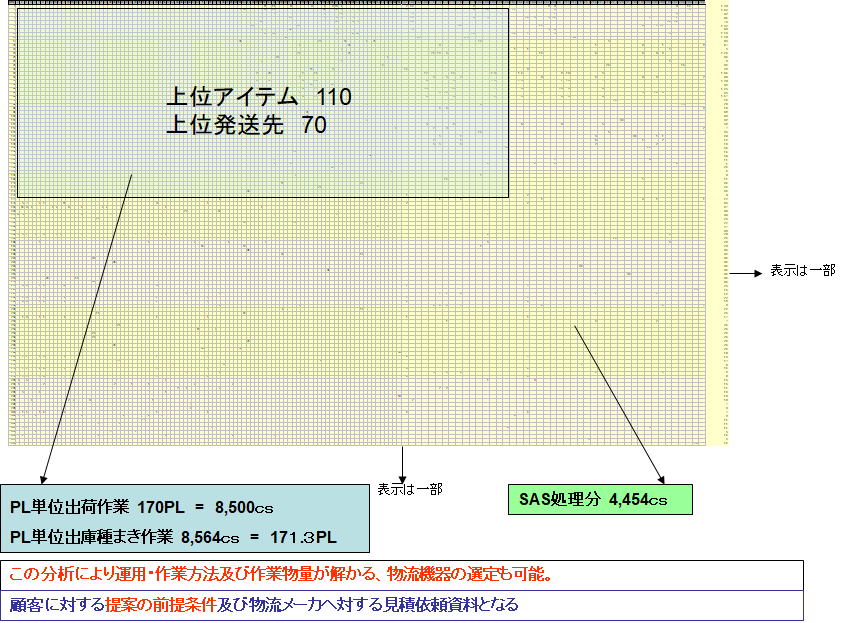
2-5.Current status survey table
📦 Inventory characteristics (including raw materials and auxiliary materials)
- Number of registered items (number of product master registrations)
- Number of items in stock (number actually stored)
- Inventory quantity (cases/number: average/maximum)
- Storage form
- Pallet storage (PL/Number of tiers)
- Case storage (case/number of shelves)
- Bulk storage (whether or not bulk items are received/shipped)
*Please be sure to check the unit in advance.
🚚 Shipping characteristics
- Shipping unit (PL unit/case unit/case+piece unit/piece unit)
- Number of registered shipping destinations
- Number of destinations shipped per day
- Summary by shipping destination (number of trucks, number of tons, departure time, number of items, shipment quantity)
- Average case dimensions (W × D × H mm / Weight kg)
- Annual vibration (presence of monthly/weekly vibration)
📄 Forms and work system
- Paper samples such as delivery center usage slips and instructions
- Working hours and personnel composition (per day/total hours including overtime)
💻 Information systems & operations
- Order receiving method (location of computer order receiving/input department such as EOS)
- Reception time (1st to 3rd time and shipping timing: same day/next day, morning/afternoon)
- Presence of logistics management computer
- Location management (all areas/partial/none)
- Contents of incoming goods inspection (quantity inspection/quality inspection) and method (visual inspection/BCR)
- Shipping instructions/picking (list presence/absence/number of times/picking method)