3-16. Processing capacity of logistics equipment
When automating and mechanizing a distribution center, it is necessary to accurately understand the processing capacity of logistics equipment (the number of cases and totes that can be processed and transported per hour), confirm that the required quantity and processing capacity match, and then select equipment .
Below, we will explain the guideline for logistics equipment processing capacity and how to use and think about it in system design .
1. Estimated major logistics equipment and processing capacity
The approximate throughput (per hour) of typical logistics equipment based on training and design materials is as follows .
| Equipment/system name | Estimated processing capacity (per hour) | Features/Applications |
|---|---|---|
| A type Pic machine | 1,200 tote | High-speed automatic picking and storage equipment.Used for bulk picking of small items and high-flow products . |
|
SAS system (High-speed dispatch of cases in order) |
600 cases | Case-by-case ordering system.Effective for processing low-flow products and complex shipping batches . |
| Sorting machine (sorter) | 2,000 to 10,000 cases | Cross belt sorters, shoe sorters, etc. that automatically sort packages by destination or direction . |
| High speed branch/merging line | 2,000 to 6,000 cases | Equipment that consolidates or branches multiple conveyor lines into one at high speed . |
|
belt conveyor (Speed 20~70m/min) |
1,800 to 3,600 cases (Depends on conveyance pitch) |
Basic transport line within the distribution center.The processing capacity is determined by the conveyor speed and the interval (pitch) at which the loads flow . |
2. Important points when considering processing capacity (practical insights)
- ① Adjust to the required capacity at “peak time (maximum wave)”
In the logistics field, there are fluctuations in shipments depending on the day and time of day .Instead of calculating the daily average processing capacity, we use EIQ analysis to calculate ``how many cases (totes) need to be processed during the peak period when shipments are most concentrated,'' and then design the equipment so that the capacity exceeds that .
- ② Single optimization and prevention of “bottleneck”
Even if the capacity of the sorting machine is 10,000 cases/hour, if the conveyor that feeds it or the processing capacity of the previous process (SAS, etc.) is 3,000 cases/hour, the overall processing capacity will be limited to 3,000 cases/hour .
Across the pyramid of equipment configurationsTotal balance that does not create bottlenecks in front and rear flowsdesign is required .
- ③ Combination of hardware (equipment) and software (WMS/operation)
If you use top-spec automation equipment (Level 4) for everything, such as in sites where there are many small-lot shipments of a variety of products, the return on investment (ROI) may not be worth it .
"Conveyor with basic capabilities + WMS + wireless handy terminal/digital picking"Use in conjunction with work support equipment (software)The golden rule is to achieve overall optimization and flexible operation by .
3. Types and characteristics of automated warehouses
Unit load type (pallet automatic warehouse)
subject:Bulk items stacked on pallets (large cardboard boxes, raw materials, finished products, etc.) .
Features:High racks and stacker cranes are used to maximize the use of high-rise space to store large quantities of pallets .Suitable for long-term storage, factories, and large DC stockyards .
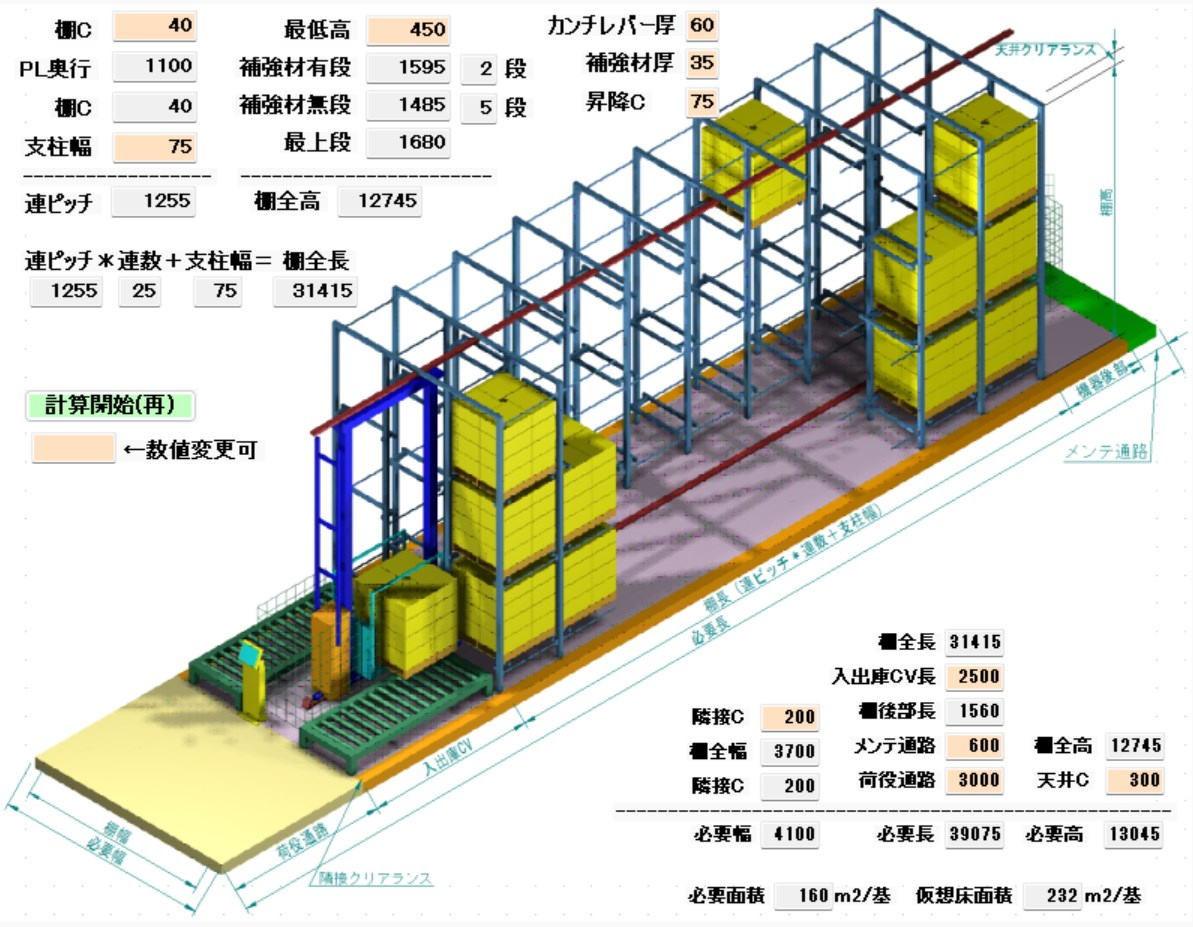
Mini load type (case/container automated warehouse)
subject:Cardboard cases, resin containers, tote boxes, etc. .
Features:This is a system that automates loading/unloading/picking on a case-by-case or container-by-container basis .It is suitable for situations where you want to quickly process medium-sized or larger quantities, such as in e-commerce backyards and parts centers .
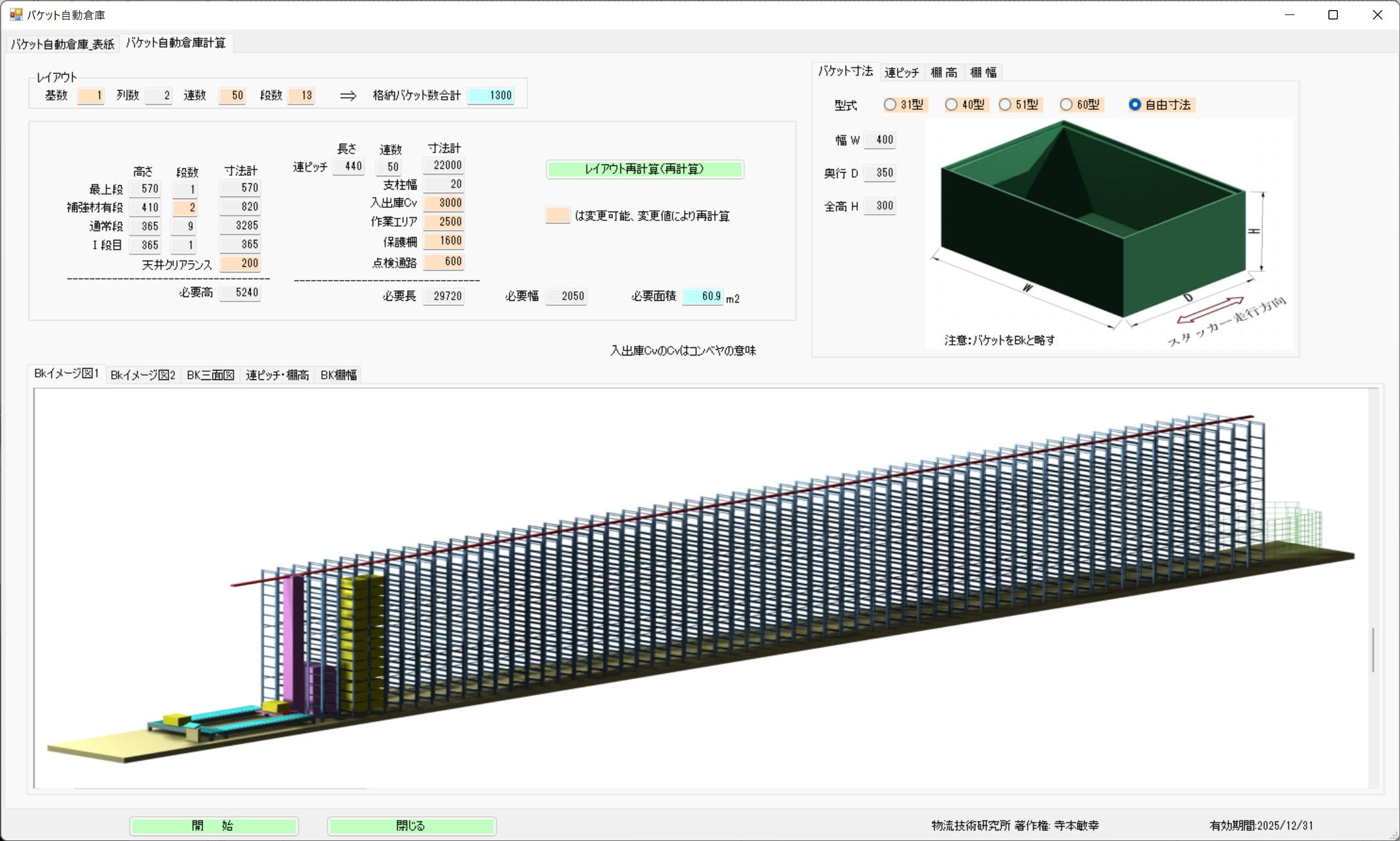
Shuttle type/robot type automated warehouse (GTP: Goods-to-Person system, etc.)
subject:Piece/rose products in a wide variety of small quantities, containers .
Features:High-speed shuttles and robots that move within the warehouse transport special containers and automatically deliver them to workers .It has a structure that is extremely strong for high-frequency shipping and EC picking operations .
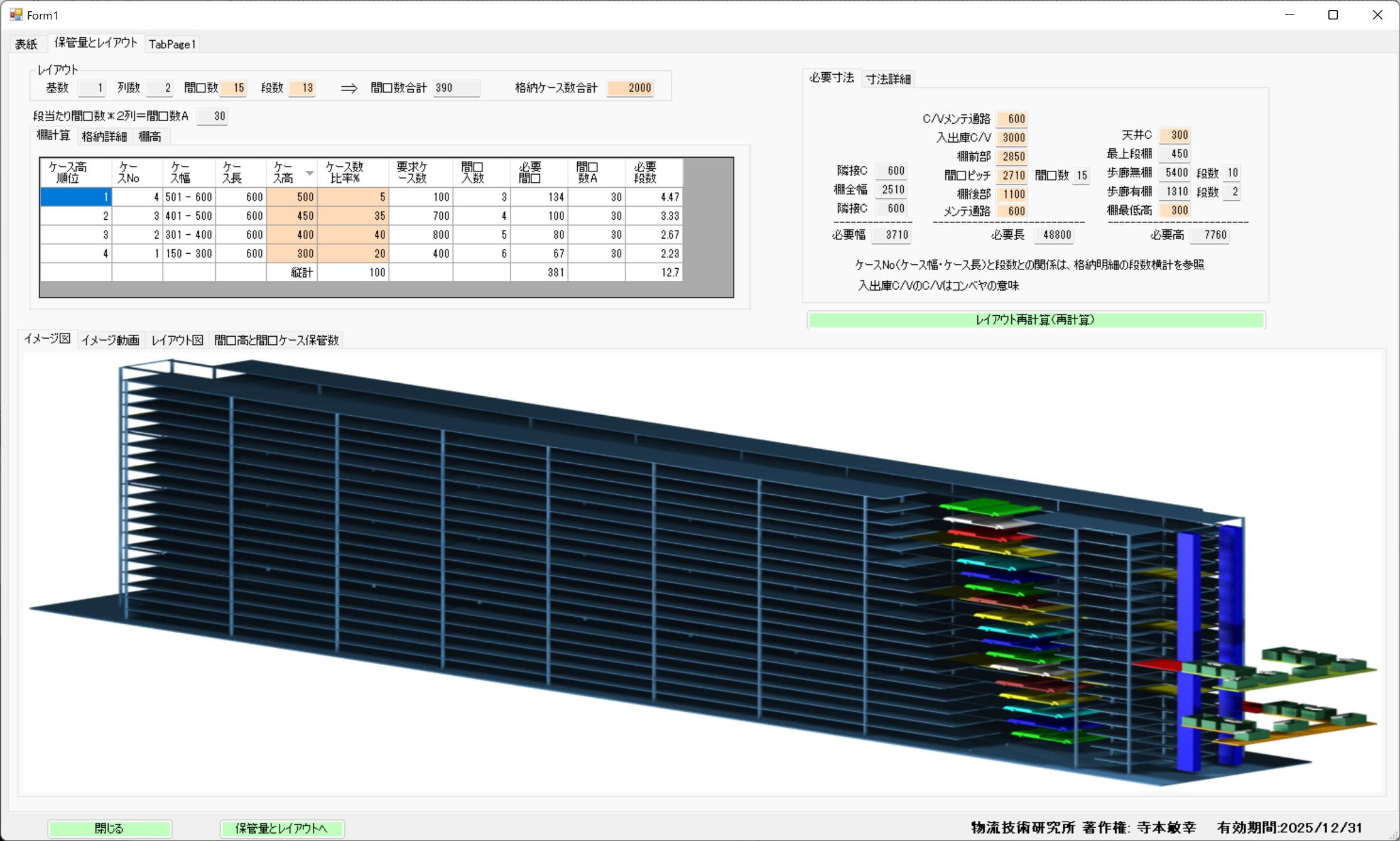
4. Processing capacity (performance) trends and selection points
The processing capacity of an automated warehouse is evaluated based on the number of cycles (input/output) that can be performed per hour (cycles/hour) .
- Comparison of processing speed
Robot type/Shuttle type > Mini load type > Unit load type
A system in which many shuttles and robots operate in parallel can access data in parallel, so it has extremely high processing power for high-frequency small-lot shipments (in piece units) .On the other hand, although the unit load type, which handles pallets, can transport a large amount of weight and volume at one time, the number of cycles (speed) per crane is structurally limited .
- Points to note during design (processing capacity at peak times)
It is essential to calculate not only the average number of inbound and outbound shipments, but also ``how much processing is required during peak hours of the day when shipments are most concentrated (peak capacity)'' .
This includes not only the performance of the cranes and robots in the automated warehouse itself, but also the conveyance capacity of the front and rear conveyors, and the speed with which workers perform picking and inspection (man-machine interface).Total balance of the entire systemdetermines the upper limit of actual processing power .
5. Estimated automatic warehouse processing capacity announced by the manufacturer
① Automatic pallet warehouse (unit load type)
- Estimated processing capacity: Approximately 15 to 30 cycles/hour (per crane)
- Maximum loading mass:1,000 kg ~ 2,000 kg / pallet
- Features/Applications:
This is a large automated warehouse with cranes (stacker cranes) running on high-rise racks .Because each pallet is heavy, its strengths lie in storage efficiency (space utilization) and safe and reliable transportation rather than speed (number of cycles) .There are also models that increase the processing capacity by 1.5 to 2 times by using speed-enhancing models or twin fork specifications (capable of transporting two pallets at once) .
② Automatic case/container warehouse (mini load type)
- Estimated processing capacity: Approximately 60 to 120 cycles/hour (per crane)
- Maximum loading mass:30 kg ~ 100 kg / Case Oricon
- Features/Applications:
This is a type that performs high-density storage and automatic loading and unloading of cardboard boxes and resin containers .Because the crane is lightweight and operates at high speed, it can handle 3 to 4 times more than a pallet type .
③ Shuttle type/GTP type (Goods-to-Person) automated warehouse
- Estimated processing capacity:
・Shuttle alone: Approximately 300 to 1,000 cases (rows)/hour(Whole system)
・Picking station capacity: Approximately 400 to 1,000 lines/hour (per worker)
- Maximum loading mass:20 kg ~ 50 kg / case
- Features/Applications:
This is a state-of-the-art system that uses self-propelled "high-speed shuttles" and "GTP robots" to run on each shelf (or every few shelves) to automatically transport products to workers' stations .It is overwhelmingly faster than conventional mini-load cranes, and boasts extremely high throughput for e-commerce mail order and small-lot piece picking of a wide variety of products .
6. Practical points to note when evaluating and calculating processing capacity
1. Difference between “single cycle” and “double cycle”
There are two ways to think about the processing capacity (cycle) of automated warehouses .
① Single cycle (single cycle)
- Operation:An operation that makes one round trip with "Inbound only" or "Outbound only" .
(Example: Go empty-handed from the platform to the rack, scoop up the luggage, return to the platform, and exit the warehouse.) - Definition of 1 cycle: "Moving 1 piece (1 pallet)"
② Double cycle (combined cycle)
- Operation:Efficient operation that performs warehouse loading and unloading at the same time in one round trip .
(Example: Load incoming luggage on the platform, store it on shelf A, then empty-handed move it to shelf B, scoop up the outgoing luggage, and return to the platform.) - Definition of 1 cycle: "Movement of 2 items (1 incoming + 1 outgoing)"
How to read "15 to 30 cycles/hour"
In the case of automated pallet warehouses (unit load type), the required time varies depending on the travel distance and height of the crane (stacker crane), but generally it is as follows .
- For single cycle operation:in 1 hour15~30 palletsProcess (receipt only or issue only)
- For double cycle operation:in 1 hour30~60 palletsProcess (Incoming 15~30 + Outgoing 15~30)
⚠️ Points to note in practice/specifications
If the catalog or specification only says "Capacity: 〇〇 cycles/hour",Maximum capacity (number of round trips during the most efficient double cycle)There are many cases where it is written based on .
Therefore, when selecting a system,“Is this the value for a single cycle (moving one pallet) or the value for a double cycle (moving two pallets in and out of stock)?”It is essential to check with the manufacturer .
2. Other calculation points
- Difference between peak (maximum wave) and average ability
Even if a manufacturer's maximum processing capacity is 1,000 cases/hour, it may not be possible in actual operation due to the balance between utilization rate (margin) and picking speed of workers (man-machine interface).Approximately 70-80% of ratingIt is common to design safety using .
- Bottlenecks with front and rear conveyor lines (conveyors and sorters)
Even if the crane speed of the automated warehouse itself is high, if the processing capacity of the conveyor and sorter (sorting machine) connected to the warehouse cannot keep up, the entire system will come to a halt .Balancing the capacity of the entire system (preventing bottlenecks) is essential .