3-6. SCM Necessity, Bullwhip Effect, and Wholesaler Roles
1. What is Supply Chain Management (SCM)?
SCM is an integrated management approach that unifies data to optimize end-to-end material and information flows—from raw material procurement, manufacturing, distribution (wholesaling), and retail sales down to the end consumer.
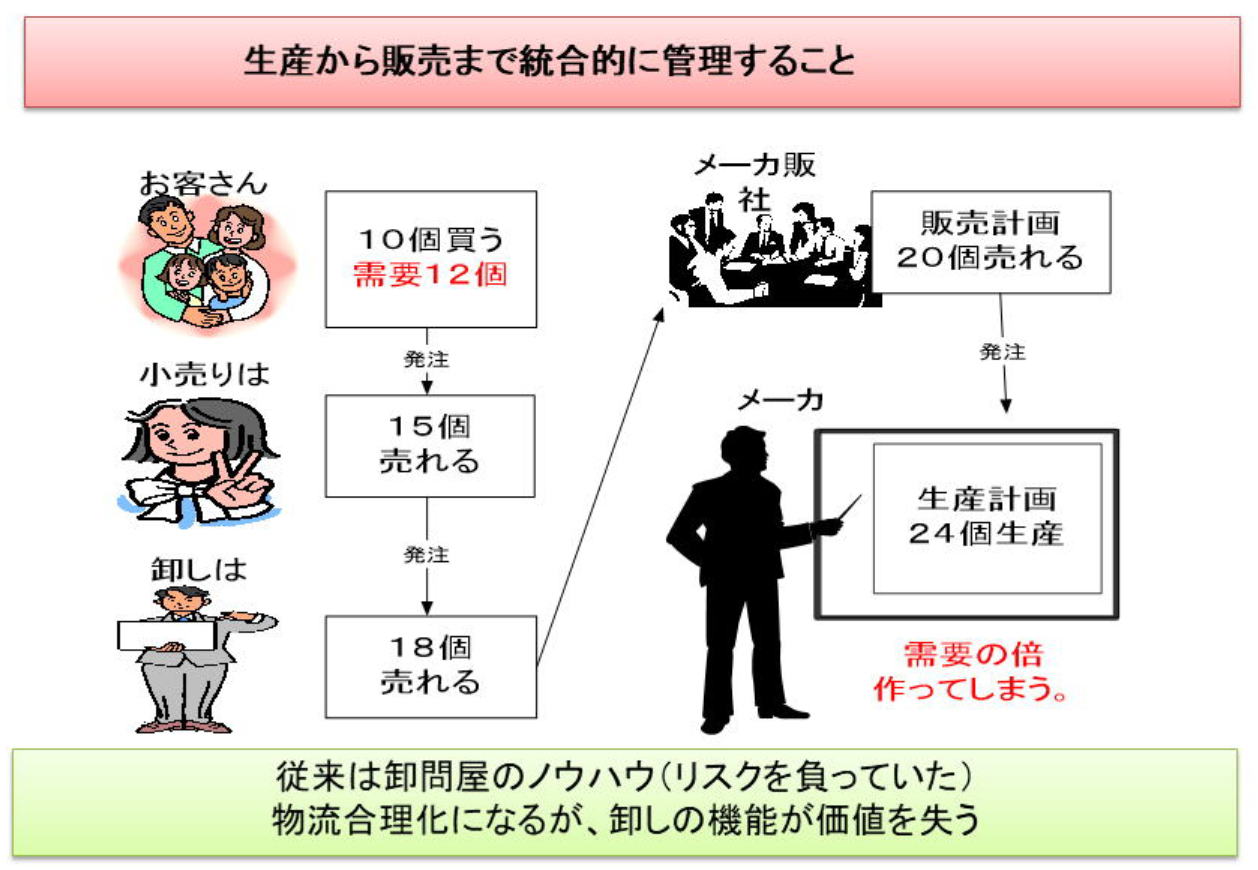
2. The Problem: Demand Amplification ("Bullwhip Effect")
The Bullwhip Effect is a classic supply chain failure occurring when real-time demand data is distorted or unshared across tiers:
| Supply Chain Tier | Forecast & Order Behavior | Orders / Production Volume |
|---|---|---|
| End Consumer | Buys 10 units (Actual Demand: 12 units) | — |
| Retailer | Forecasts 15 units to prevent stockouts | Orders 15 units from Wholesaler |
| Wholesaler | Adds safety stock, forecasting 18 units | Orders 18 units from Sales Subsidiary |
| Manufacturer Sales Arm | Builds buffer, planning sales of 20 units | Orders 20 units from Factory |
| Manufacturer Plant | Schedules production buffer of 24 units | Manufactures 24 units |
📌 The Result (Bullwhip Effect)
For an actual consumer demand of 12 units, the upstream manufacturer produces double the required volume (24 units). Moving further upstream away from real demand magnifies excess inventory and waste risks.
3. Evolving Roles & Challenges for Wholesalers
Impact of SCM adoption on traditional distribution channels:
-
Traditional Distribution Layer
Historically, wholesalers absorbed demand fluctuations and buffer inventory risks through proprietary merchant experience and balance sheet risk-taking.
-
Impact of SCM & Logistics Optimization
Direct POS data sharing enables manufacturers to eliminate overproduction. However, this disintermediates traditional wholesaling, reducing the need for traditional middleman buffer functions ("Disintermediation / Middleman Elimination").
4. Three Wholesaler Survival Strategies in the SCM Era
To move beyond simple transactional markups, wholesalers must specialize in one or more value-adding strategies:
Three Core Value-Added Strategies
| Strategy Type | Operational Focus | Strategic Objective |
|---|---|---|
| 1. Specialization in SME Retail | Provide full-line product assortment for small/medium retailers | Offers one-stop procurement for regional independent stores and small chains unable to manage direct bulk factory procurement. |
| 2. Specialization in 3PL Operations | Outsource physical fulfillment for major retailers | Acts as an asset-based 3PL logistics provider, managing physical warehousing, fulfillment, and transportation infrastructure. |
| 3. Specialization in Commercial Category Management | Provide merchandising, category, and inventory management consulting | Delivers data-driven POS sales analytics, planogram optimizations, inventory replenishment models, and retail marketing support. |
💡 Executive Takeaway
"Must Master at Least 1 of the 3 Competencies to Survive"
Unspecialized intermediaries will be disintermediated. Wholesalers must solidify distinct core strengths: Assortment Breadth (SME Focus), Logistics Efficiency (3PL Execution), or Data Value-Add (Commercial Merchandising).