3-11. Distribution Center Types & Functional Maturity Levels
This article details supply chain logistics classifications (Production vs. Sales Logistics), domain characteristics, and structural cost drivers associated with expanding B2C e-commerce operations[cite: 26].
A1. Five Core Logistics Classifications
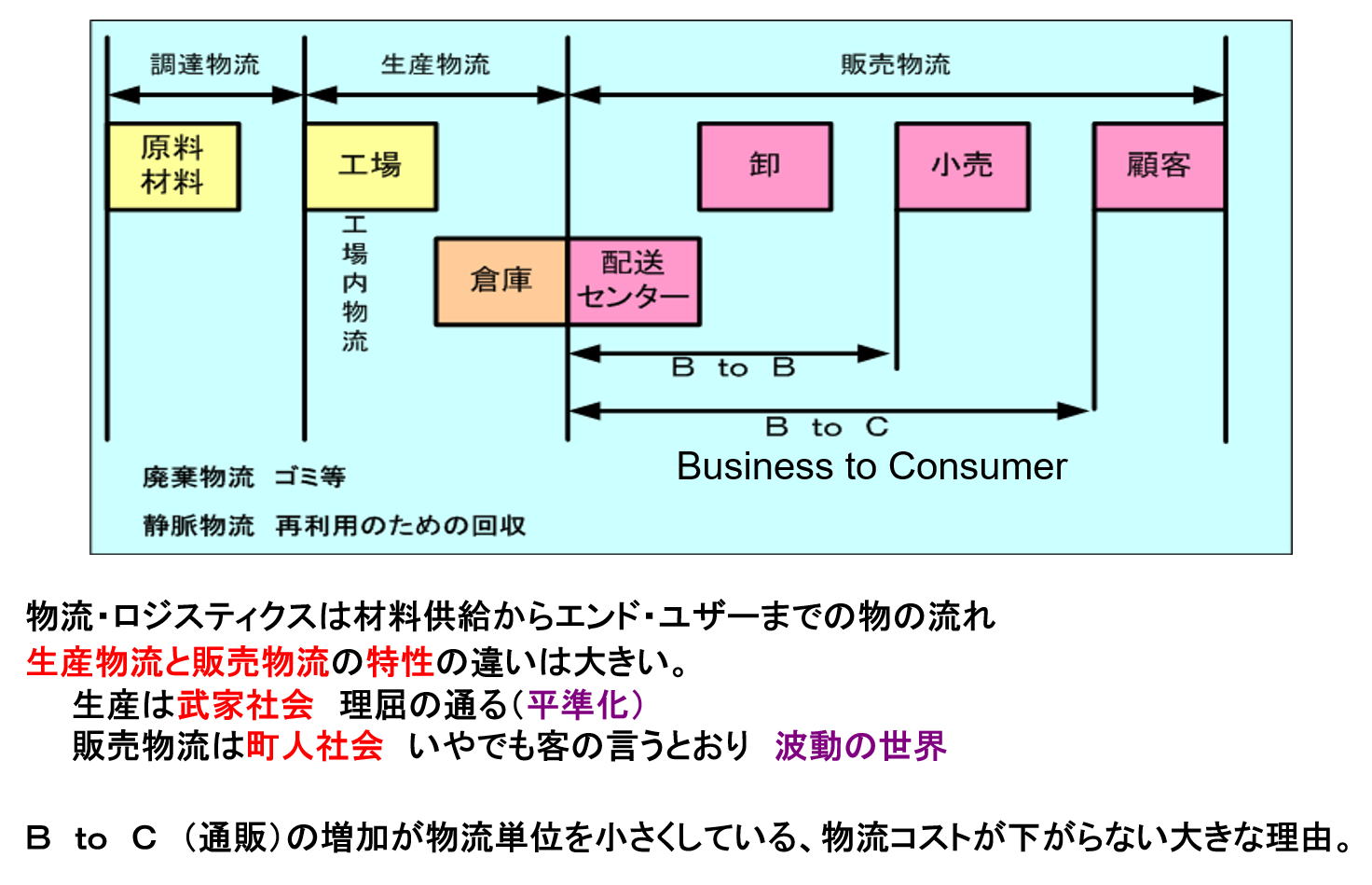
A2. Core Domain Characteristics
① The 5 Supply Chain Logistics Classifications
Material flows break down into five core operational domains[cite: 26]:
Procurement Logistics
Inbound movement supplying raw materials and parts from vendors to manufacturing plants[cite: 26].
Production Logistics
Internal factory transfers of raw materials and movements of finished goods to warehouses/DCs[cite: 26].
Sales Logistics
Outbound distribution transferring finished goods from DCs to wholesalers/retailers (B2B) or end-consumers (B2C)[cite: 26].
Waste Logistics
Collecting and transporting discarded packaging, corrugated materials, and industrial waste to disposal sites[cite: 26].
Reverse Logistics
Managing returns, product recalls, and collecting reusable transport assets (pallets, totes)[cite: 26].
② Production Logistics vs. Sales Logistics Structural Differences
Operational realities differ fundamentally between production and sales domains[cite: 26]:
-
Production Logistics = Controllable & Plan-Driven Domain
Operates strictly on factory production master schedules, allowing volume smoothing and predictable scheduling[cite: 26]. Low variance enables high-efficiency, standardized rule execution[cite: 26].
-
Sales Logistics = Demand-Driven & Uncontrollable Domain
Triggered by end-consumer purchase orders, subject to day-of-week, seasonal, promotional, and weather spikes[cite: 26]. Must absorb severe demand fluctuations while meeting strict delivery time windows[cite: 26].
③ B2C Expansion & Structural Cost Drivers
Traditional B2B Logistics
Ships full pallet or master case quantities in consolidated bulk shipments to retail hubs[cite: 26].
Expanding B2C / E-Commerce Logistics
Ships individual piece orders in fragmented single-item parcels directly to consumer households[cite: 26].
💡 Why B2C Expansion Resists Unit Cost Reductions
1. Explosive Labor Hours: Piece-picking, individual packaging, and custom labeling dramatically increase labor-hours per unit[cite: 26].
2. Lower Delivery Density: Unlike bulk B2B truck drops, B2C parcel delivery requires more vehicles and miles traveled per unit, compounded by redelivery overhead[cite: 26].
A3. Strategic Summary
Sales logistics (especially B2C) faces severe unit cost pressures due to order fragmentation and demand spikes[cite: 26]. Key operational imperatives include building flexible buffer architectures to absorb volume spikes and automating small-piece fulfillment workflows[cite: 26].
B1. Sales Logistics Warehouse Characteristics
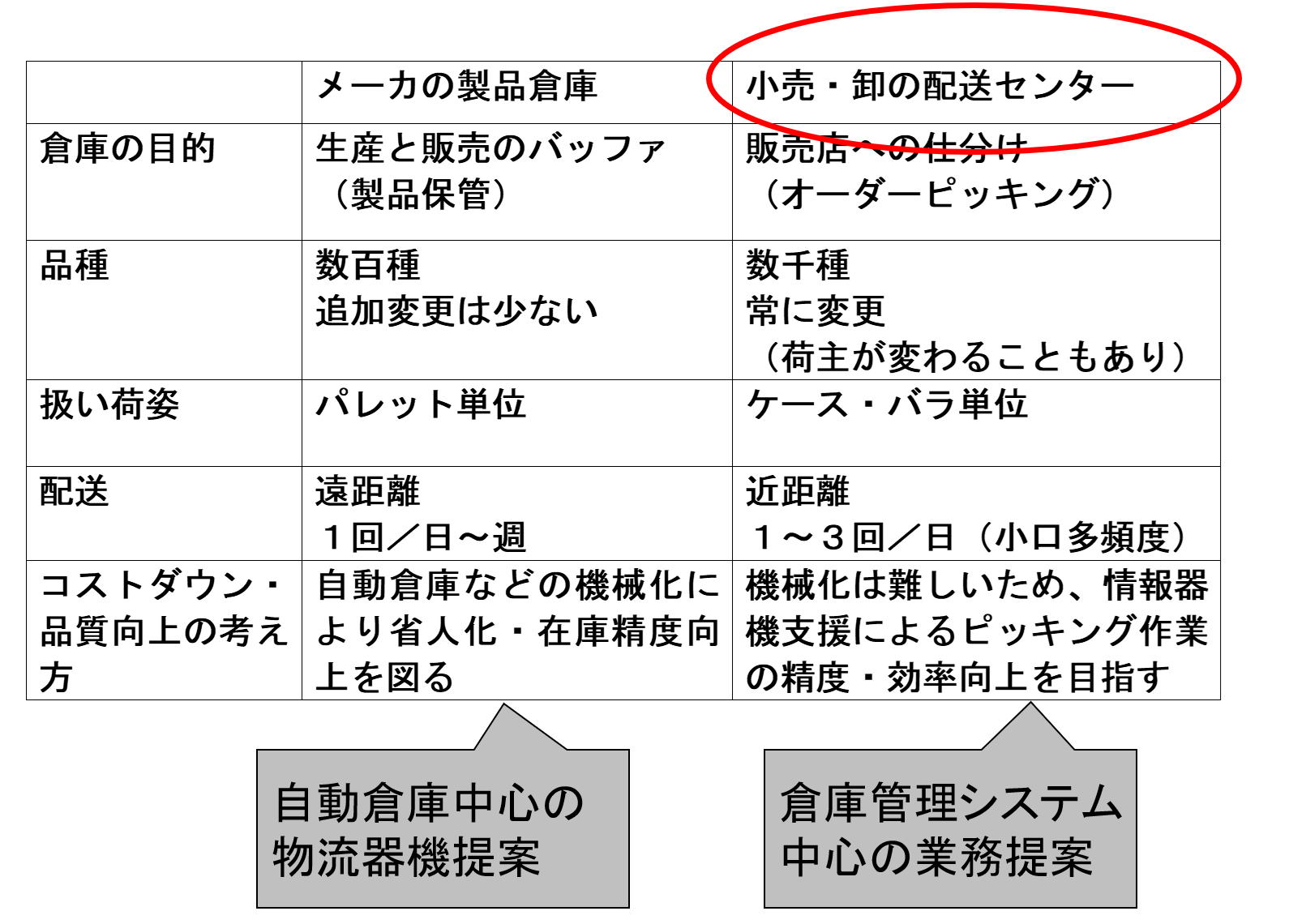
Comparing operational differences between Manufacturer Product Warehouses vs. Retail/Wholesale DCs across 5 key dimensions to determine optimal improvement strategies[cite: 26]:
B2. Comparative Analysis Matrix
| Comparison Factor | Manufacturer Product Warehouse | Retail / Wholesale DC (TC/DC) | Structural Operational Difference |
|---|---|---|---|
| Primary Objective | Production-sales buffer (inventory holding) | Order sorting & store picking | Manufacturers focus on buffer storage, whereas retail DCs focus on high-speed cross-docking and order fulfillment[cite: 26]. |
| Managed SKUs | Hundreds (Low SKU turnover) | Thousands to tens of thousands (Frequent turnover) | Retail DCs manage massive, changing product ranges, making fixed slotting impossible and requiring dynamic WMS slotting[cite: 26]. |
| Load Units (PCB) | Pallet Units (P) Dominant | Case (C) & Piece (B) Units Dominant | Manufacturers focus on bulk pallet loads, whereas retail DCs demand intensive piece-picking labor[cite: 26]. |
| Delivery Frequency | Medium/long-distance inter-hub runs | Short-distance local store routes (multiple times/day) | Retail DCs must strictly meet store delivery time windows, requiring tight dock berth management[cite: 26]. |
| Improvement Approach | Hardware automation (AS/RS, AGVs) | Software optimization (WMS, Pick-to-Light, DAS) | Standardized manufacturer loads suit hardware automation, whereas retail DCs require flexible WMS software[cite: 26]. |
B3. Strategic Proposal Insights
① Manufacturer Warehouses: Hardware-Centric Automation
Fixed SKU ranges and standardized pallet loads make capital investments in AS/RS, palletizers, and AGVs highly cost-effective[cite: 26].
② Retail/Wholesale DCs: Software-Centric Optimization
High SKU variance and piece-picking demand WMS-driven workflows combined with RF terminals, Pick-to-Light, and Digital Assort Systems[cite: 26].
C1. Distribution Center Functional Maturity Levels
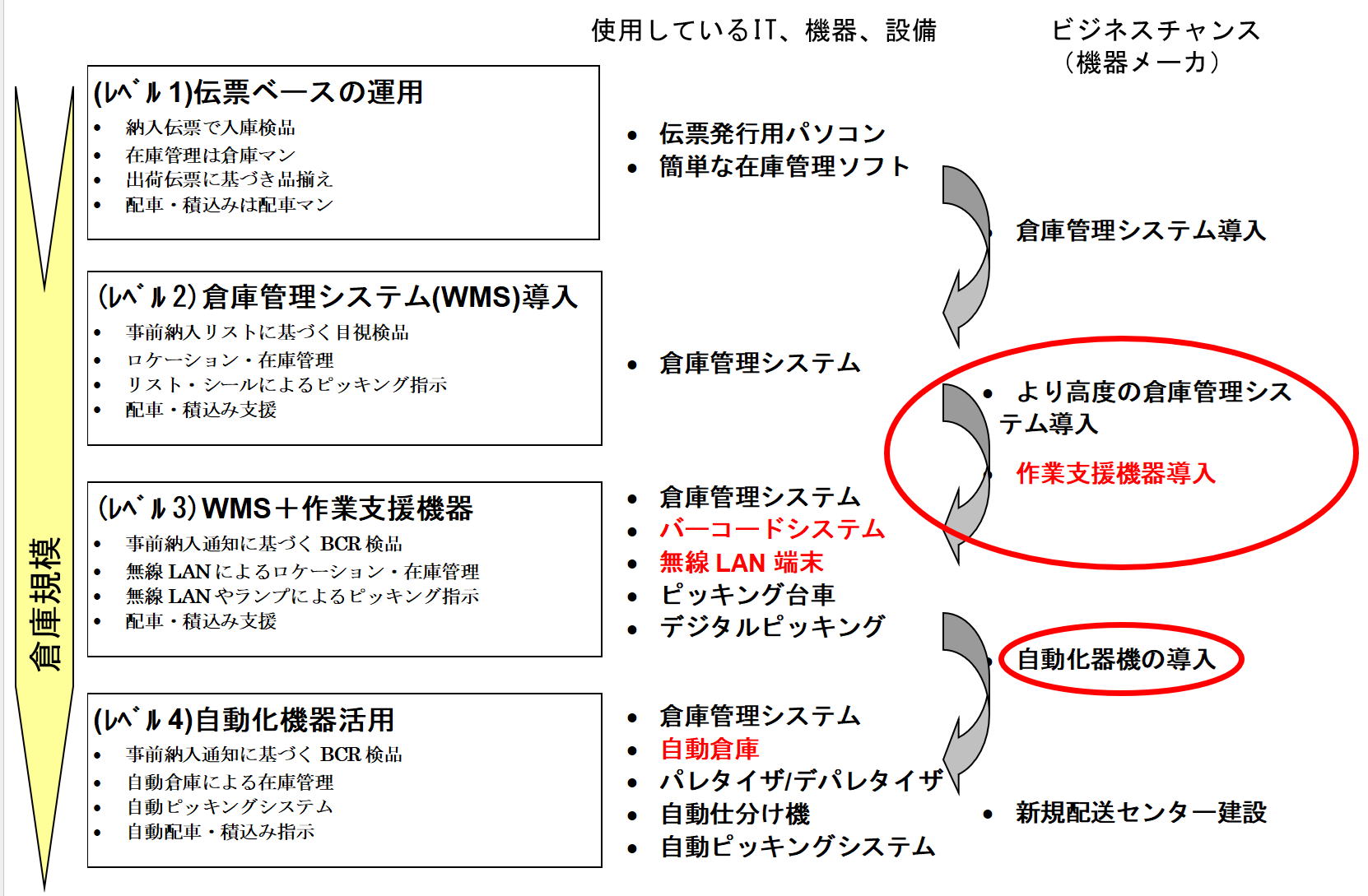
Categorizing distribution center IT and equipment sophistication across a 4-tier maturity framework[cite: 26]:
C2. Functional Maturity Levels (4-Step Progression)
| Maturity Level | Operational Characteristics | Deployed IT & Equipment | Vendor Business Opportunity |
|---|---|---|---|
| (Level 1) Paper Paper-Based |
"Paper & Tribal-Knowledge Dependent" • Paper shipping slip checks • Inventory managed in memory or paper logs |
• Basic PC for invoice printing • Entry-level spreadsheets |
Propose Core Warehouse Management System (WMS) |
| (Level 2) WMS Deployed |
"Data & Paper-List Driven" • Visual checks against printed lists • Basic location management & dispatching |
• Warehouse Management System (WMS) | Propose Advanced WMS + Execution Support Hardware |
| (Level 3) WMS + Execution Support |
"Error-Proofed Real-Time Operations" • Barcode scanning checks • Paperless Pick-to-Light / RF Terminal guidance |
• WMS / Barcode Scanners • Wireless LAN / Picking Carts • Pick-to-Light Systems |
Propose Automated Handling Equipment |
| (Level 4) Fully Automated |
"Automated & Unmanned Operations" • Automated warehouse storage • Automated sorting and robotic picking |
• WMS / Automated AS/RS • Palletizers / Depalletizers • Automated Sorters / Piece-Pickers |
Propose Greenfield / Facility Construction |
C3. Strategic Maturity Insights
-
Evolution from Labor-Dependent to Fully Automated
As facility scale expands, operations progress from Level 1 to Level 4[cite: 26]. Levels 1–2 rely on human judgment, Level 3 enforces system-guided error-proofing, and Level 4 achieves full automation[cite: 26].
-
Key Target Zone for Retail/Wholesale DCs
Facilities handling high-SKU piece picking struggle to jump directly to Level 4 automation[cite: 26]. Upgrading from Level 2 to Level 3 (WMS + Pick-to-Light / RF terminals) provides the highest return on investment[cite: 26].
D1. Facility Scale & Information System Layers
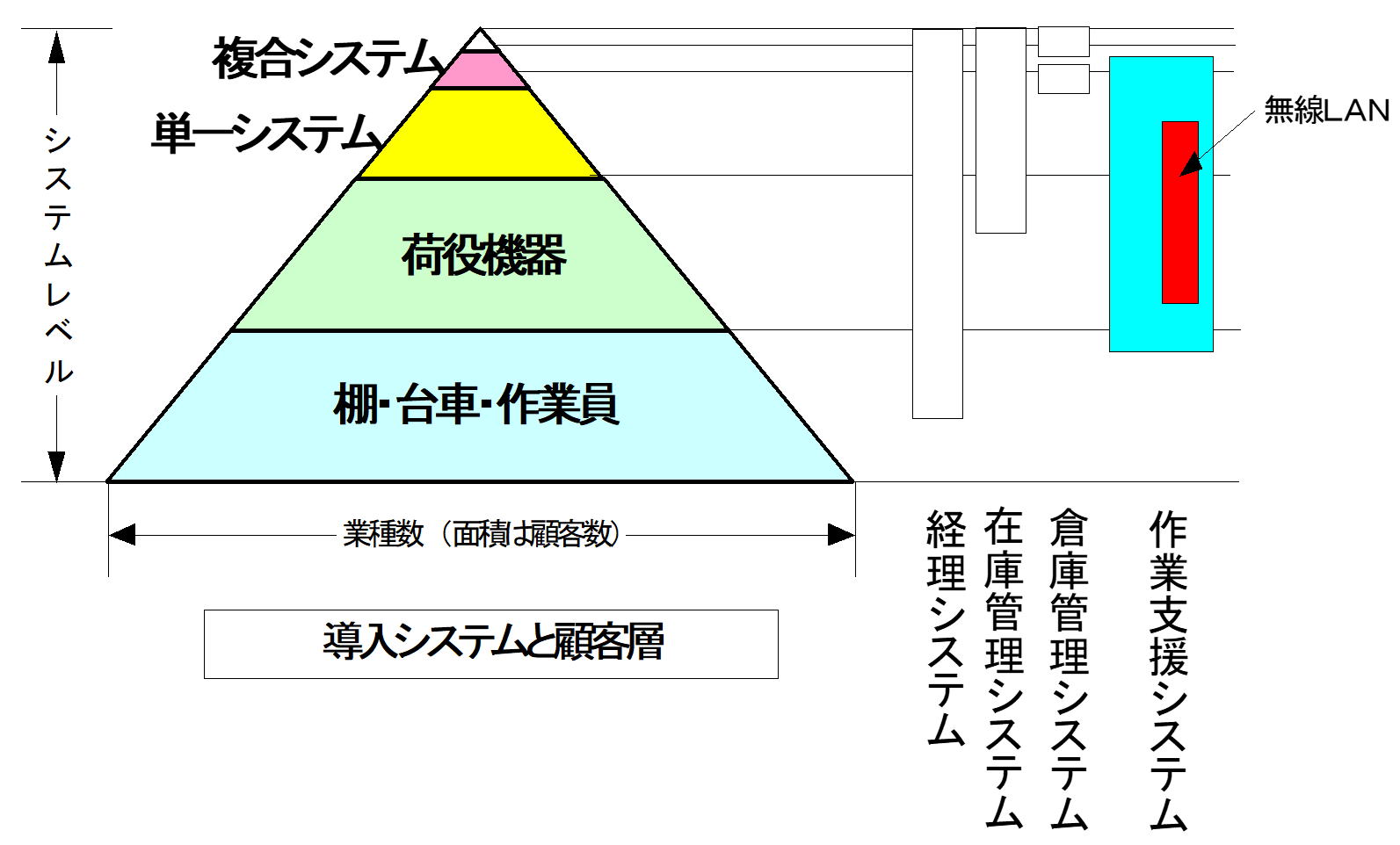
Mapping material handling equipment sophistication against corresponding IT software architecture layers based on facility scale and complexity[cite: 26]:
D2. System Layer Breakdown
① Material Handling Hierarchy (Pyramid)
- Base Level: Racks & Carts (Manual labor-driven)[cite: 26]
- Level 2: Handling Equipment (Forklifts, basic conveyors)[cite: 26]
- Level 3: Standalone Systems (Isolated AS/RS or sorters)[cite: 26]
- Top Level: Integrated Systems (AS/RS + AGVs + Robotic Picking)[cite: 26]
② Information System Layers (4 Tiers)
- ERP / Financial System: Core enterprise accounting master[cite: 26]
- Inventory Management: Manages theoretical stock ledgers[cite: 26]
- Warehouse Management System (WMS): Controls physical location and picking workflows[cite: 26]
- Execution Support System (WCS / Wireless): Real-time RF terminal guidance and error-proofing[cite: 26]
D3. Practical Execution Insights
1. Wireless Execution Systems Drive Instant Floor Optimization
Even in facilities without heavy automation, deploying WMS with RF terminals and wireless LAN dramatically boosts picking accuracy and labor productivity[cite: 26].
2. Prevent Hardware vs. Software Investment Mismatches
Align software investments with physical facility maturity—digitizing floor workflows via WMS and RF terminals delivers the highest immediate ROI before investing in heavy automation[cite: 26].