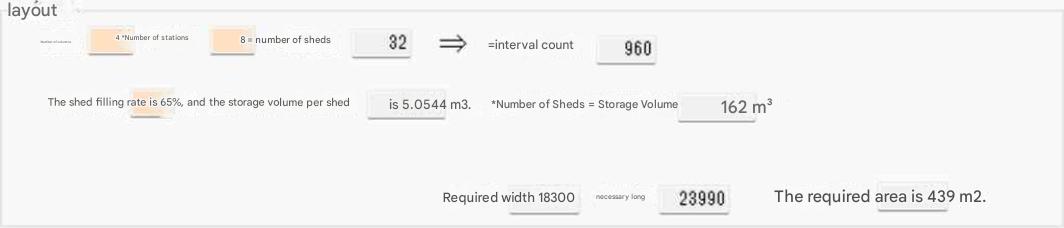
Total Rack Units = Rows × Bays.
Flow rack systems consist of starter units and add-on units.
(Add-on units share upright structural posts with adjacent rack frames).
Because cases of diverse dimensions are stored temporarily across standardized rack widths, volumetric rack fill rates are typically low.
Section 6 Flow Rack Calculation: Optimization of Piece Shipping & Picking Efficiency for High-Velocity Items
Basic Structure and Calculation of Flow Racks
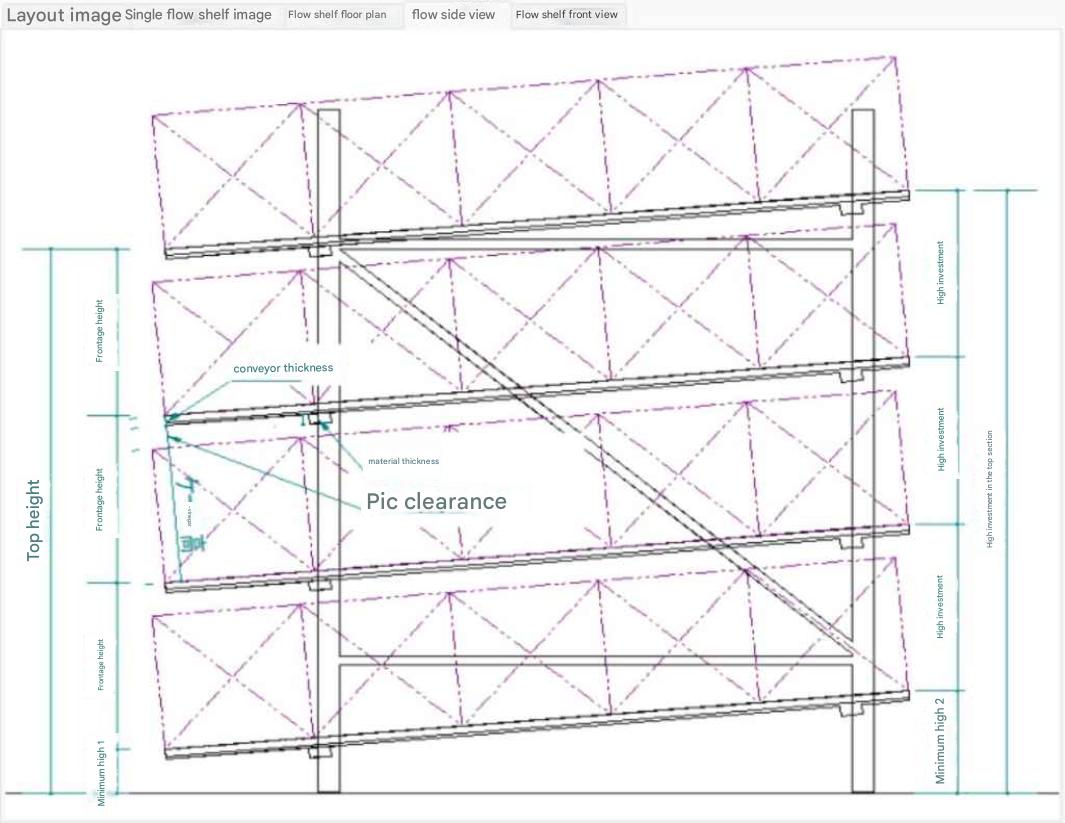
Flow racks (carton flow racking) employ inclined roller tracks where stock loaded from the rear glides naturally via gravity to the front picking face, making them ideal for First-In, First-Out (FIFO) inventory control. They deliver outstanding efficiency particularly for piece shipping and picking operations handling high-velocity (fast-moving) SKUs.
- Calculating Total Rack Units: Total rack count is calculated as "Rows × Bays".
- Unit System Configuration: Flow rack blocks comprise independent "Starter Units" and "Add-on Units" that share upright posts with adjacent rack frames.
- Fill Rate Characteristics: Because cases of varying dimensions are stored temporarily across standardized rack shelf widths, overall rack volumetric fill rates tend to be relatively low.
Picking Efficiency and Operational Considerations
Flow rack engineering requires factoring in operator physical attributes (such as worker height) and picking frequency.
- Top Tier Operations:
- Because top tiers sit at elevated heights making case retrieval difficult, they are best assigned to storing lower-velocity SKUs.
- In facilities where female operators perform the majority of picking tasks, ergonomics dictate providing step stools or lowering top-tier beam heights.
- Storage Density vs. Operational Efficiency:
- Reducing tier levels (e.g., from 4 tiers down to 3 tiers) decreases storage capacity by 25%, but significantly improves ergonomic reach and productivity for piece shipping. Careful simulation evaluation is required when deciding whether to prioritize storage capacity or picking speed.
Engineering Dimensions (Setback Clearance)
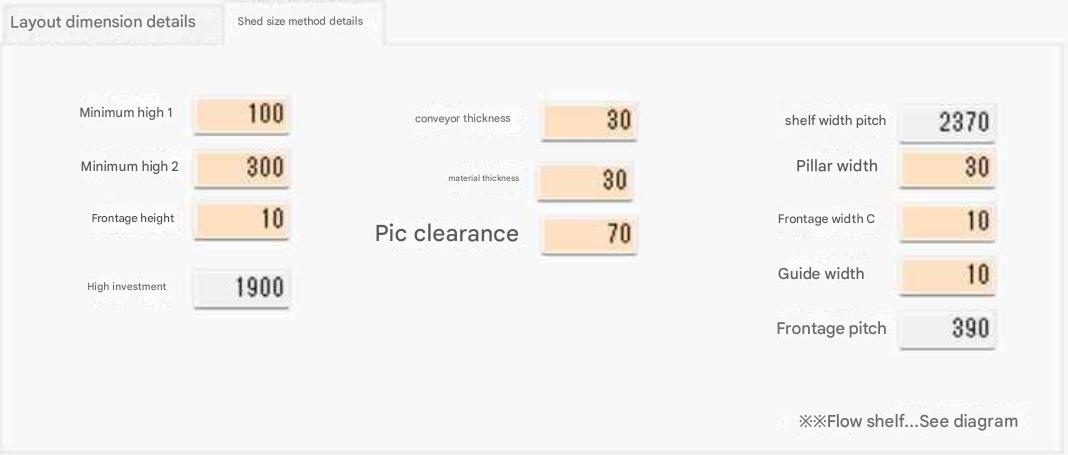
- Building Setback Clearance: Operational clearance gaps between building structures (walls/columns) and rack frames are typically configured at 100 mm.
- Automated Calculation: Modifying parameter values in Tera Settings instantly updates total required floor area reflecting these operational constraints.
Calculation Interface
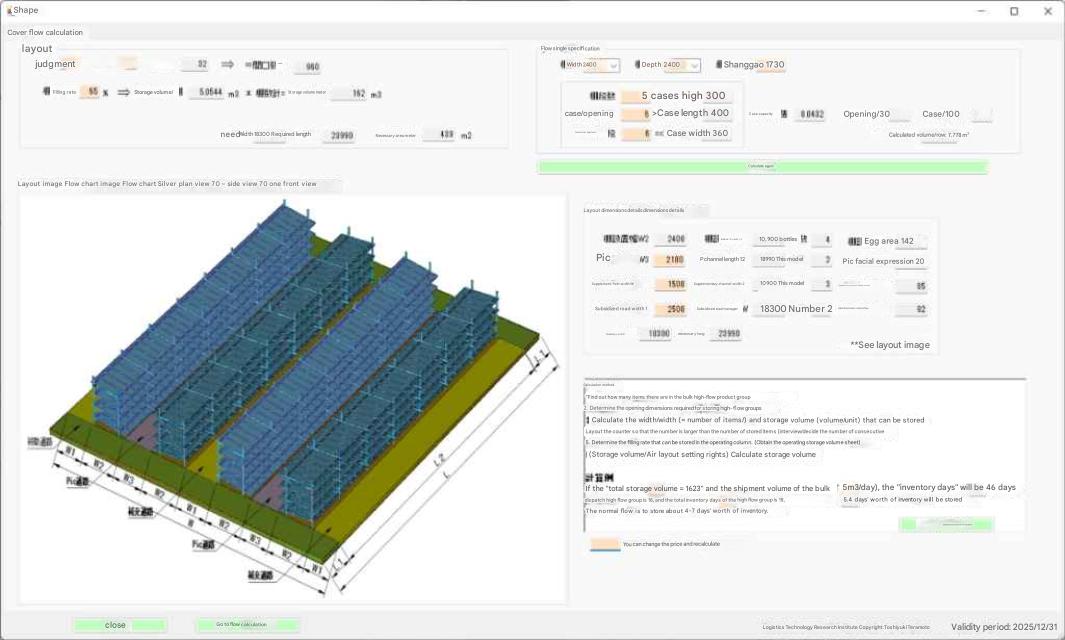
Top tiers are difficult to reach and should be assigned to low-velocity SKU storage.
Because picking is typically performed by female workers, step stools should be provided, or top beam elevations lowered to match worker ergonomics.
Reducing 4-tier racks down to 3 tiers cuts storage capacity by 25%, creating a trade-off decision between picking efficiency and storage density.
Setback clearance to building walls is set at 100 mm.