Standard truck load factor = Loaded Cargo Volume / Internal Truck Volume. However, inbound load factor refers to: Receiving Truck Load Factor = Unloaded Cargo Volume / Internal Truck Volume. For example, if a 2-ton long truck arrives with a 90% load but offloads 20% of its volume, the receiving load factor is regarded as 20%.
Section 5 Receiving Space Calculation
This document details the concepts and parameters used to calculate "Receiving Area" and "Number of Receiving Bays" in distribution center facility design.
It explains how to optimize facility design by sharing space with shipping areas and incorporating truck loading characteristics. Key principles are structured and explained below.
1. Fundamental Concepts of Receiving Space and Dock Bays
- Receiving Bay: Refers to building loading docks/door openings where receiving trucks berth to unload cargo.
- Calculating Bay Count: Calculated as "Total Truck Berthing Time (minutes) during peak hour ÷ 60 minutes".
- Shared Space Utilization: Utilizing shipping bays and shipping floor staging areas for receiving during off-peak hours when outbound operations are inactive allows reducing dedicated receiving space.
2. Measuring Throughput and Time Windows
- Peak Receiving Hour Volume: Refers to 1-hour inbound throughput during the single highest-volume hour of the day.
- Ratio %: Calculated as "(Peak Hour Volume ÷ Daily Receiving Volume) × 100", quantifying the peak operational load burden.
3. Configuring Parameters for Receiving Trucks and Loading
To enhance calculation precision, the following elements are configured:
- Receiving Methods and Volume Allocation: When multiple inbound receiving patterns exist, volume allocation percentages are assigned to each pattern.
- Vehicle Type Selection: Vehicle sizes (e.g., heavy trucks vs. 40ft containers) dictate cargo capacity and turning radiuses, heavily influencing site plot layouts.
- Defining Load Factors: In receiving calculations, load factor is defined as "Unloaded Cargo Volume ÷ Total Internal Truck Container Volume".
4. Calculation Differences by Loading Method
- Palletized Loading: Unloading is rapid, but incurs cubic volume loss equal to pallet thickness (150 mm × pallet count). Calculations must incorporate "Temporary Staging Area for Empty Pallets" returned from unloading.
- Floor Loose-Case Stacking: High cubic volume utilization efficiency, but unloading takes longer. In this case, temporary empty pallet staging area is set to 0.
5. Adjustments via Area Expansion Multipliers
In addition to theoretical calculated values, practical operational spaces are ensured by applying an "Area Multiplier Ratio" covering the following factors:
- Physical Space Factors: Clearance gaps between cargo items, forklift traffic aisles, administrative work offices.
- Time & Operational Factors: Inspection/quality check times, shipping manifest processing, operational delays caused by truck traffic interference.
Receiving Space Calculation Interface
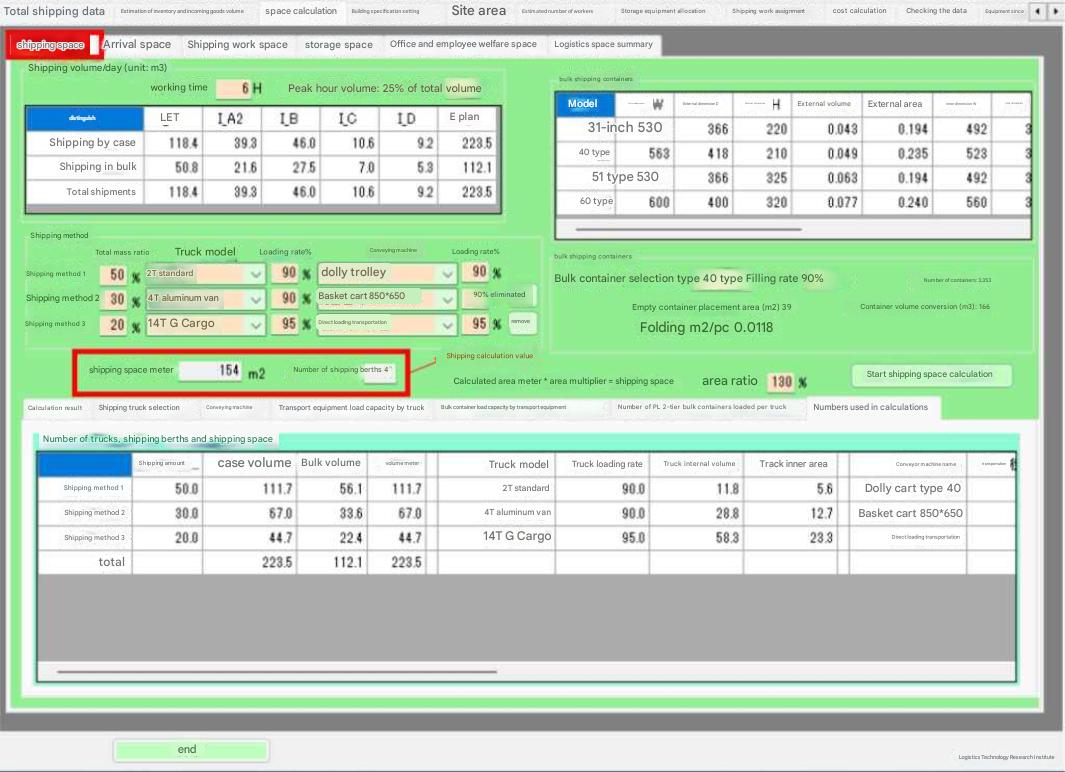
Subsection 1 Calculation of Receiving Area and Number of Receiving Bays
Outbound shipping cannot arbitrarily adjust order quantities or delivery dates at the distribution center's sole discretion. Conversely, receiving allows specifying delivery quantities, dates, and time slots when placing purchase orders. By controlling receiving schedules, the distribution center actively avoids bottleneck hours and busy weekdays.
Receiving operations often share shipping space during times when shipping operations are inactive. By sharing shipping floor space, dedicated receiving space requirements can be reduced.
In rare cases, third-party inbound personnel conduct night-time receiving, bulk storage putaway, and picking rack replenishment when no shipping occurs. In such facilities, receiving utilizes shipping bays and shipping space, meaning dedicated receiving bays and receiving spaces become unnecessary.
High receiving volumes do not automatically require large bay counts or massive receiving space.
Tera Calculation 2 calculates baseline bay counts and receiving space from inbound throughput volumes, then allows entering shared space ratios between receiving and shipping to recalculate net receiving bays and receiving space requirements.
For certain items like imported goods, delivery arrival times are difficult to control and schedules may slip. In such instances, operational countermeasures like holding buffer areas on or off site are required.
Below, methods and terminology for receiving space calculation are detailed.
Subsection 2 Peak Receiving Hour Volume
Peak Hour Volume represents inbound material volume during the single busiest 1-hour window of the day.
Receiving volume is calculated on the receiving estimation screen. Ratio % expresses the peak 1-hour throughput as a percentage of total 100% daily receiving volume. Formula: Ratio % = (Peak Hour Volume / Daily Receiving Volume) * 100.
Subsection 3 What Are Receiving Methods?
Patterns in which purchased goods arrive at the distribution center; Tera Calculation 2 prepares 3 distinct patterns.
Configures vehicle types, loading methods, and load factors during peak receiving periods.
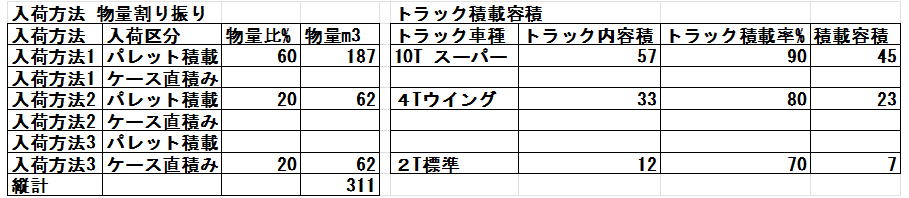
Subsection 4 Volume Ratio Allocation
Proportion of total receiving volume allocated across Receiving Methods 1 to 3. Method 1 Volume = (Method 1 Volume / Total Receiving Volume) * 100.
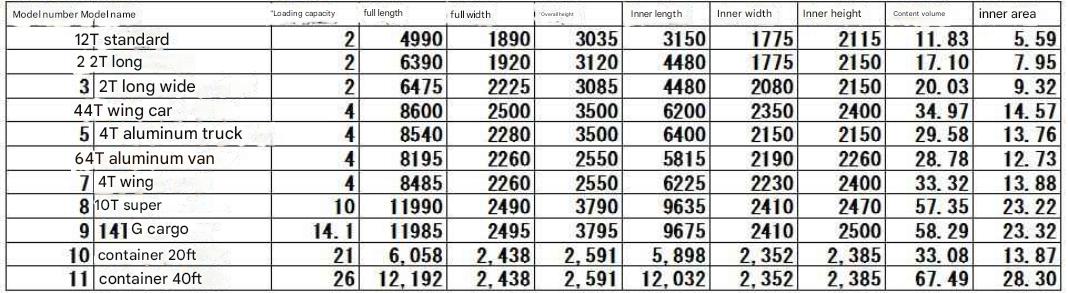
Subsection 5 Receiving Truck Vehicle Types
Internal container loading capacities vary across truck types. Users select a single vehicle type to establish capacity parameters. Note that selected vehicle types determine turning radiuses, directly impacting site plot layouts. Because receiving handles larger per-item quantities than shipping, larger trucks are utilized. Additionally, some trucks make deliveries across multiple centers (without offloading their entire load).
Container transport handles long-distance logistics, with 40ft containers frequently used for imported goods.
Subsection 6 Receiving Trucks and Load Factors
Subsection 7 Truck Cargo Loading Methods
Two loading methods exist: Palletized Loading and Floor Loose-Case Stacking. While palletized loading is preferred for rapid unloading, trucks under 4-ton capacity exhibit poor volume load factors under palletization, leading to widespread floor loose-case stacking. Heavy trucks can fit 2 pallets across internal bed width, but incur height volume loss equal to 2 pallet thicknesses (150 mm × 2).
Long-distance heavy haulers frequently favor floor loose-case stacking to avoid pallet thickness volume losses.
Loose-case stacking is calculated using case cubic volume. Palletized loading = Loose-Case Calculation * ((Pallet Count * 150 mm) / Internal Bed Height).
Subsection 8 Incorporating Empty Transport Equipment in Floor Space
In palletized loading, receiving bay floor space equals staging space plus temporary storage area for returned empty pallets. In floor loose-case stacking, empty pallet temporary staging area is calculated as 0.
Subsection 9 Number of Receiving Bays
A receiving bay is a building loading dock door where receiving trucks dock for unloading. Required bay count equals total docks needed during peak 1-hour windows. Formula: Cumulative Hourly Berthing Time (minutes) / 60 minutes. Berthing times per truck type are pre-configured parameters (refer to Receiving Space Calculation.xlsx).
Subsection 10 Receiving Space Area Multiplier Ratios
Factors omitted from theoretical receiving space calculations: clearance gaps between stored goods, forklift traffic aisles, administrative office spaces. Factors omitted from theoretical receiving bay counts: inspection time, shipping document processing, traffic interference delays between trucks.
These space and time requirements are incorporated using Area Multiplier Ratios.