Section 4 Inventory and Receiving Calculation

This section explains fundamental concepts and calculation logic for deriving inventory quantities and receiving volumes directly from shipping data.

1. Fundamental Relationship Between Shipping, Receiving, and Inventory

Material flow balance within a distribution center is expressed by the following mathematical formula:

Cumulative Receiving - Cumulative Shipping = Inventory Quantity

2. Logic for Estimating Inventory Quantity (Storage Volume)

In Tera Calculation, stable-operation inventory volume is calculated using the following formula:

Calculation Formula

Stable-Operation Inventory Volume = Safety Inventory + (Fluctuating Inventory / 2)

* Fluctuating Inventory = Maximum Inventory - Safety Inventory

3. Handling "Dead/Dormant Inventory" Not Appearing in Shipping Data

Not all inventory items move during the specific time window covered by analyzed shipping data. Low-velocity items in particular may exhibit zero shipping records.

Through these steps, preparations are complete for estimating overall distribution center volume from shipping data, covering not only "active moving volume" but also "dormant dead inventory."

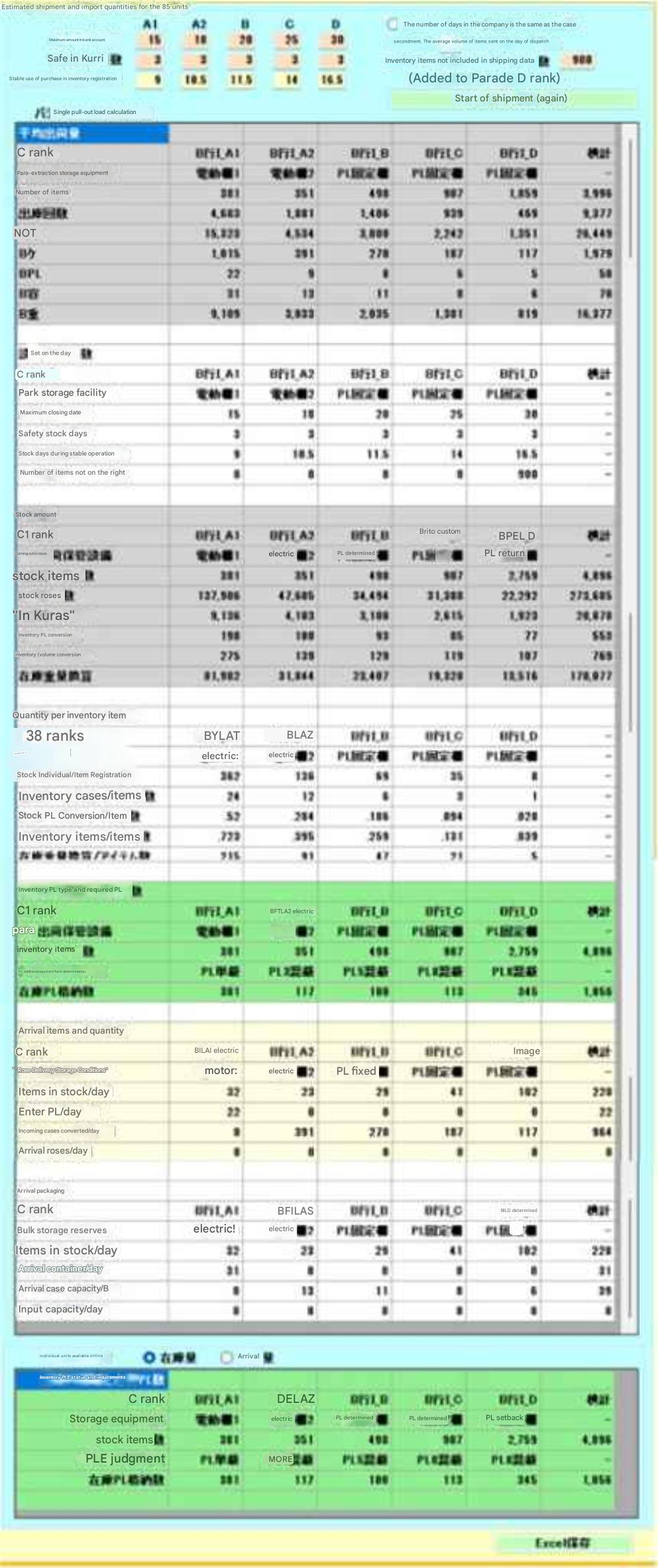
Subsection 1 Inventory and Receiving Calculation Screen

Inventory and Receiving Calculation Screen

1. Input Maximum Inventory Days and Safety Inventory Days per rank tier.
2. Input inventory item count not appearing in shipping data.
3. Calculate and output daily average shipping volume as baseline.
4. Calculate stable-operation inventory days:
Stable-Operation Inventory Volume (Storage Volume) = Safety Inventory + (Fluctuating Inventory / 2)
Fluctuating Inventory = Maximum Inventory - Safety Inventory (Refer to Section 2).
5. Calculate stable-operation inventory volume:
Inventory Volume = Daily Shipping Volume × Stable-Operation Inventory Days.
6. Calculate inventory volume per item:
Inventory Quantity per Item = Total Inventory Volume / Item Count.
7. Determine required pallet conversions and single/mixed-loading judgments.
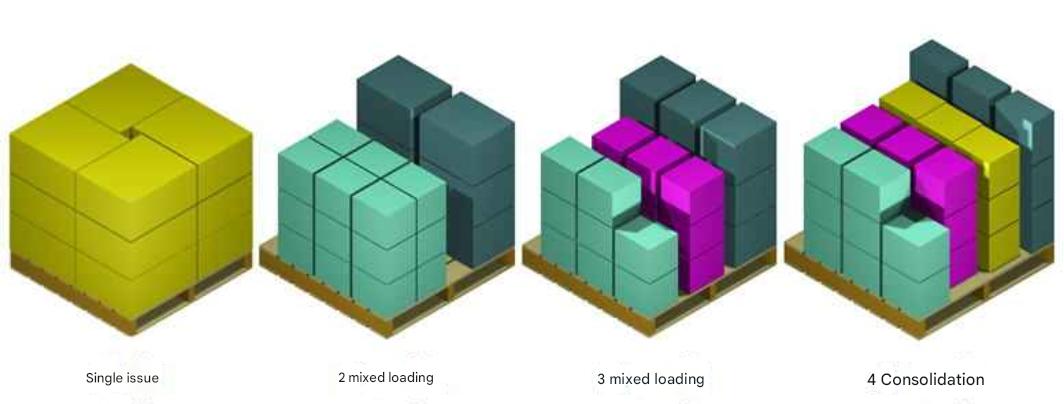
Required Pallet Conversion Judgment

8. Receiving item count and volume calculation:
Receiving Item Count = Inventory Item Count / Receiving Cycle.
Receiving Volume = Shipping Volume.

Receiving Volume Output (Verification):
Selecting "Inventory Volume" radio button displays inventory volume.
Selecting "Receiving Volume" radio button displays receiving volume.

9. Clicking the Excel button exports inventory and receiving data to an Excel file.

The above explanation takes piece shipping as an example; case shipping follows identical calculation logic.
Note: Inventory items not contained in shipping data are incorporated into piece shipping, while case shipping sets unlisted inventory items to 0.

Observations

"Inventory = Cumulative Receiving - Cumulative Shipping"; as noted earlier, while managing receiving volumes while monitoring shipping trends per item is key,
uncontrollable external factors exist, such as production lot sizes, volume purchase price tiers, and advance strategic buying driven by sales campaigns.

Looking company-wide, reducing distribution center inventory is not always the top priority; receiving volumes are determined through coordination between sales and purchasing divisions, directly reflecting overall corporate management capabilities in inventory levels.