Distribution Center Systems Planning by EIQ Method
Logistics Systems Consultant
Chairman, EIQ Research Society
Shin Suzuki
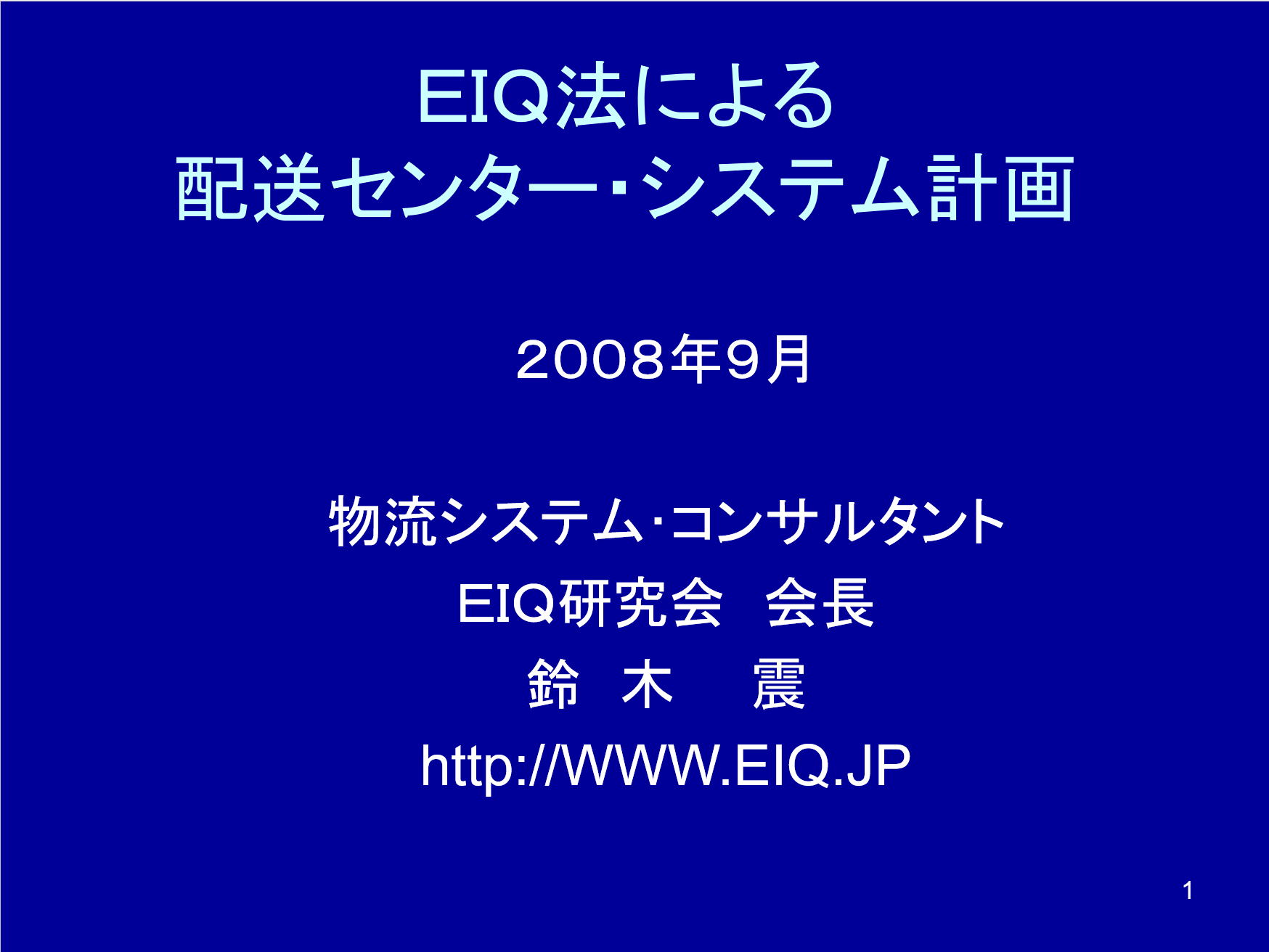
An overview slide of distribution center system planning using EIQ analysis by Mr. Shin Suzuki. It explains the flow from the characteristics of logistics systems to specific analytical methods and actual system design.
"Shin" in Earthquake (Shinsai)

Explains the origin of Mr. Suzuki's given name, "Shin" (震). He was born in the year of the Great Kanto Earthquake.
Basic Knowledge of Logistics System Planning
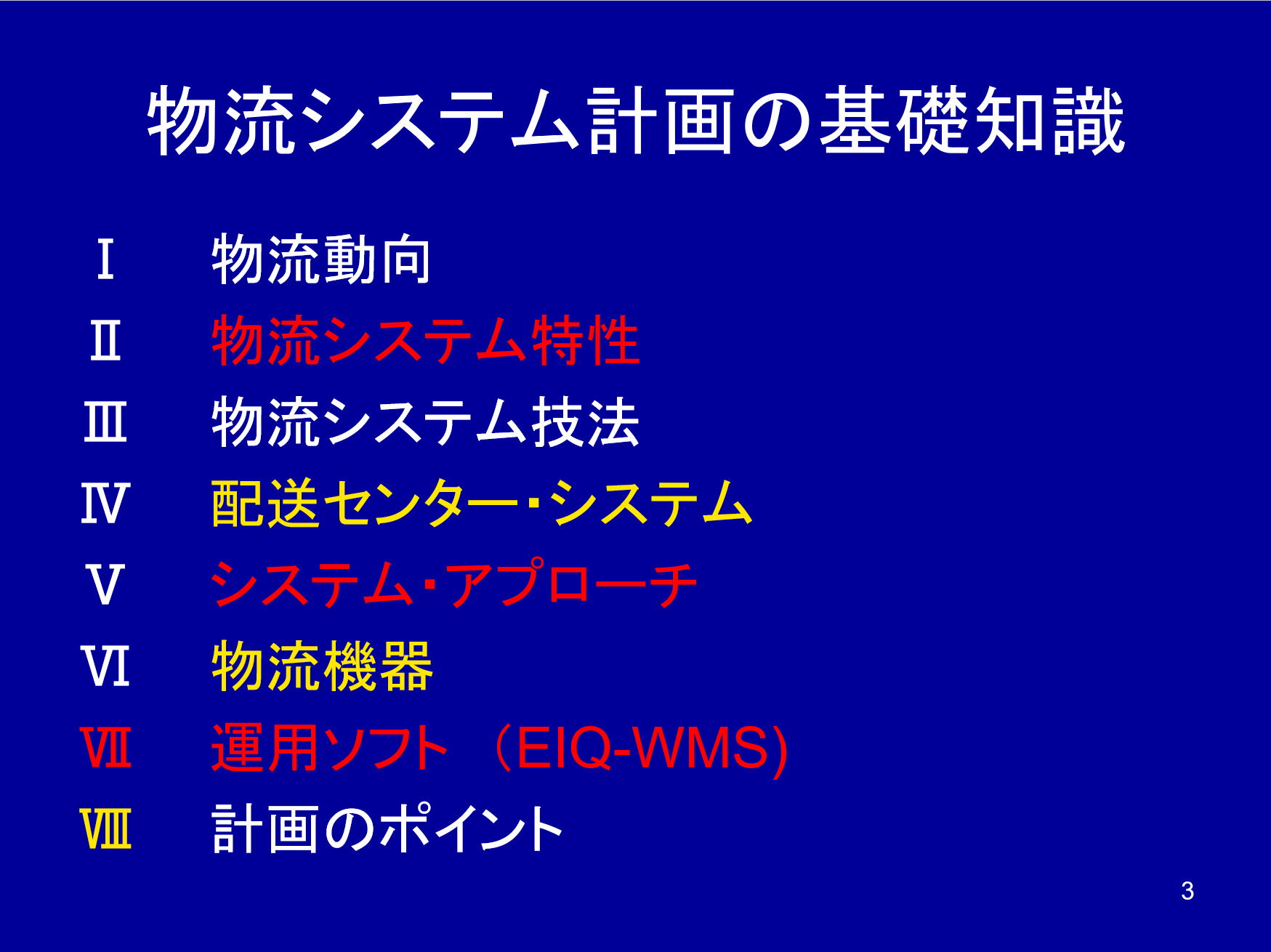
The overall picture of basic knowledge required when planning a logistics system. It consists of 8 steps: trends, characteristics, techniques, actual systems, approaches, equipment, operational software, and key planning points.
I. Logistics Trends
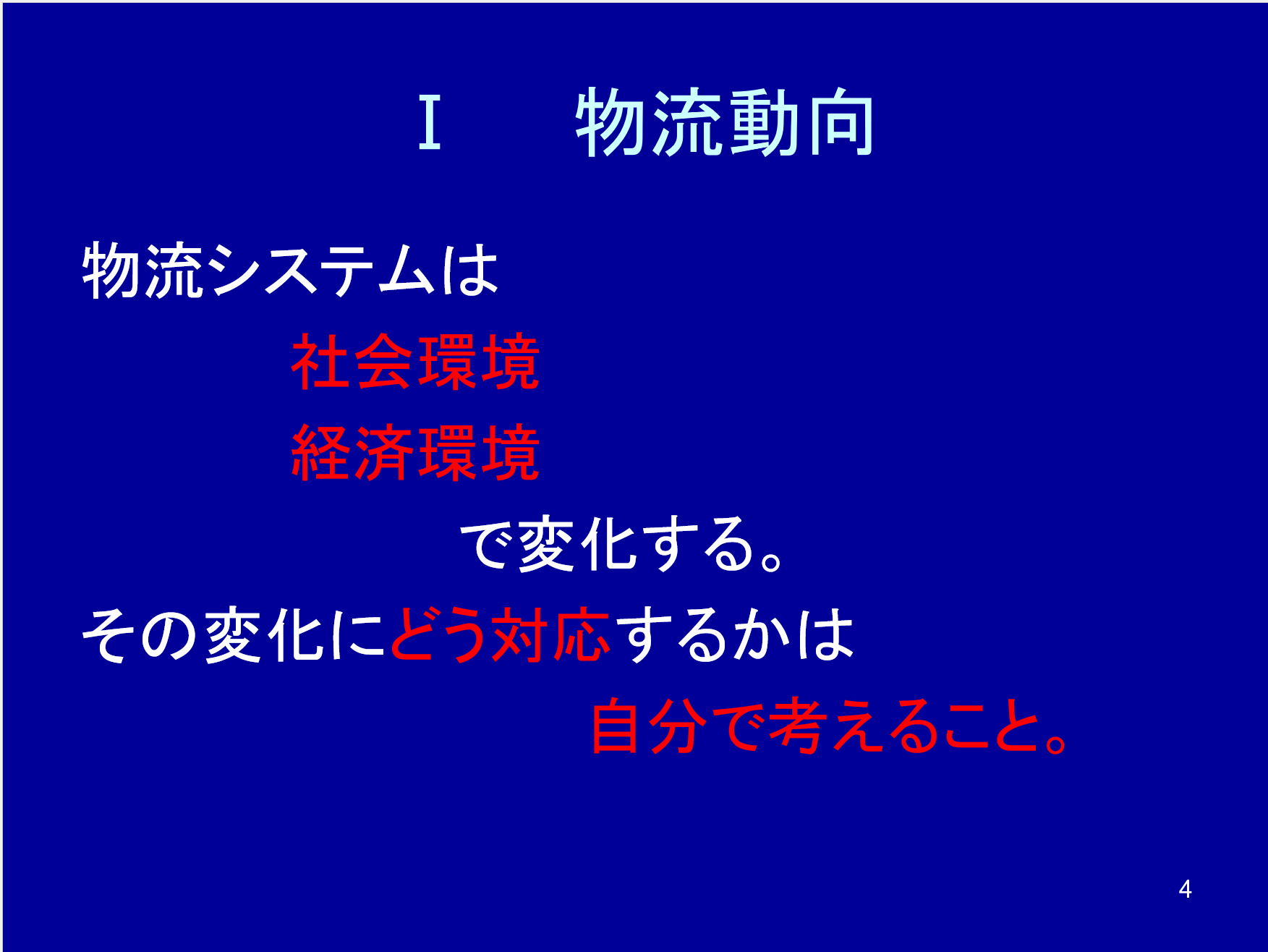
Recent trends surrounding the logistics industry. It analyzes the impact of business environment changes, such as diversifying customer needs and IT advancement, on logistics.
Socioeconomic Issues
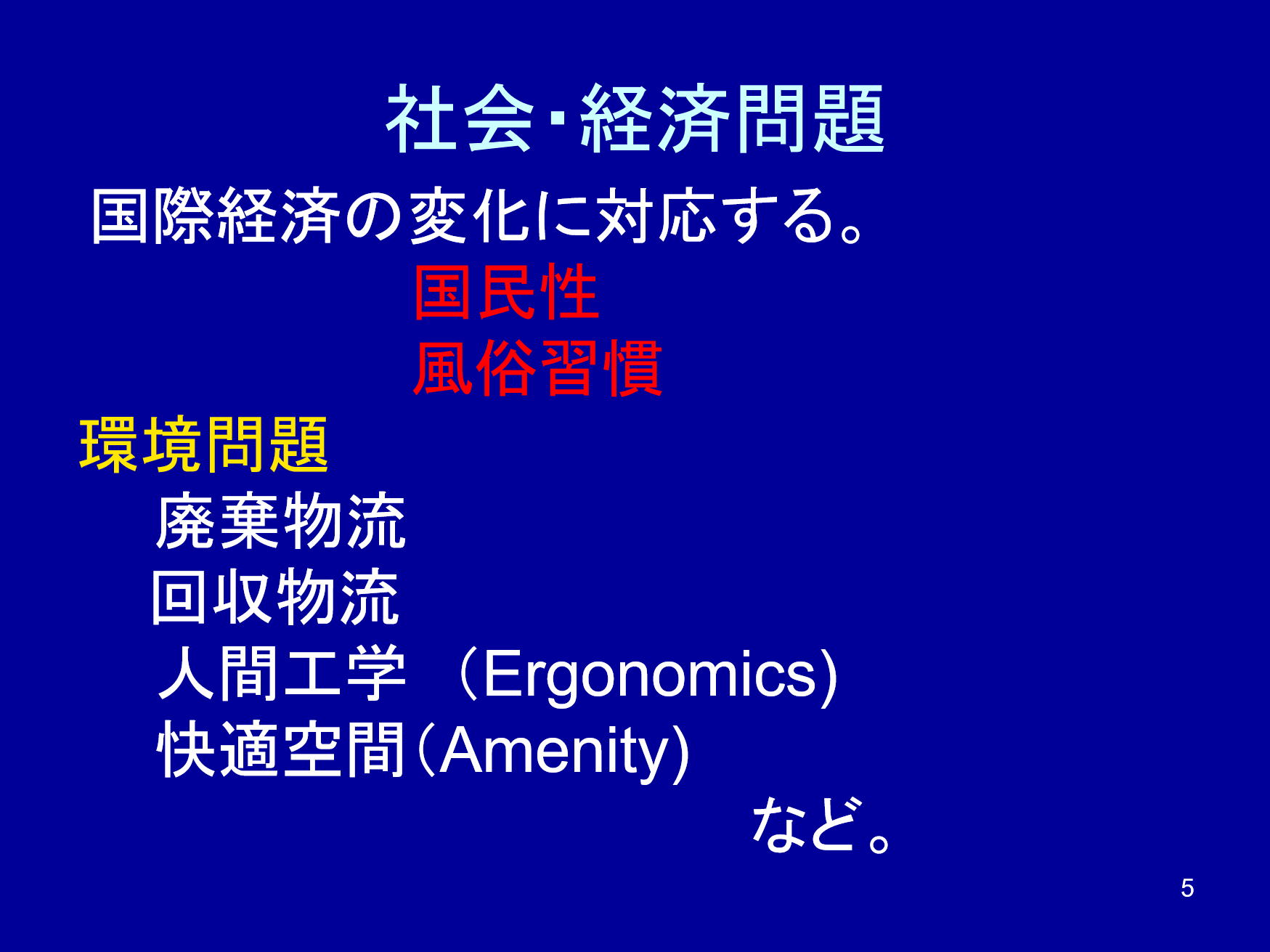
Socioeconomic challenges affecting logistics. Issues from a macro perspective, such as labor shortages, environmental issues, and globalization, are listed.
Philosophy & Thinking Are Crucial
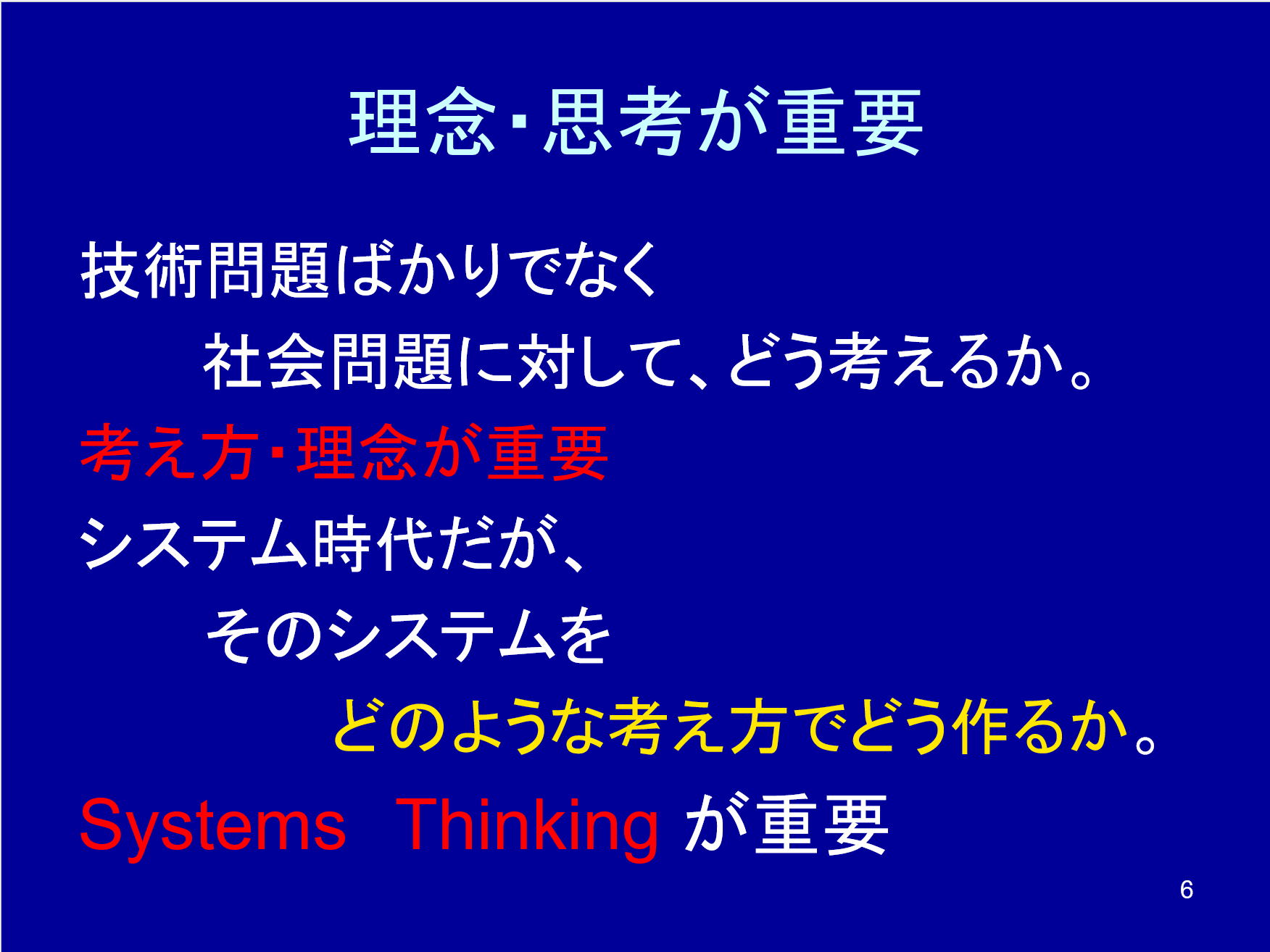
Emphasizes that in system building, it is not just technical theory, but the "philosophy" and "thinking (Systems Thinking)" regarding the purpose of creating the system that matter.
II. Logistics System Characteristics
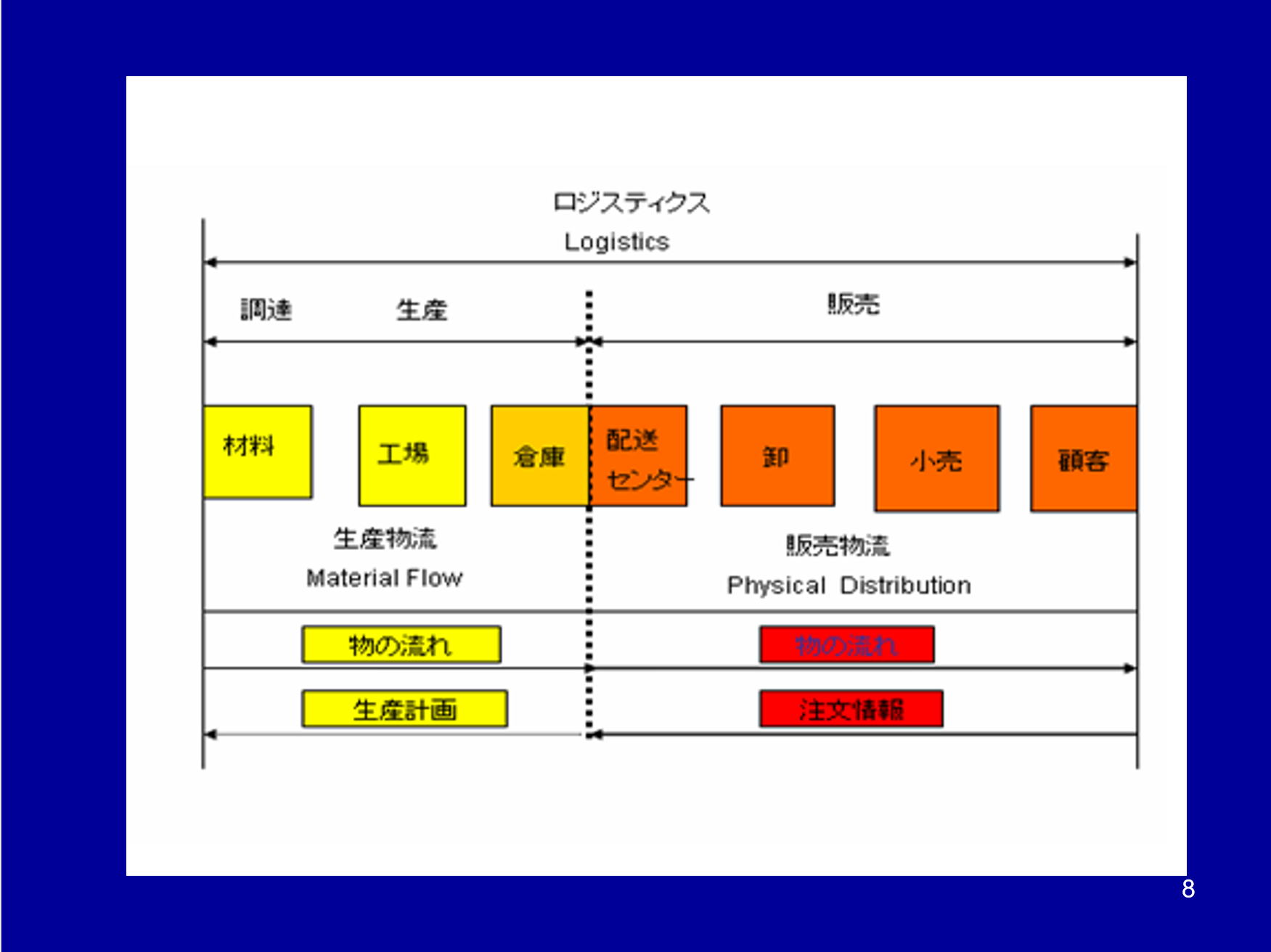
A section explaining characteristics unique to logistics systems. It shows how to perceive systems amid intertwined, complex factors.
Production Logistics + Sales Logistics
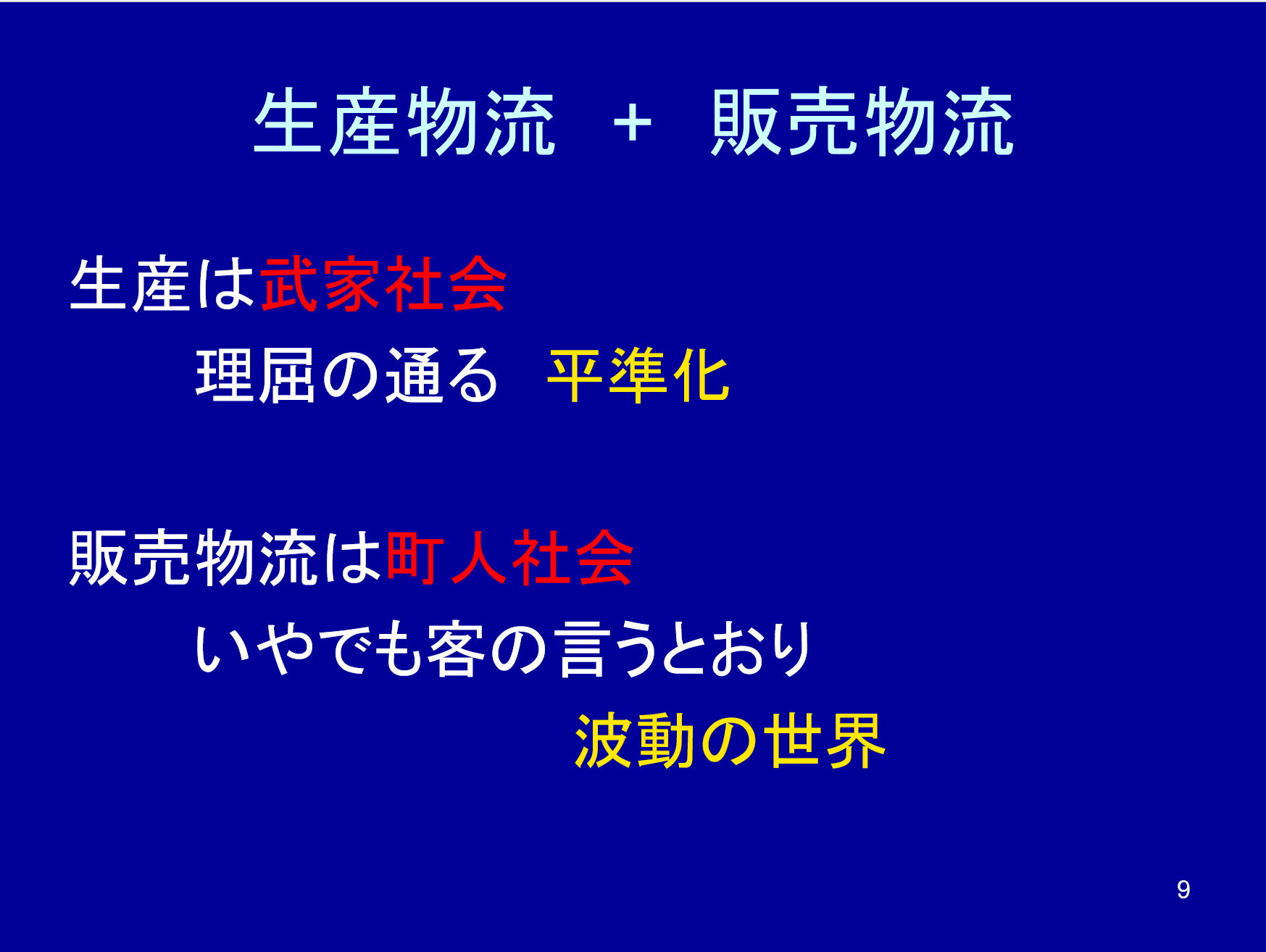
In-factory "production logistics" and "sales logistics" that deliver to customers have significantly different characteristics. It is necessary to understand the differences between both and build suitable systems for each.
Logistics System Characteristics
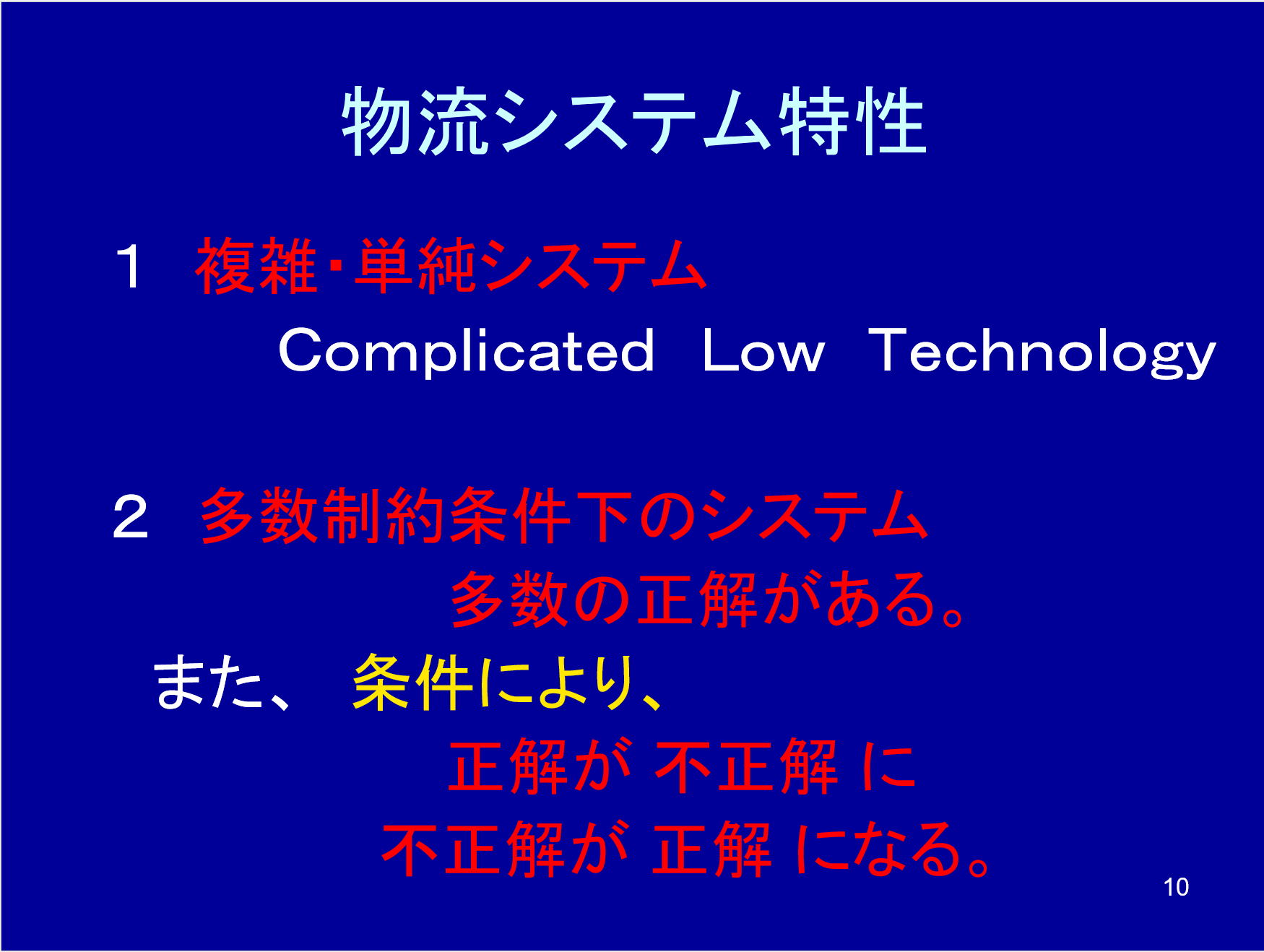
Logistics systems are "complex/simple systems" established under numerous constraints, requiring flexible responsiveness where correct answers change depending on conditions.
Chaotic and Fractal
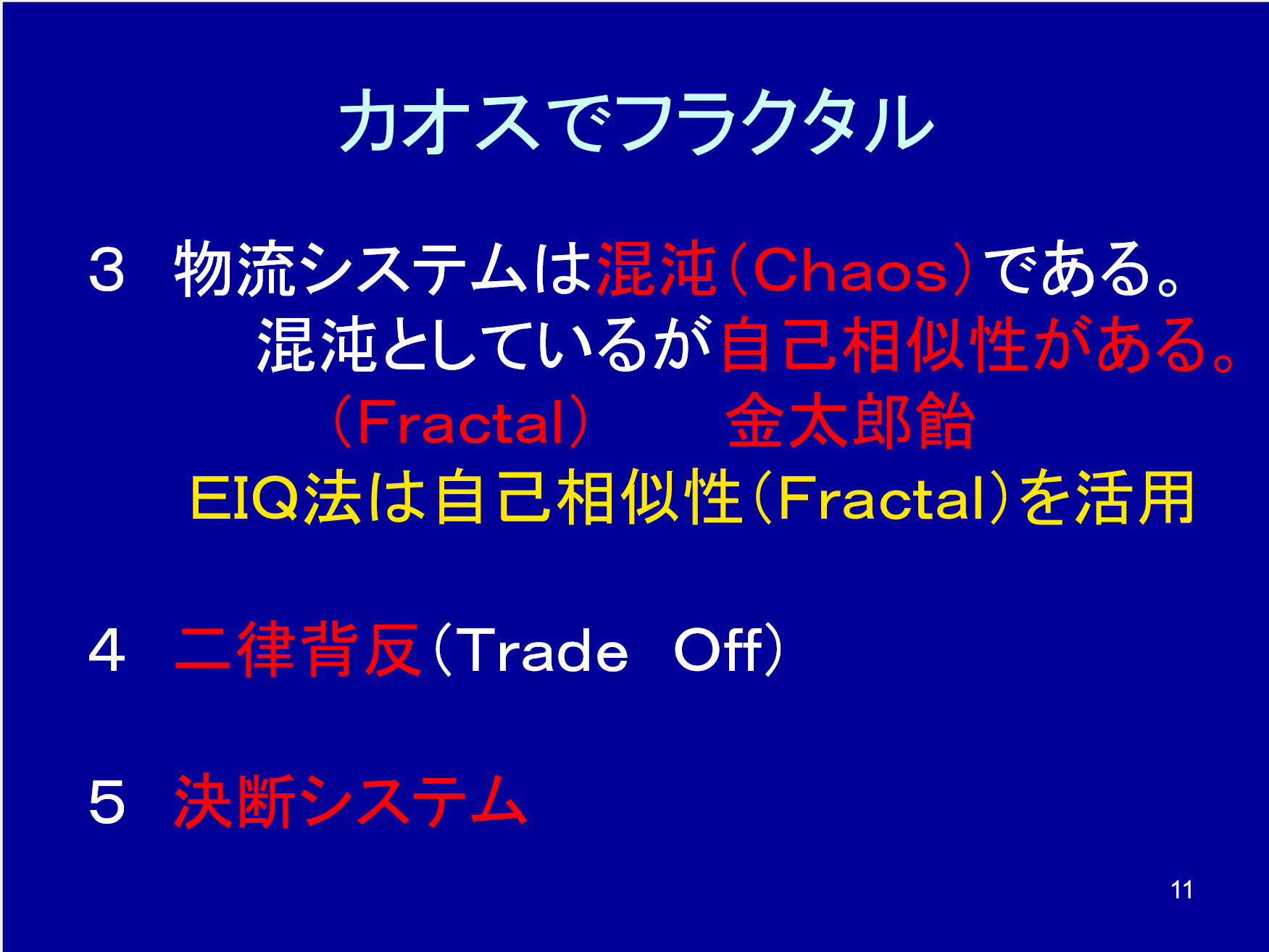
Logistics data appears chaotic (disordered) at first glance, but suggests that certain regularities, like fractals (self-similarity), are hidden. EIQ analysis is a tool to uncover these regularities.
Logistics Systems Are...
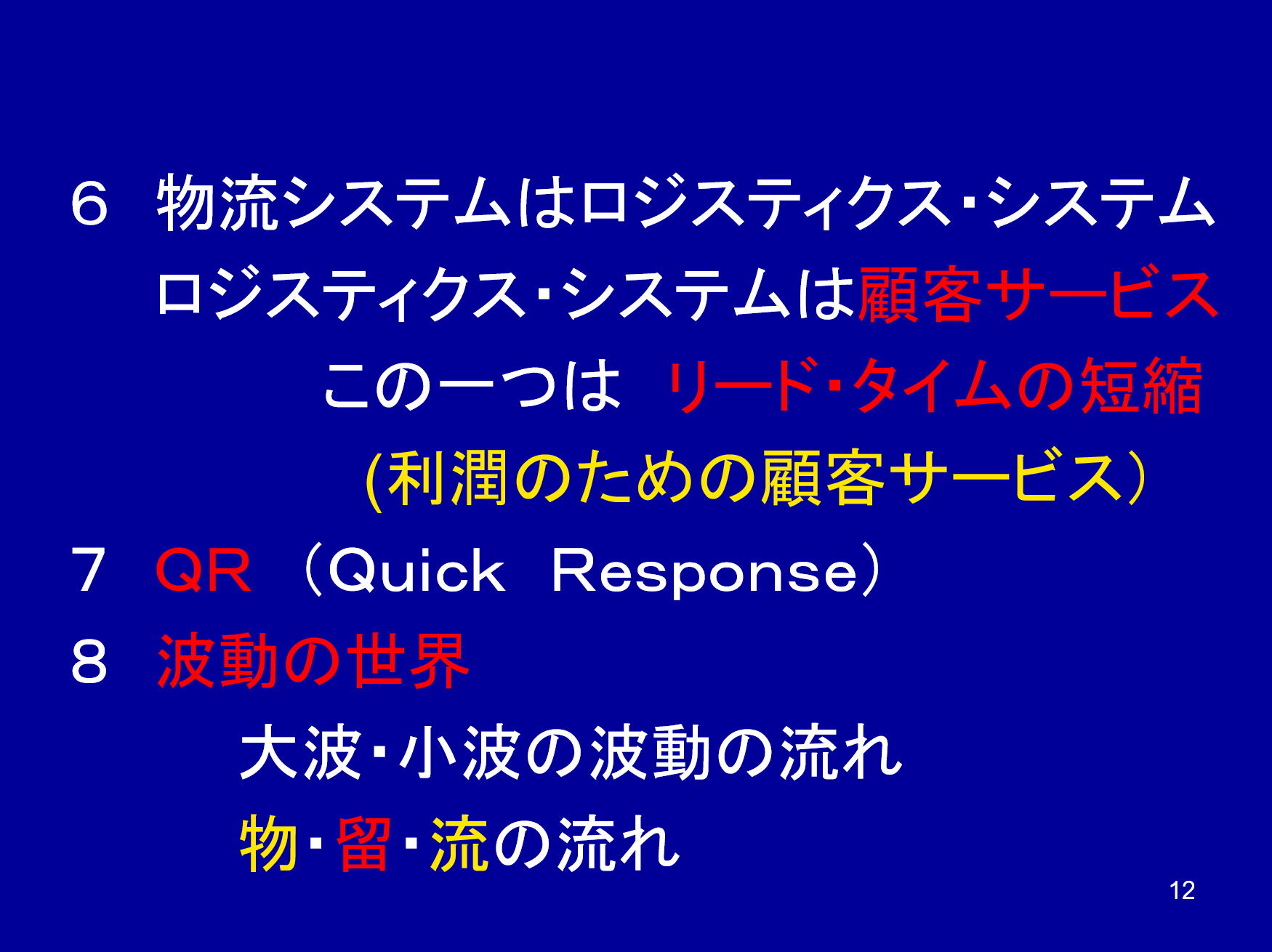
Defines that automation and cost reduction are not the ultimate goals of a logistics system; rather, it should be built on a basic system derived from EIQ data to fulfill the mission of "delivering accurately by the designated date".
III. Logistics System Techniques
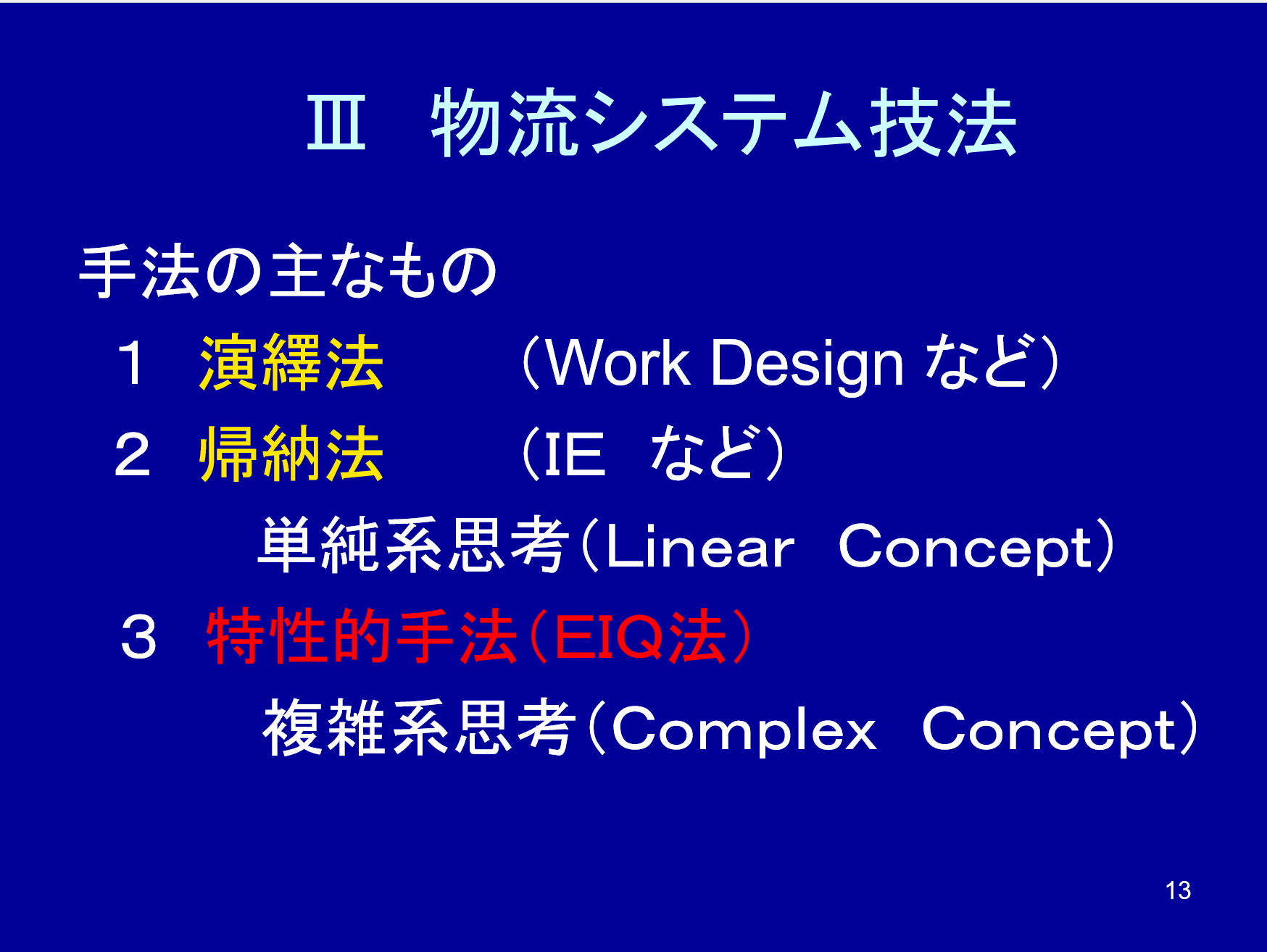
An overview section of various techniques (IE methods, EIQ methods, etc.) for constructing and analyzing systems.
Proper Differentiation of Methods is Necessary
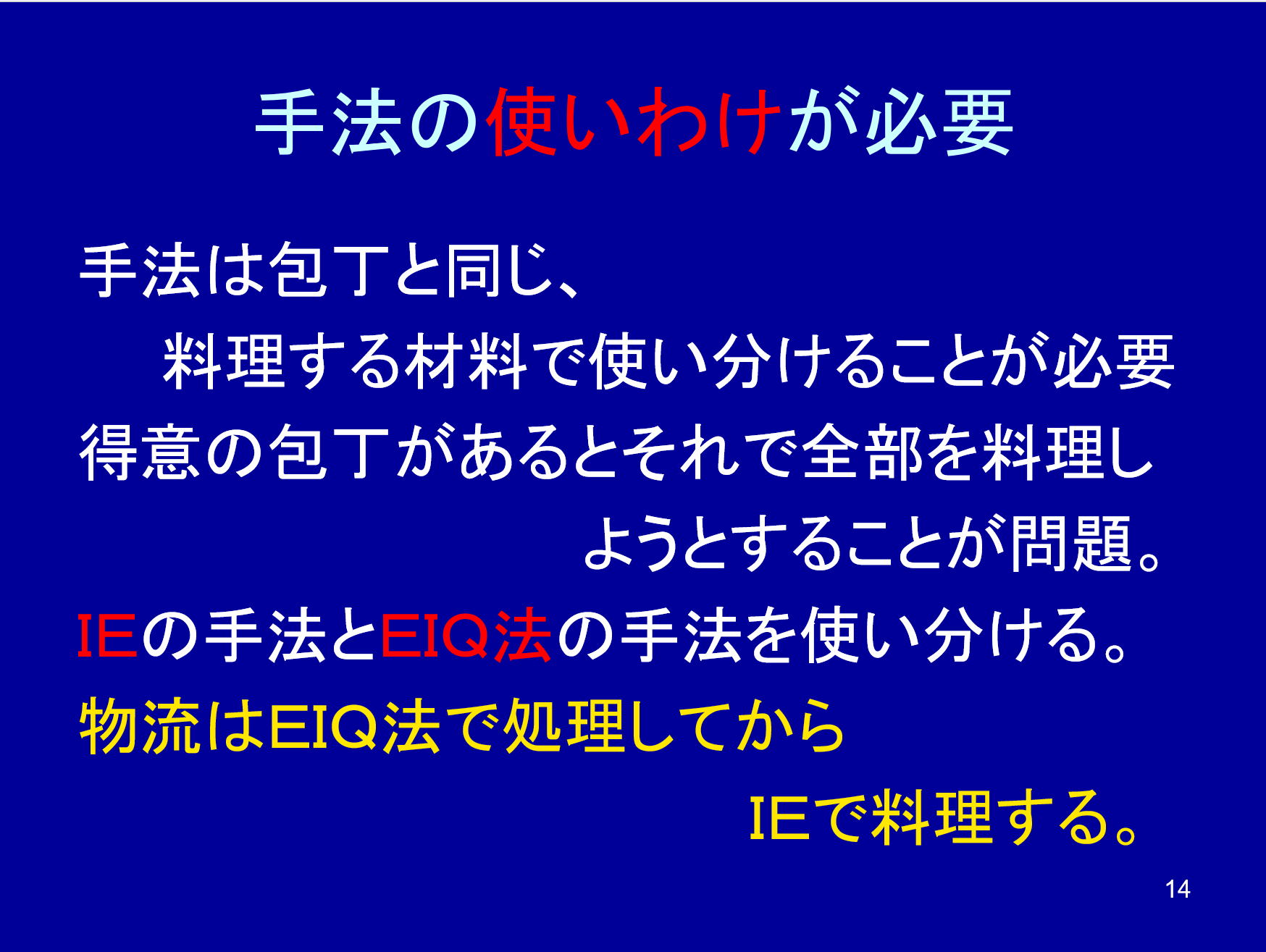
Teaches the importance of properly differentiating and using methods such as IE (Industrial Engineering) and EIQ analysis according to the nature and purpose of the problem.
IE and EIQ Method
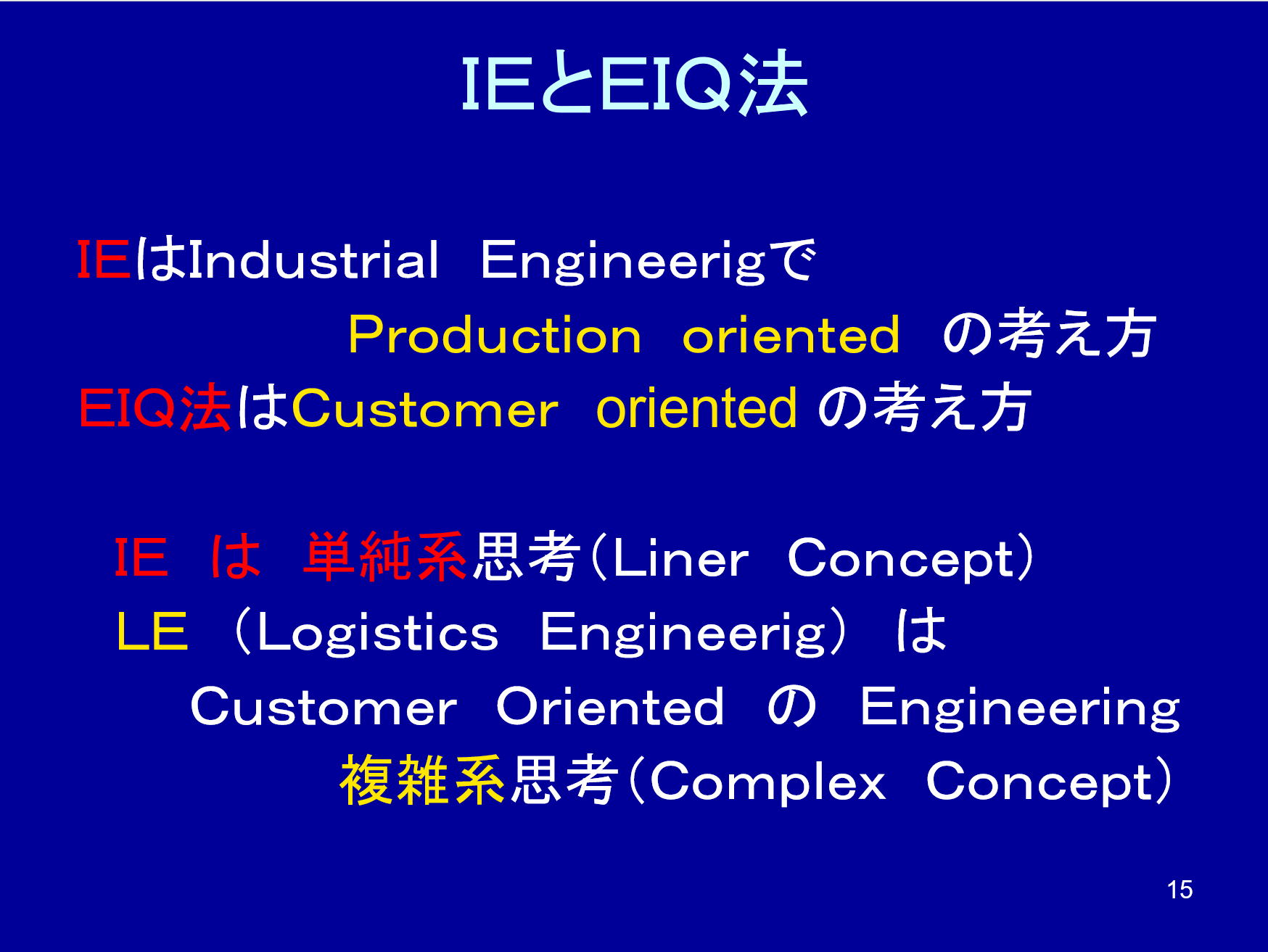
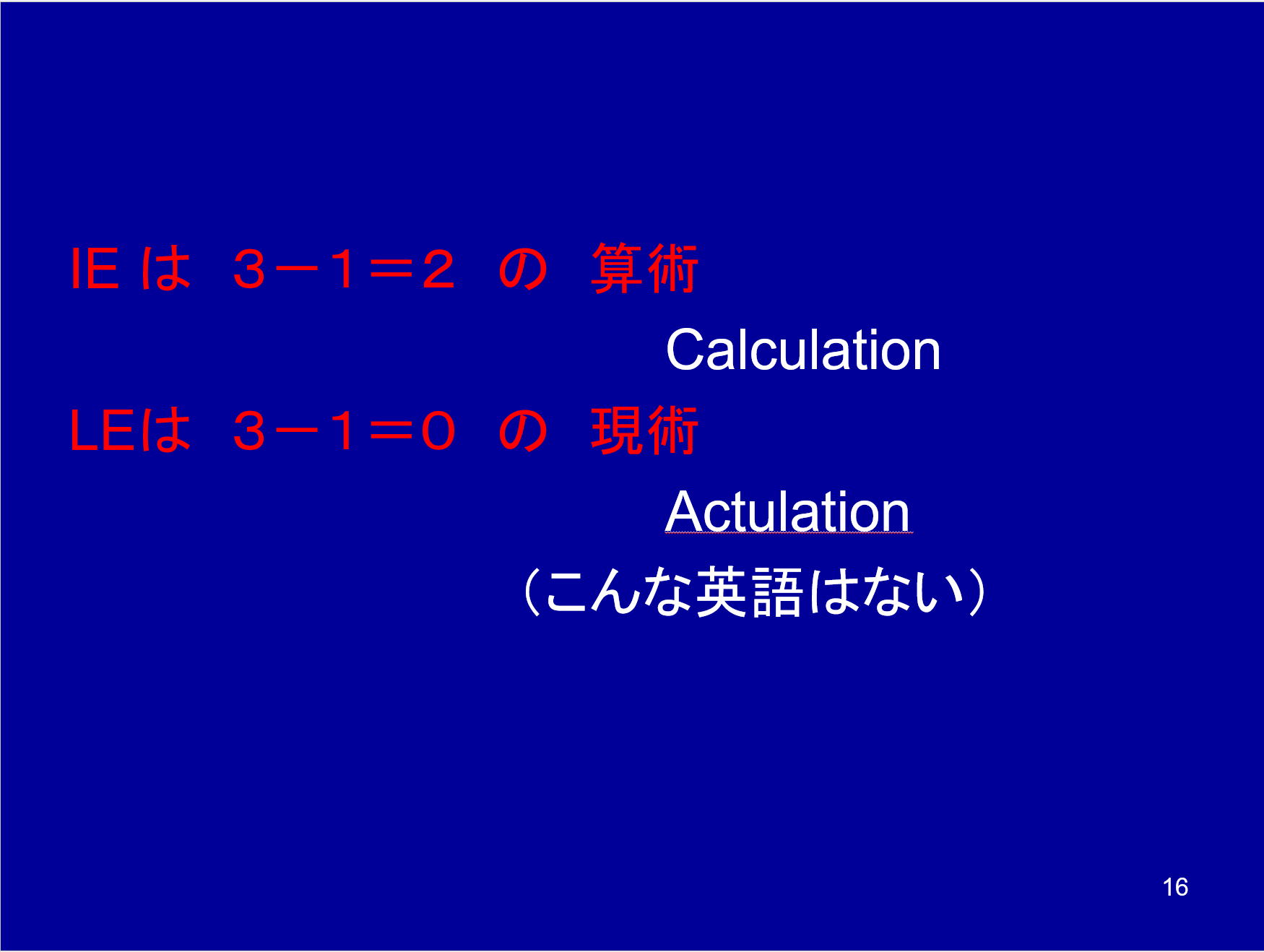

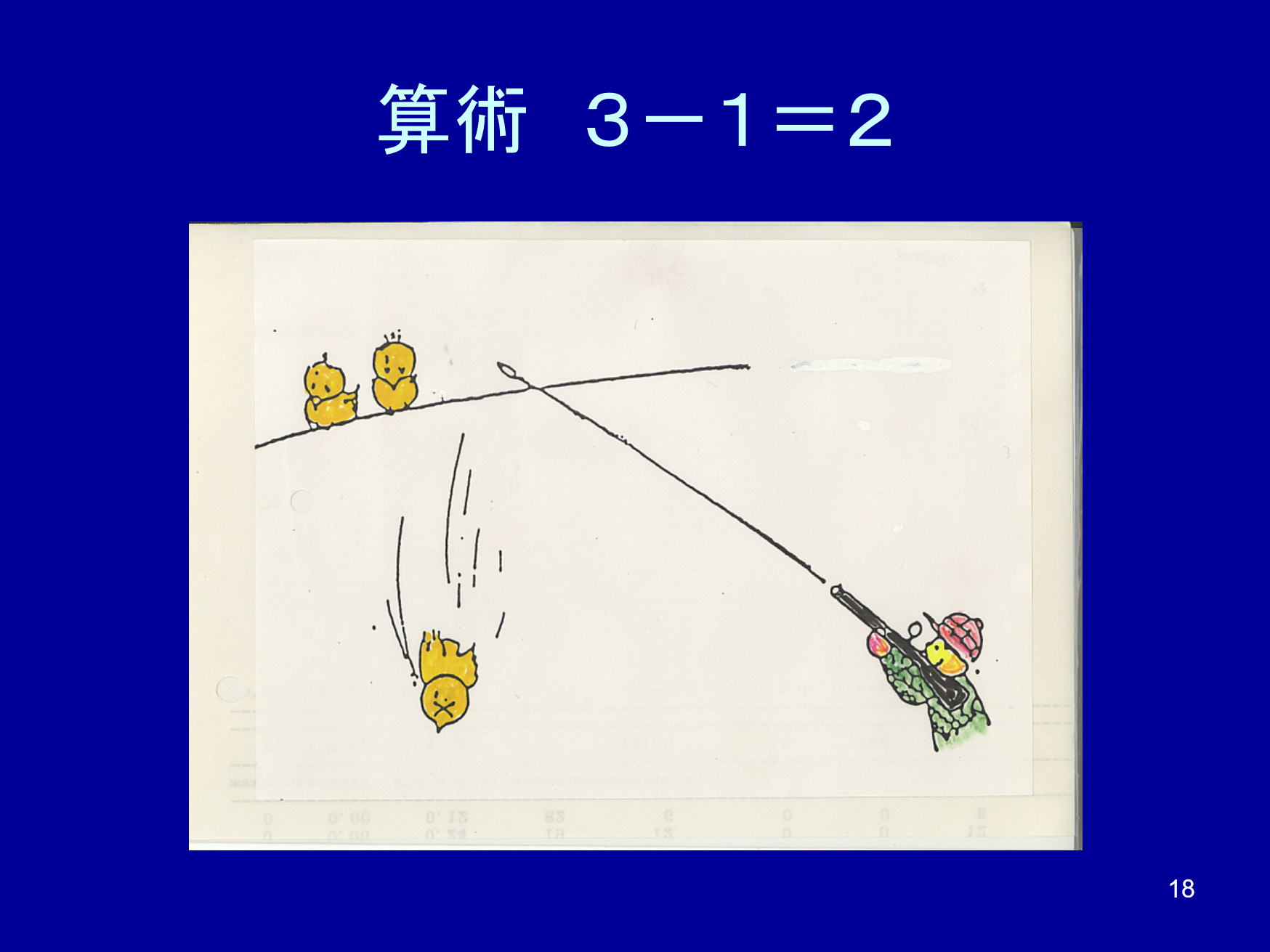

Explains the differences between IE methods aiming for work standardization/efficiency and the EIQ method for grasping logistics characteristics from shipping data, as well as how to combine and leverage both ("dual-wielding").
Reading Between the Lines
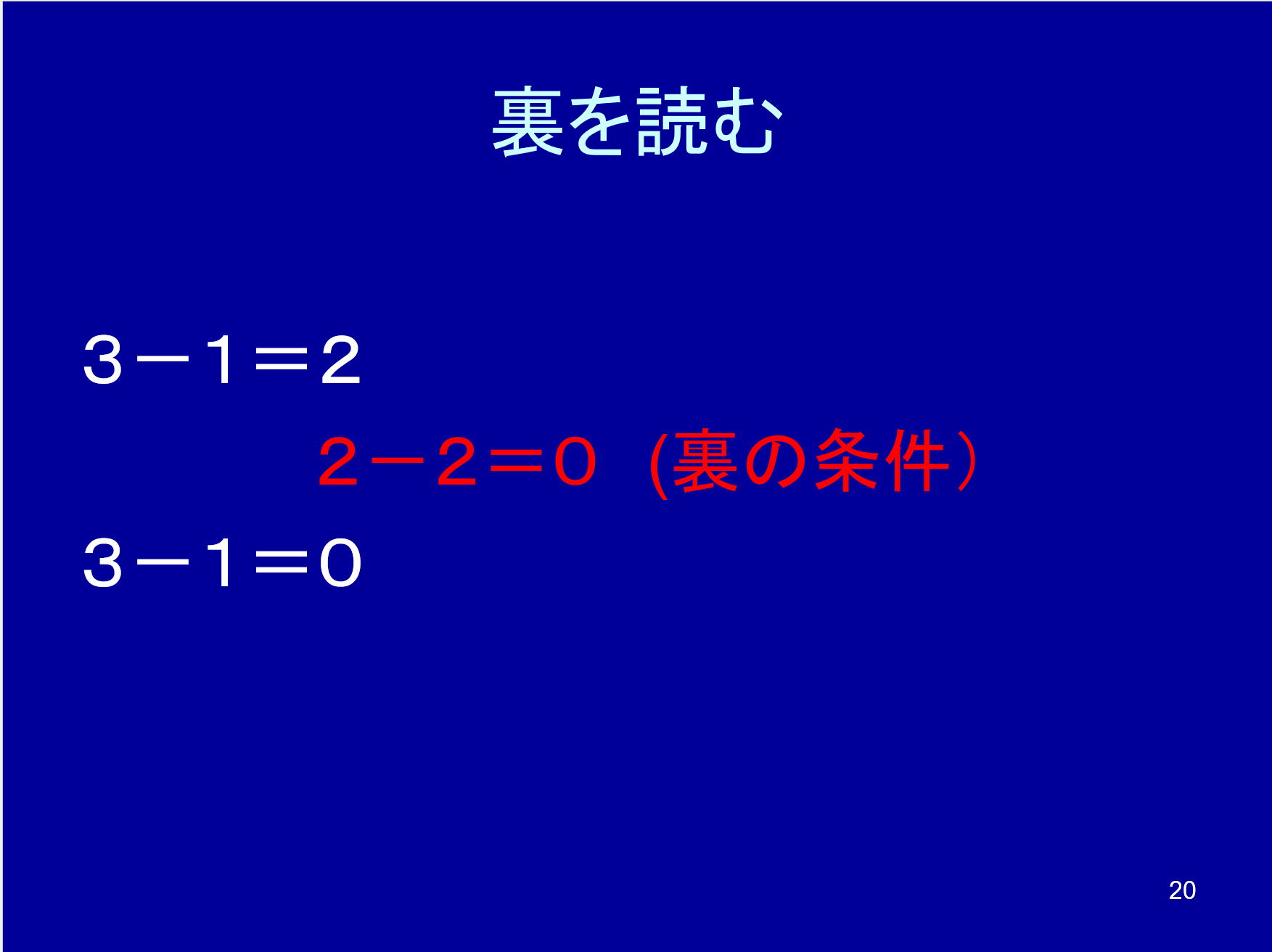
Shows the importance of reading not just superficial data, but underlying factors ("why did the data turn out like this?", operational rules, constraints, etc.) behind it.
IV. Distribution Center Systems
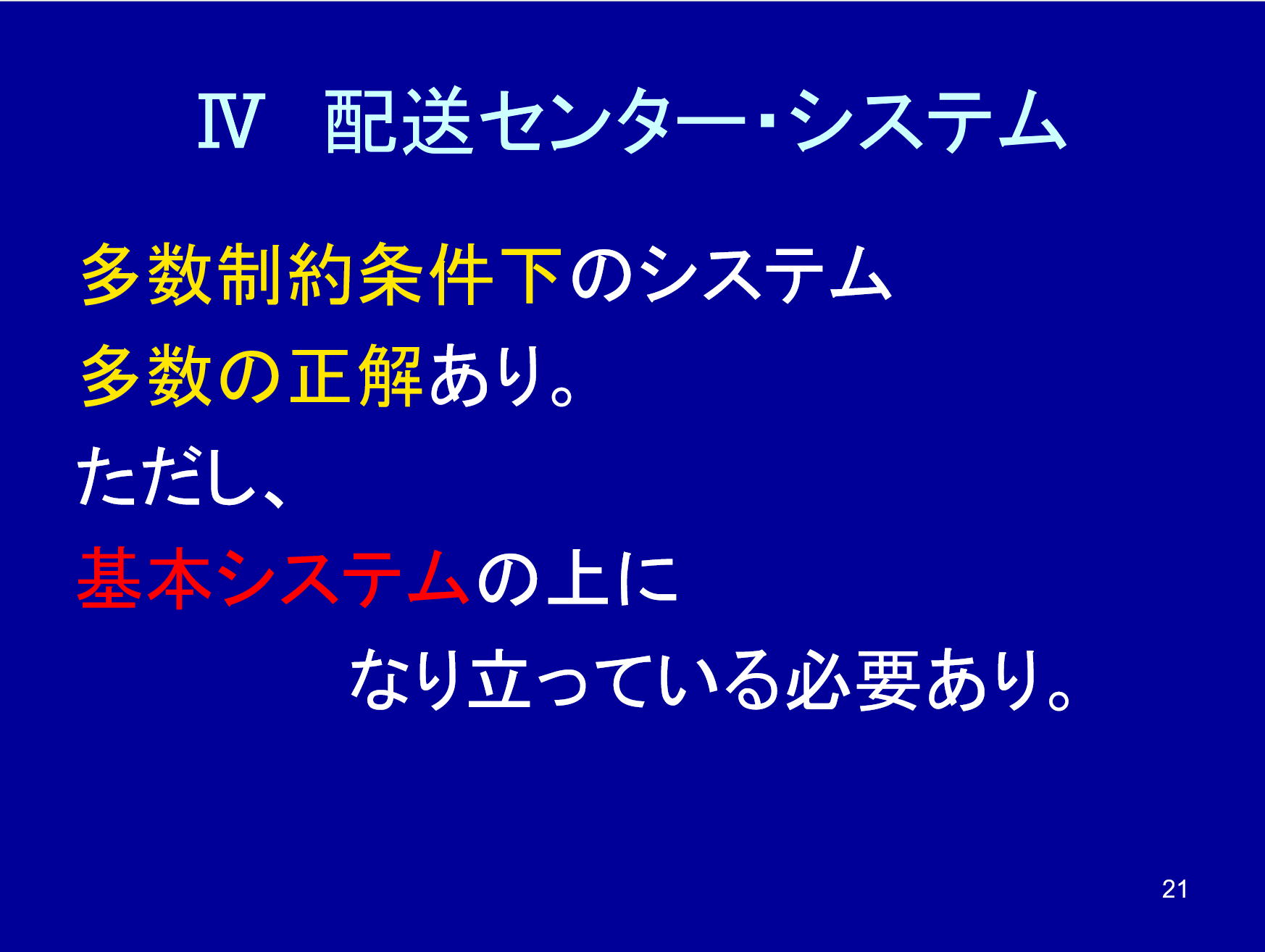
A section explaining specific systems, functions, and picking methods in distribution centers.
Basic Systems of a Distribution Center

Illustrates the basic material flow (system) in a distribution center from receiving to storage, picking, and shipping.
Distribution Center Characteristics
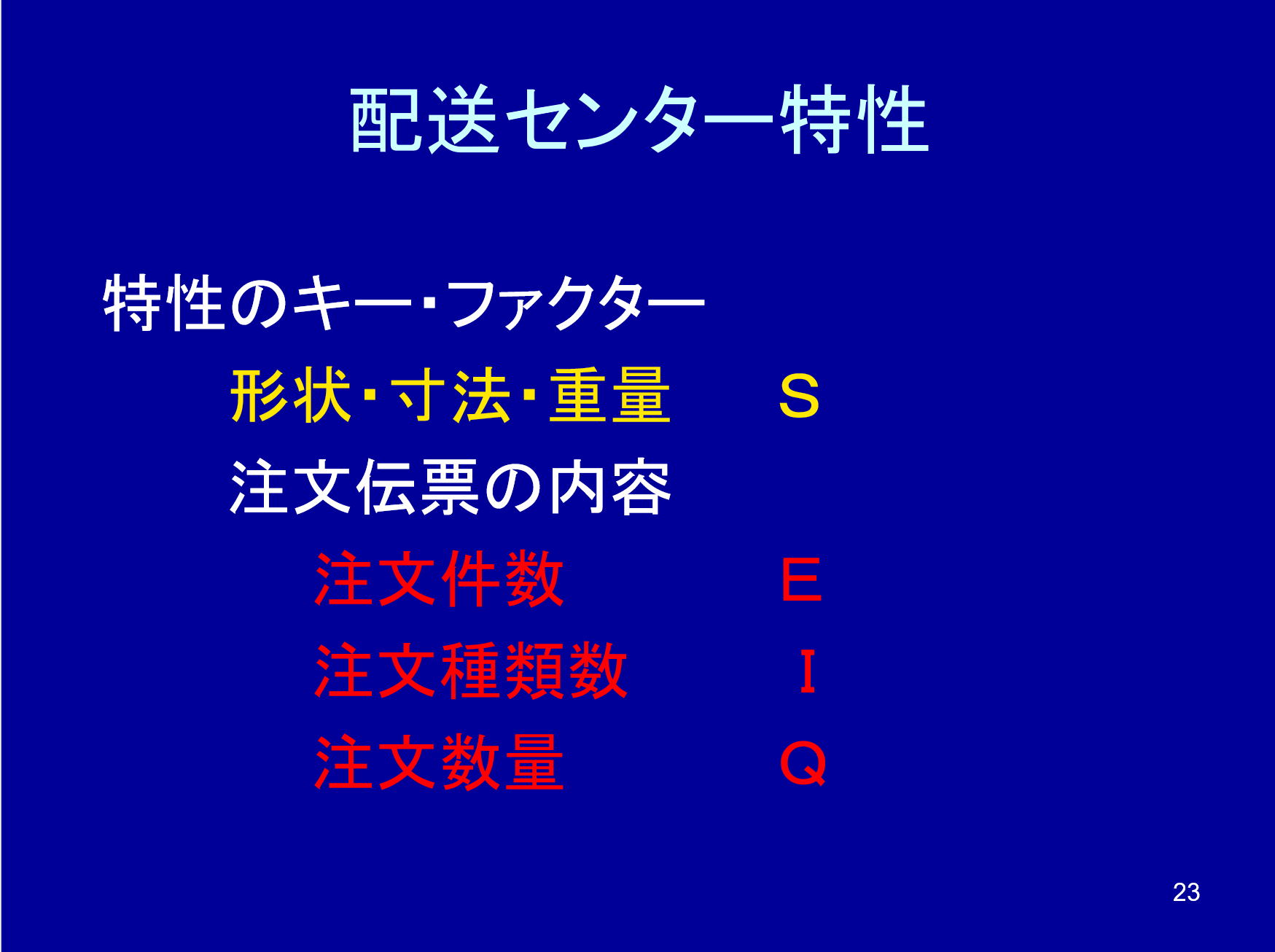
Summarizes the functional characteristics of distribution centers, such as storage-type (DC) and transfer-type (TC), as well as the characteristics of handled items.
Distribution Center Planning

Outlines basic concepts and steps when planning a new distribution center or improving an existing one.
V. Systems Approach
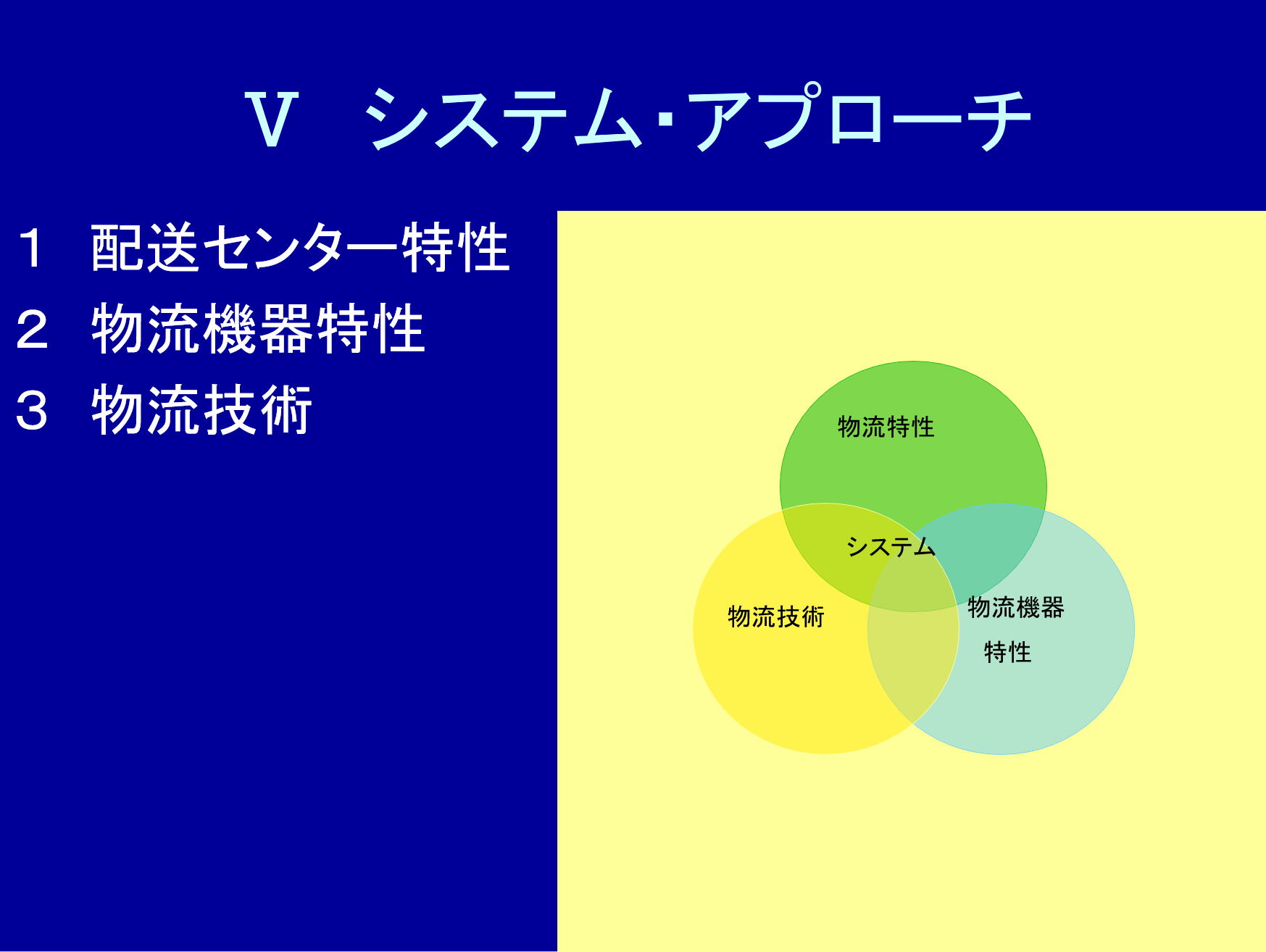
A section on methodologies for taking a bird's-eye view of the entire system and approaching it logically.
The EIQ Method for Sales Logistics
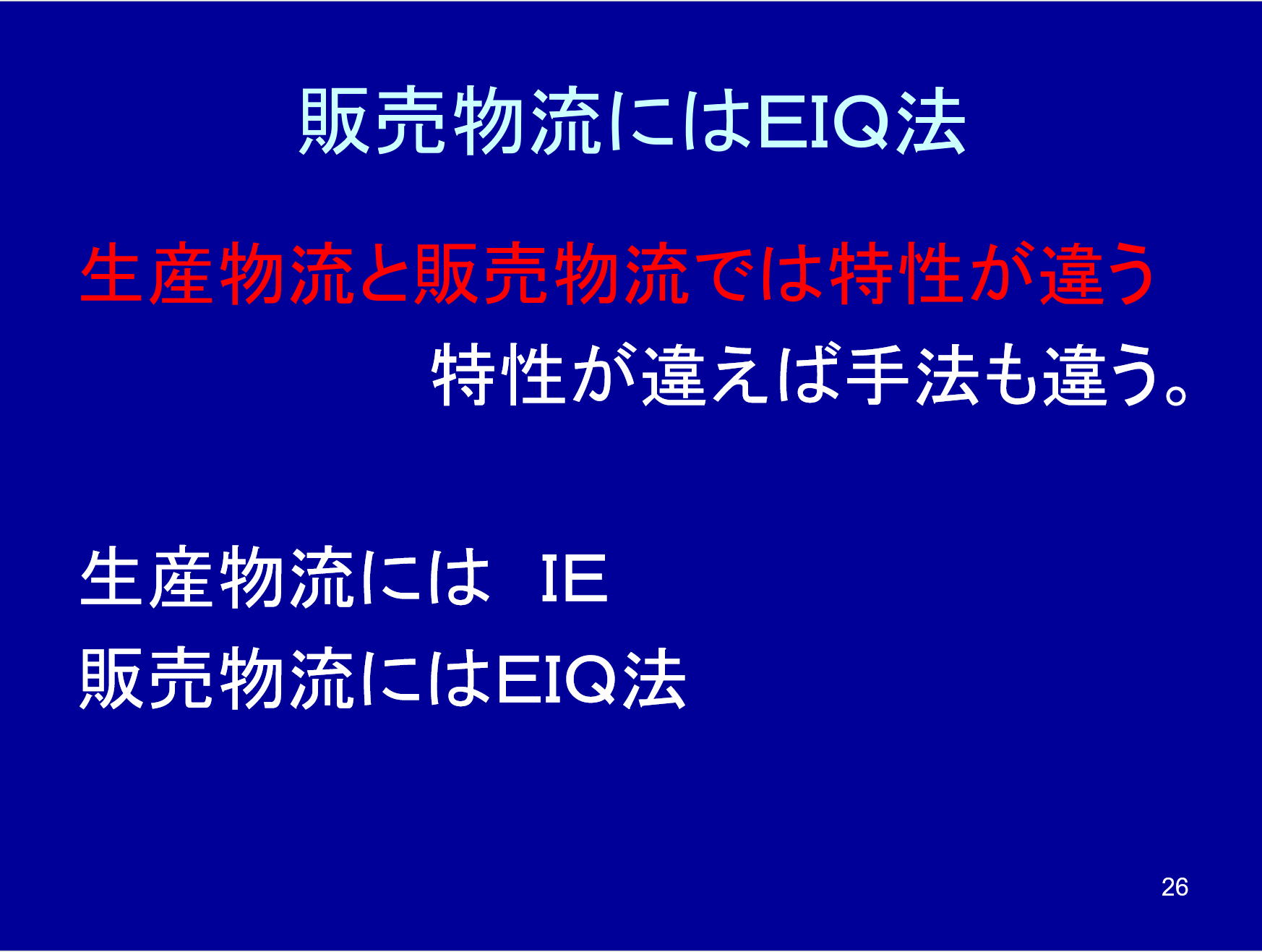
States that unlike production logistics, the EIQ method based on actual shipping performance is indispensable for designing "sales logistics" which must handle high uncertainty and diverse orders.
Systems Thinking
Re-emphasizes the importance of "Systems Thinking," aiming for overall optimization without falling into local optimization.
VI. Logistics Equipment
A section on selecting appropriate logistics equipment (racks, automated warehouses, sorters, etc.) based on analysis results.
Selection of Logistics Equipment
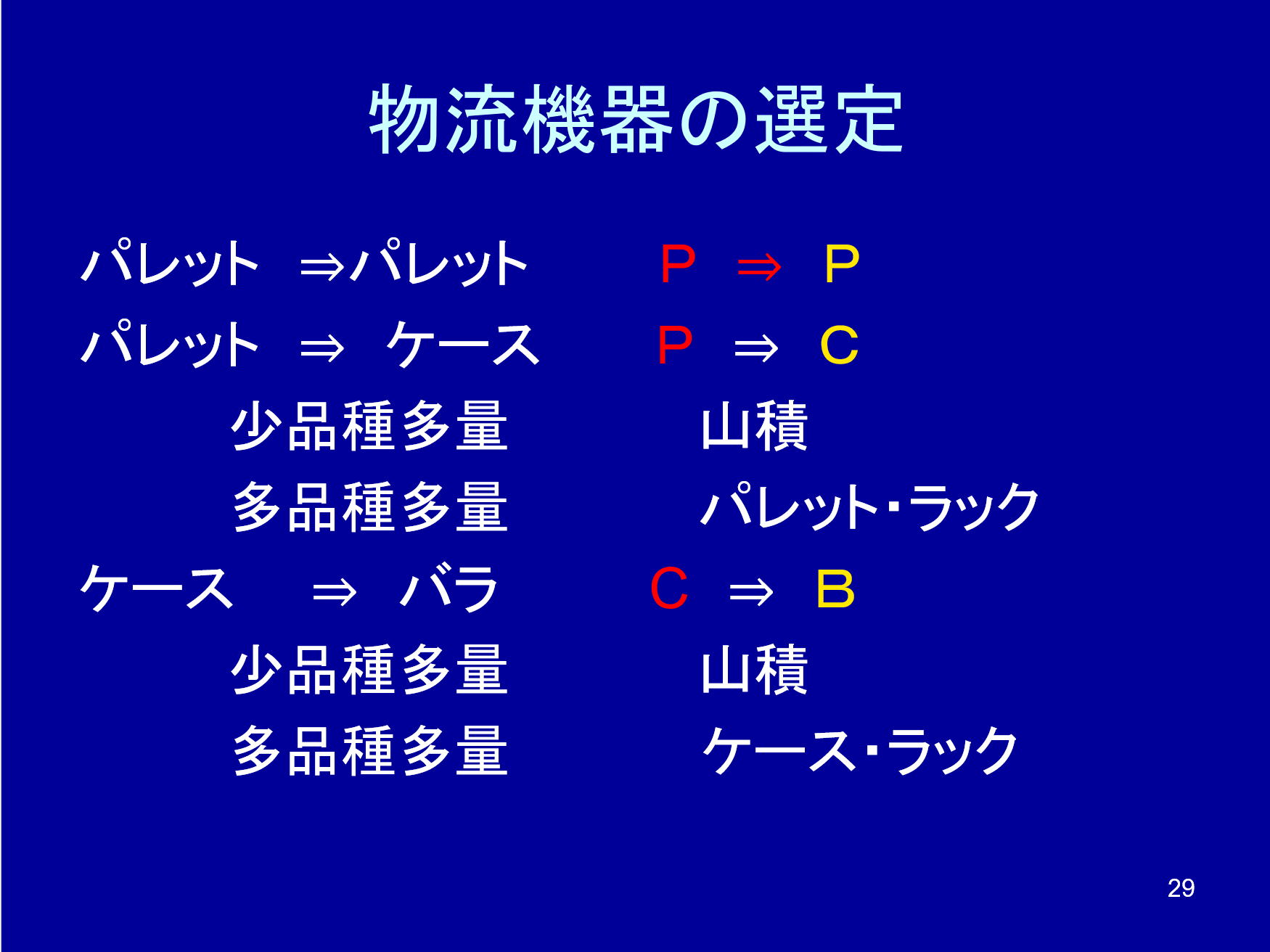
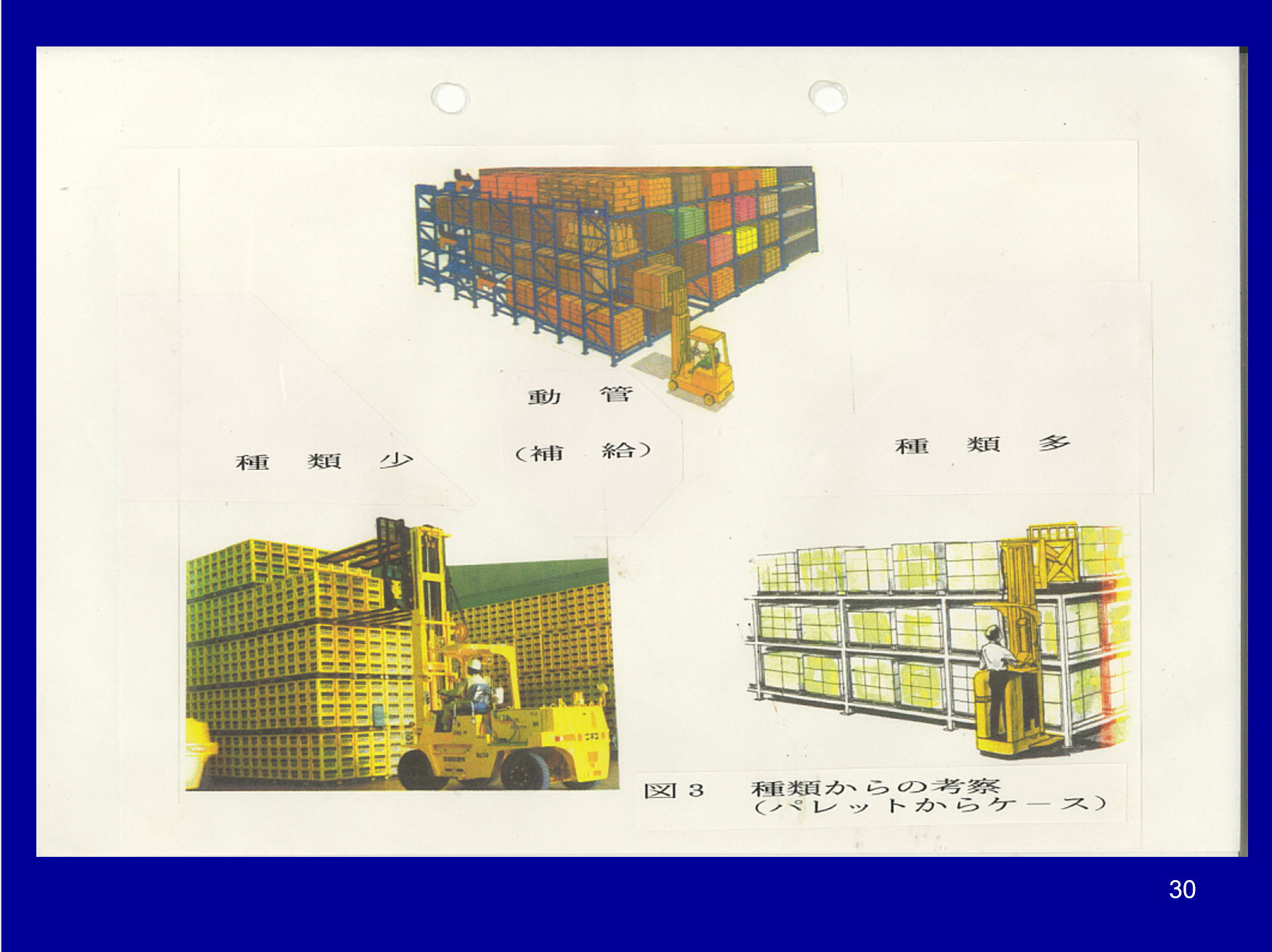
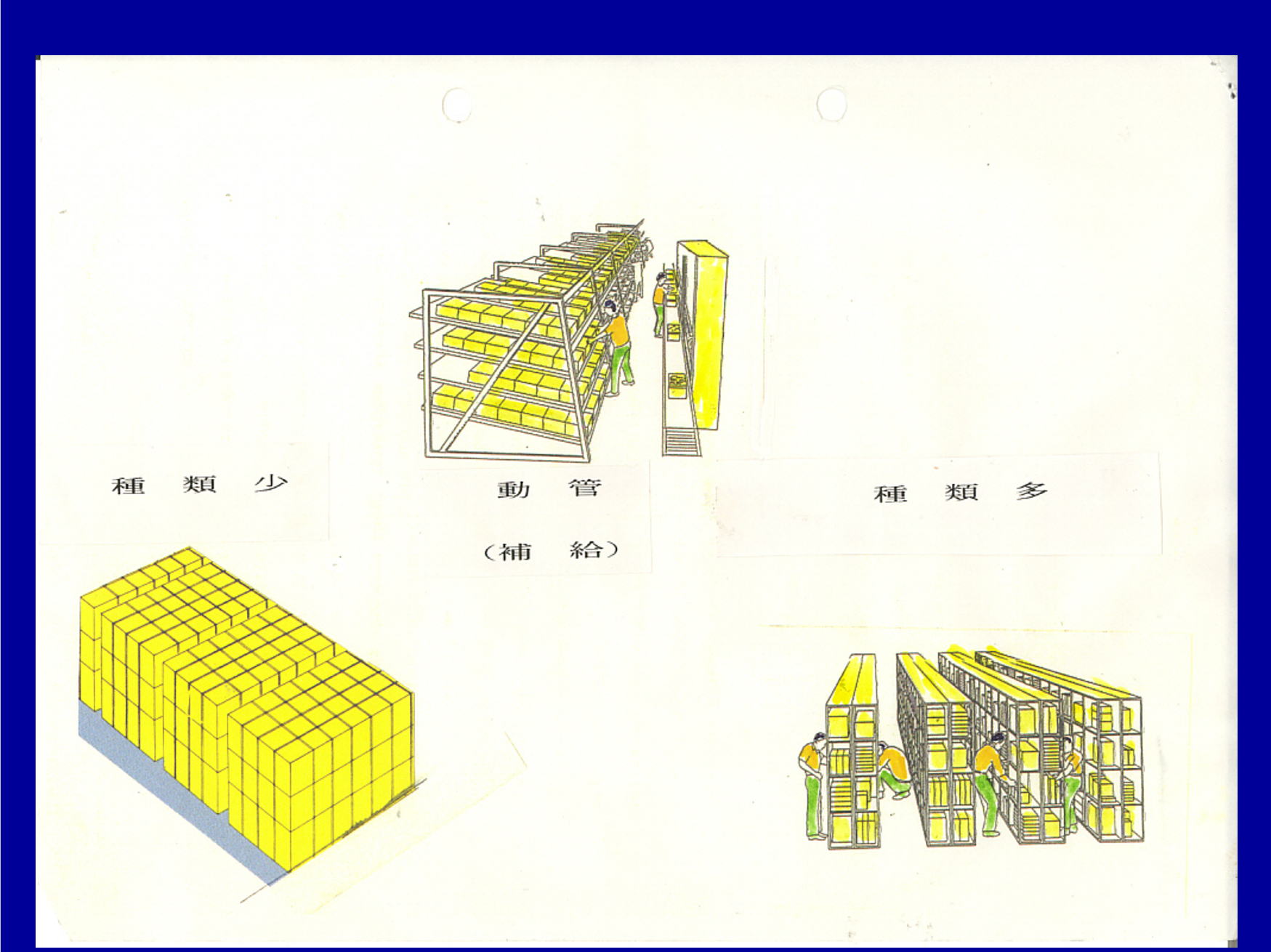
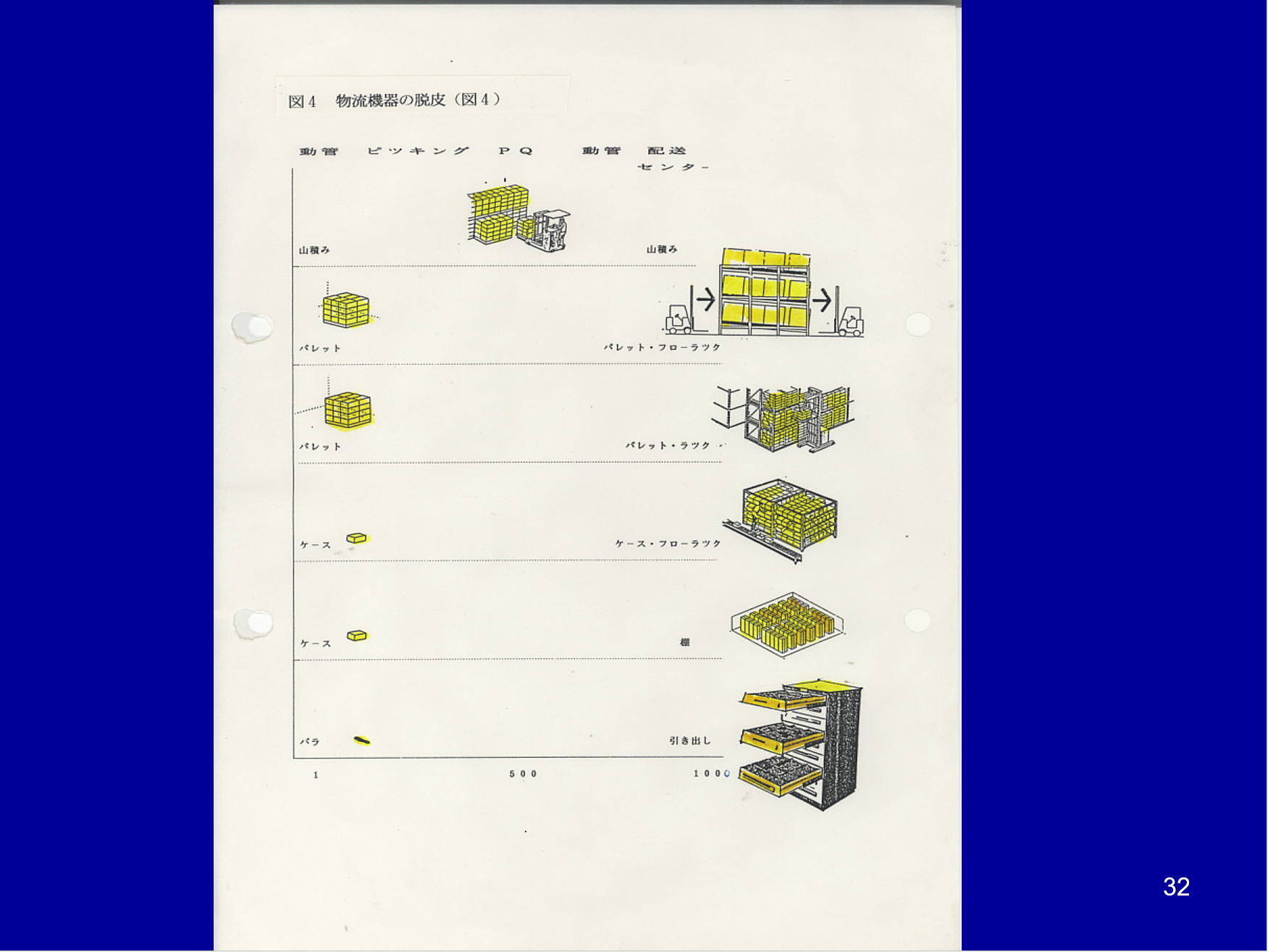
Concrete examples of how to assign optimal logistics equipment such as automated warehouses, electric mobile racks, and flow racks according to the shipping characteristics (ranks) of items obtained from EIQ analysis.
1960s
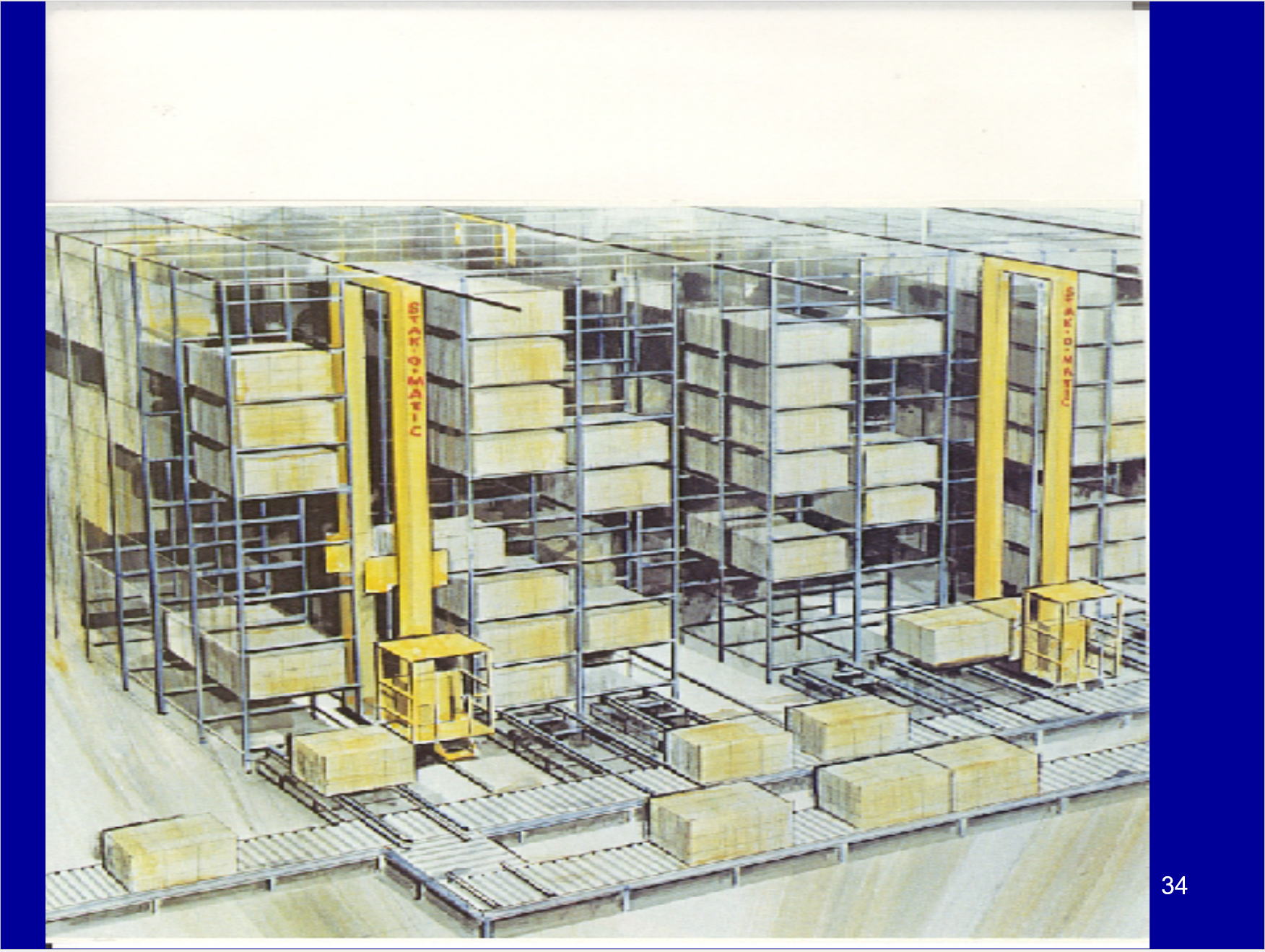
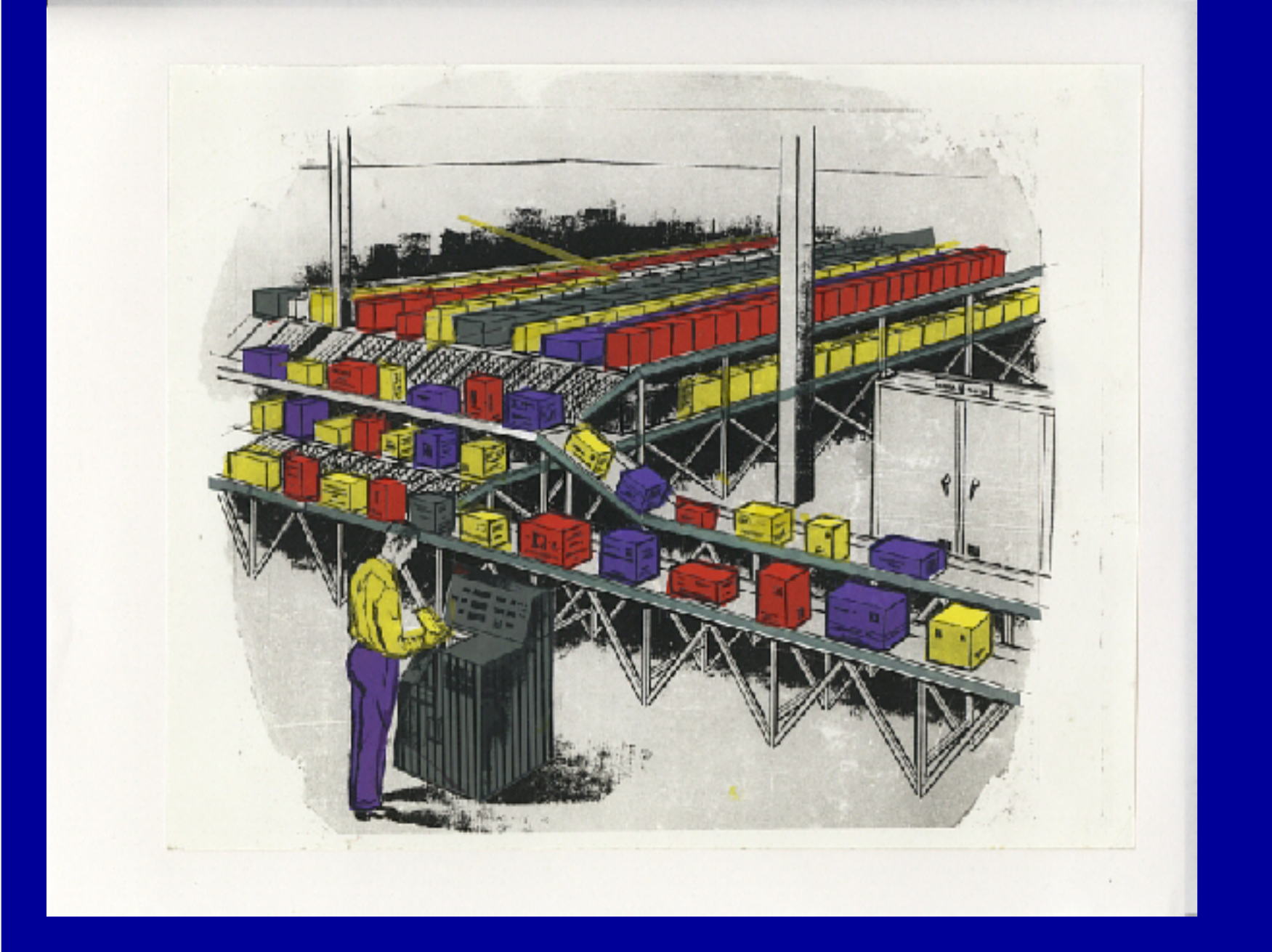
Logistics sites in the past (1960s). Materials for understanding the significance of modern systemization by knowing historical transitions.
A-Type Picking 1974
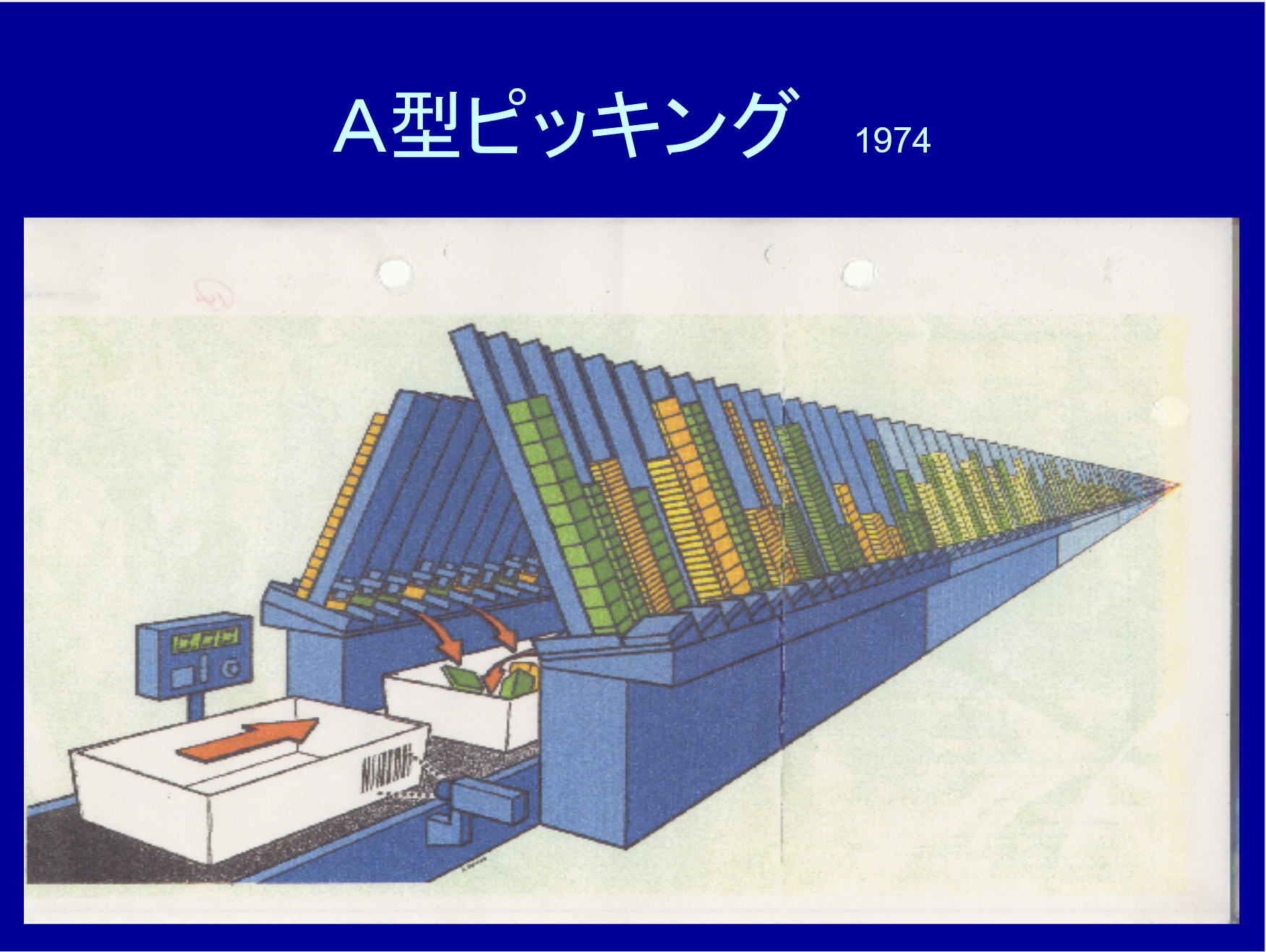
An early example of automatic sorting machines (such as A-frame). Shows the history of automation for efficiently handling high-frequency items.
VII. Operational Software
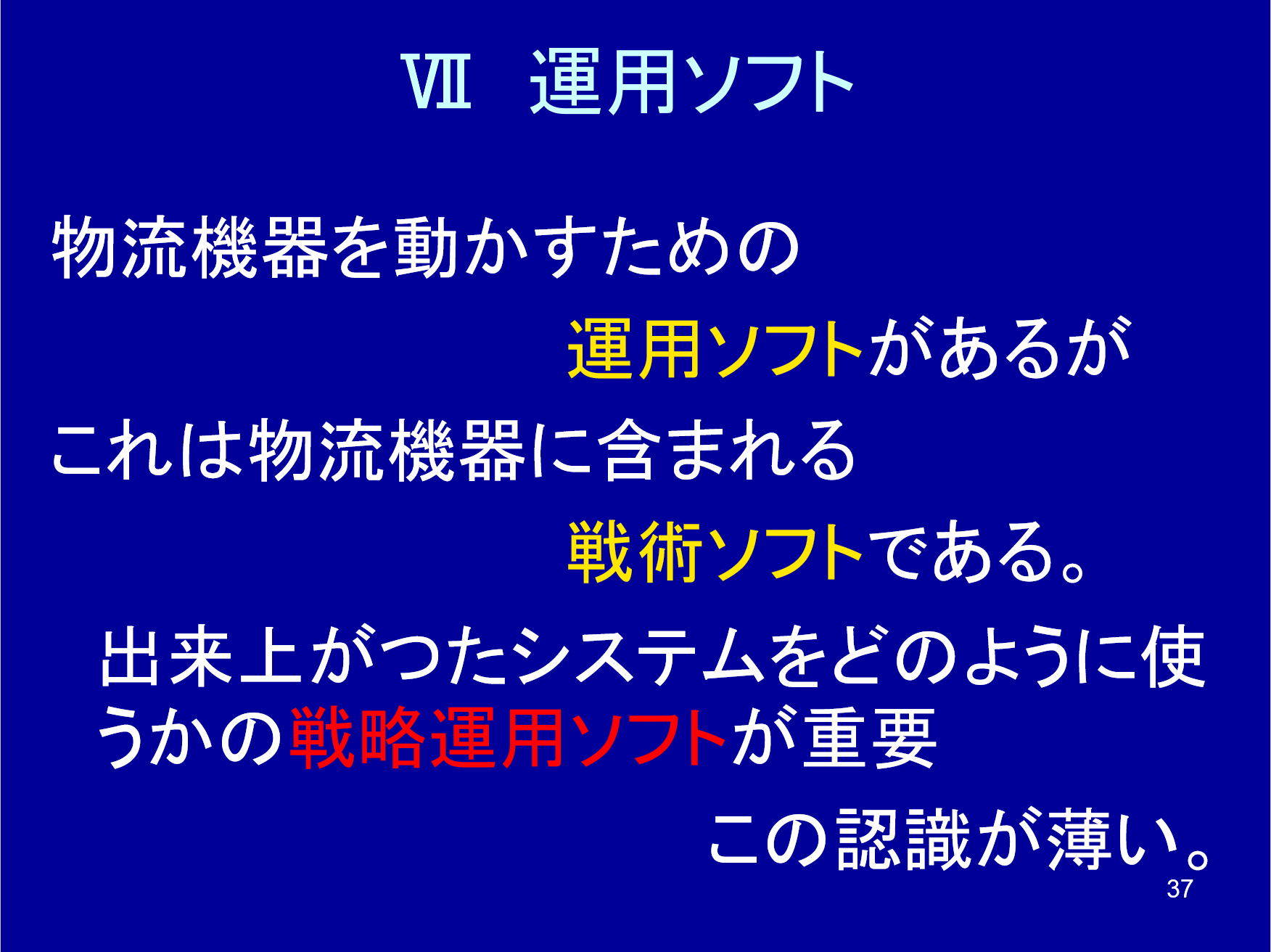
A section on the importance of not just hardware (logistics equipment), but software (WMS, etc.) to operate it.
WMS
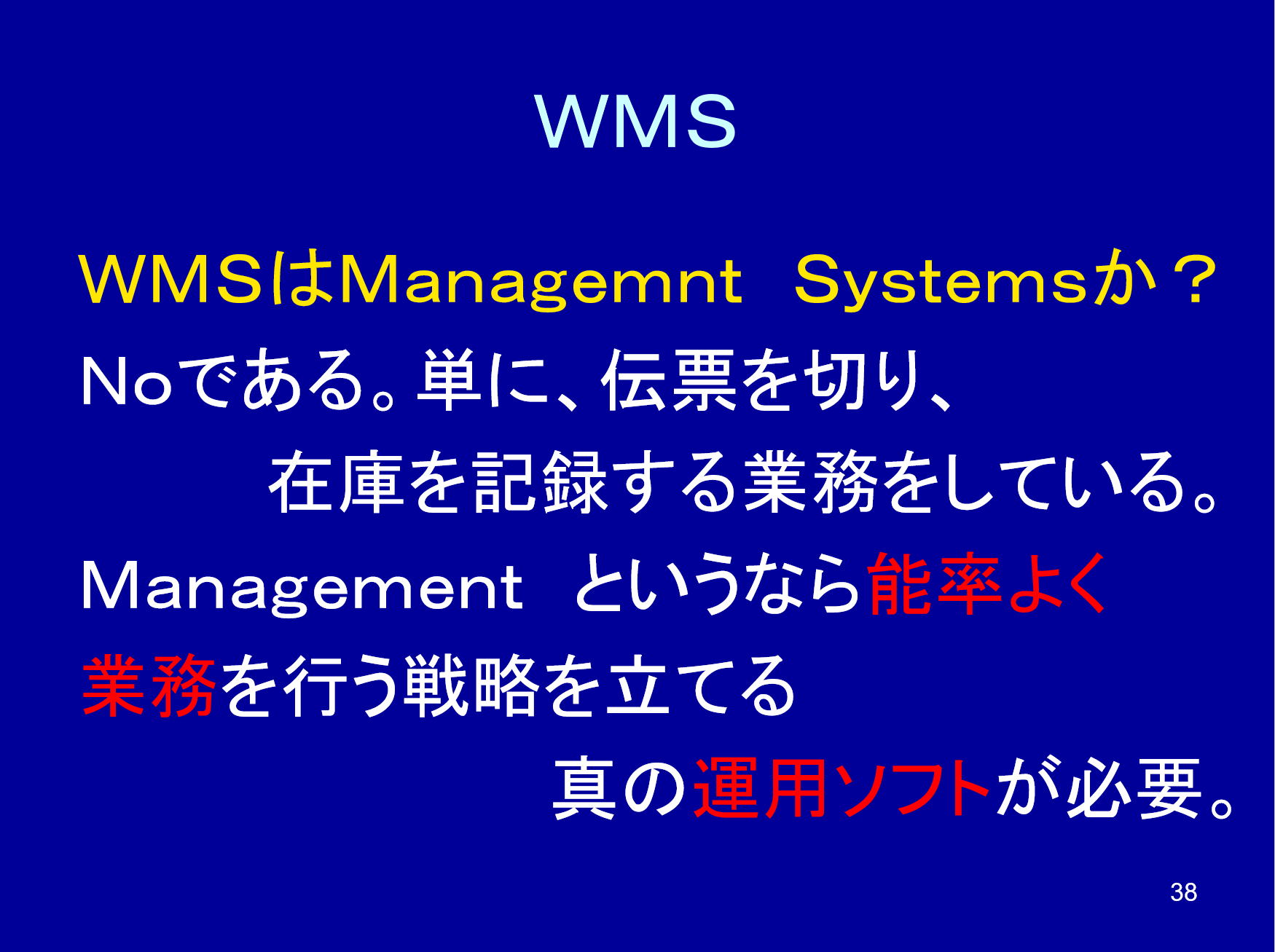
An explanation of the basic functions and roles of WMS (Warehouse Management System).
EIQ-WMS
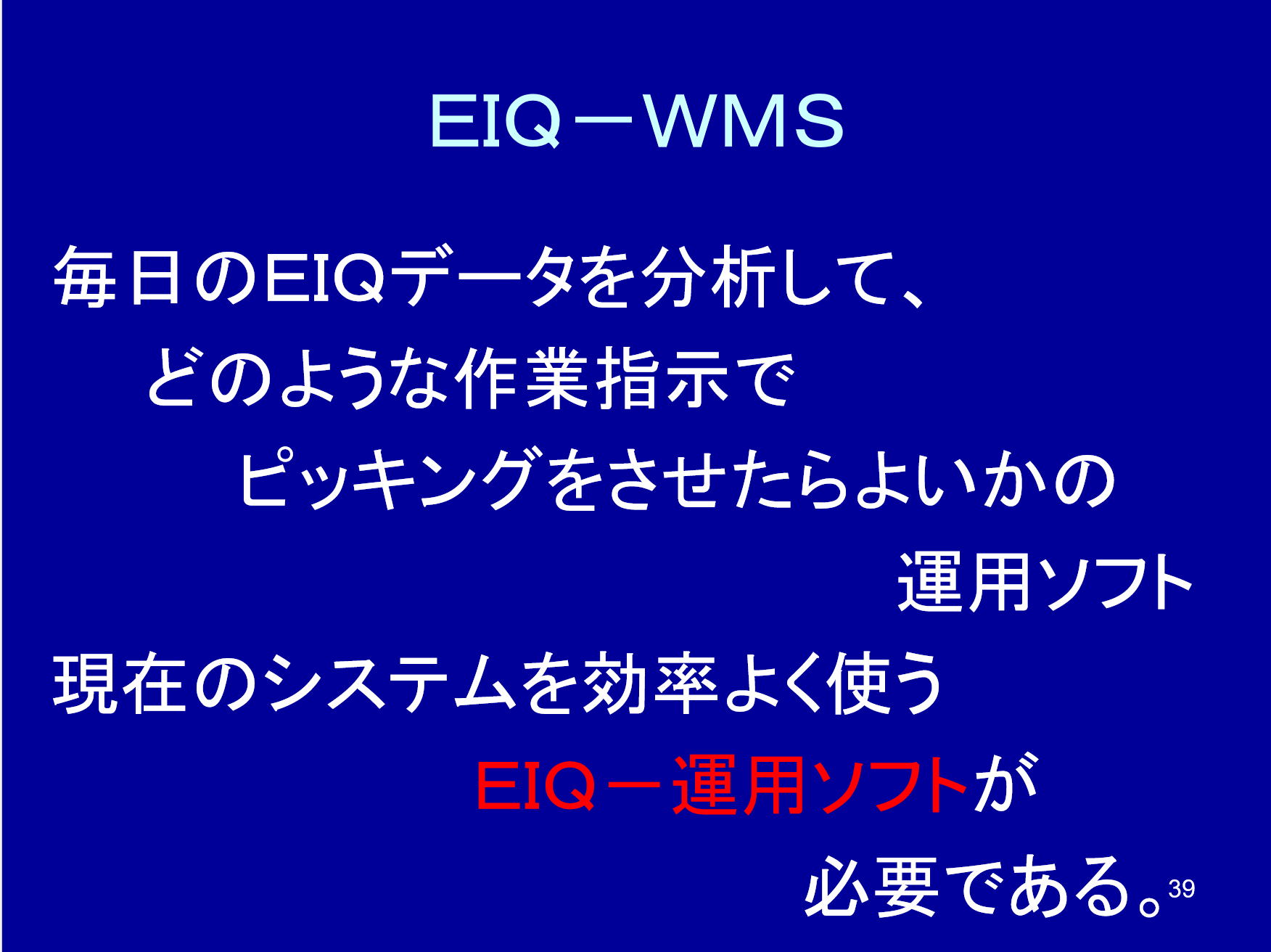
A conceptual diagram of a higher-functionality WMS that incorporates EIQ analysis concepts to dynamically optimize locations based on daily shipping data.
VIII. Key Planning Points
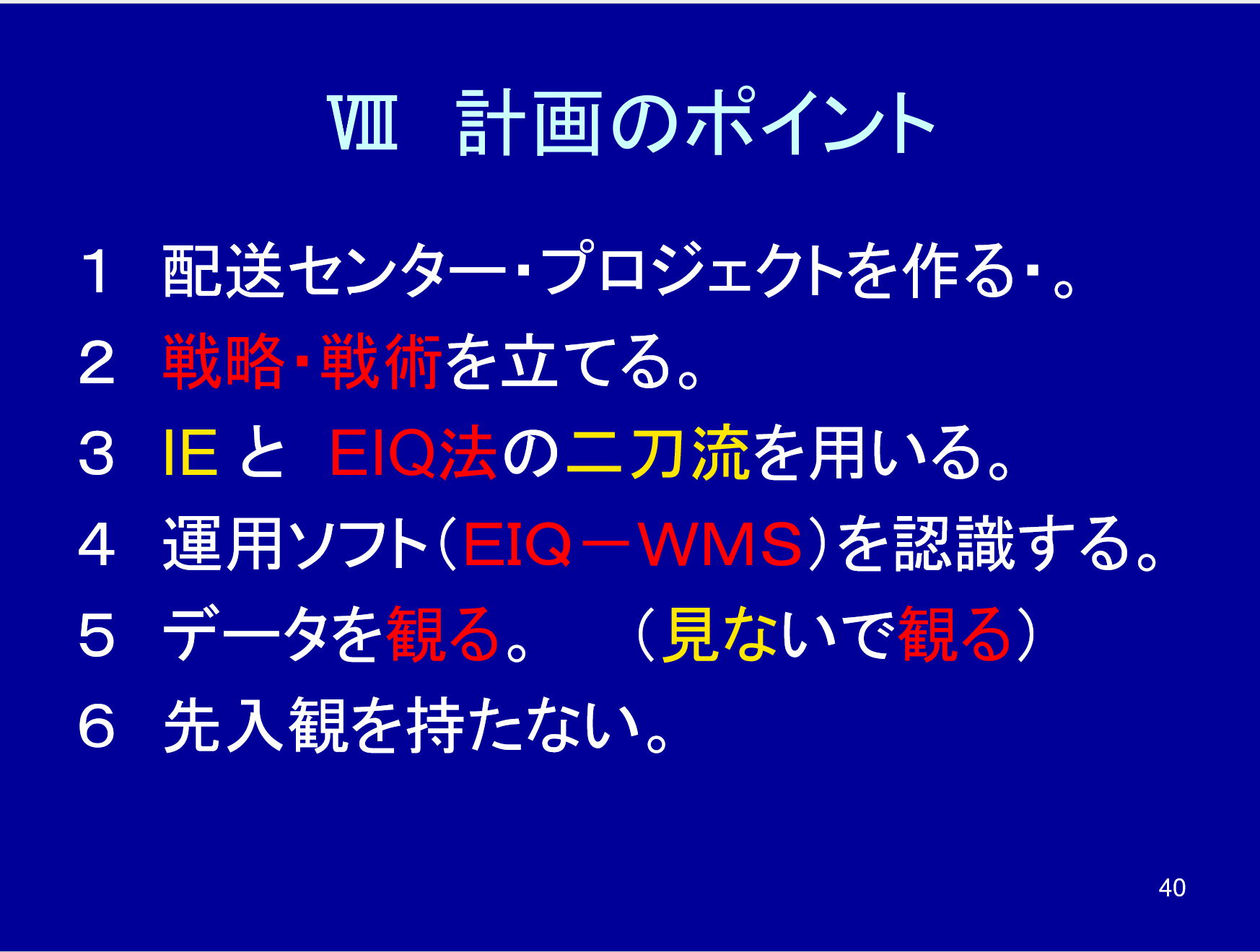
The final section summarizing overarching key points for successful logistics system planning.
Planning Project
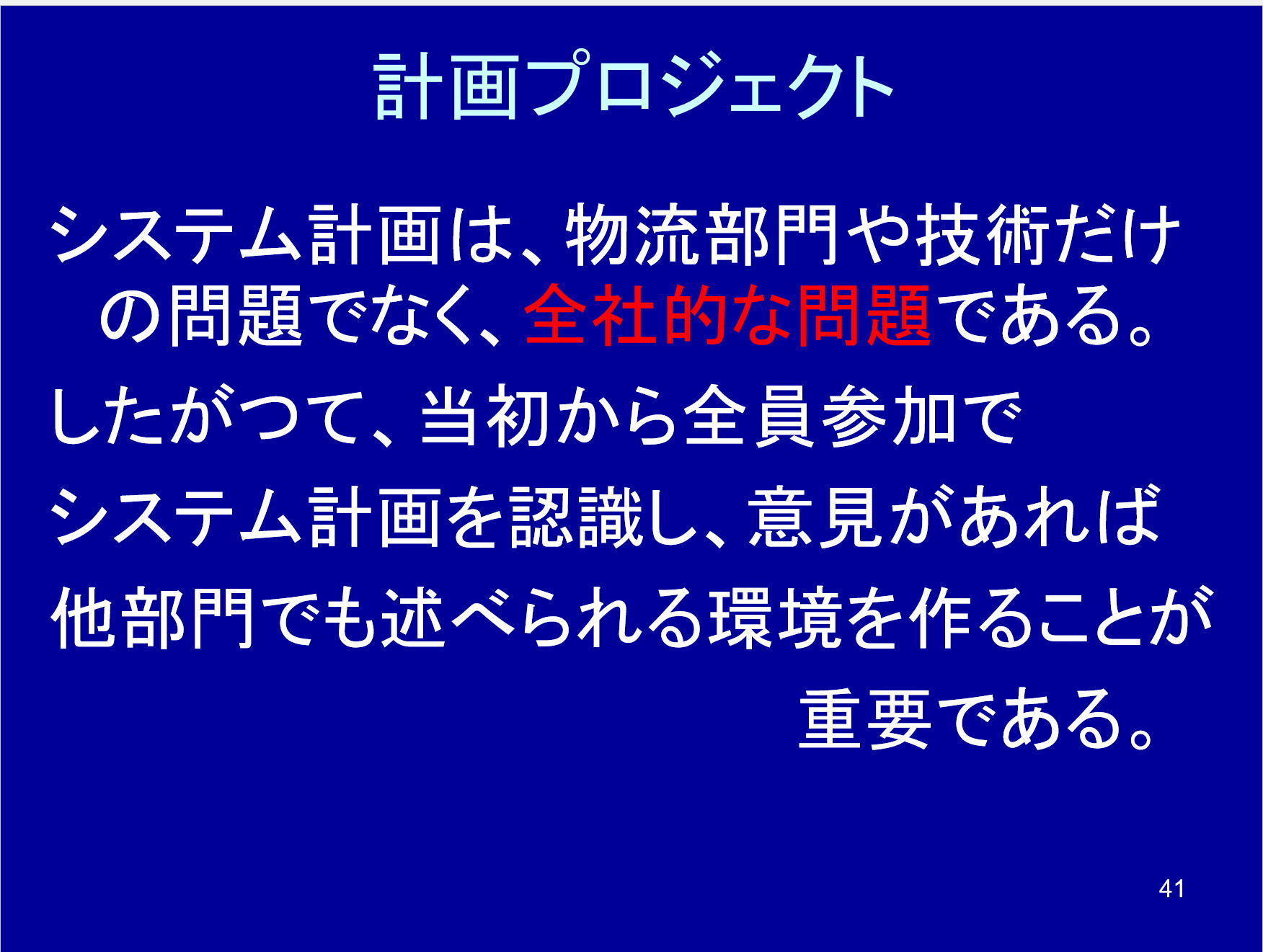
An explanation of how to proceed with a system implementation project, including organizational structure and steps.
Strategy & Tactics
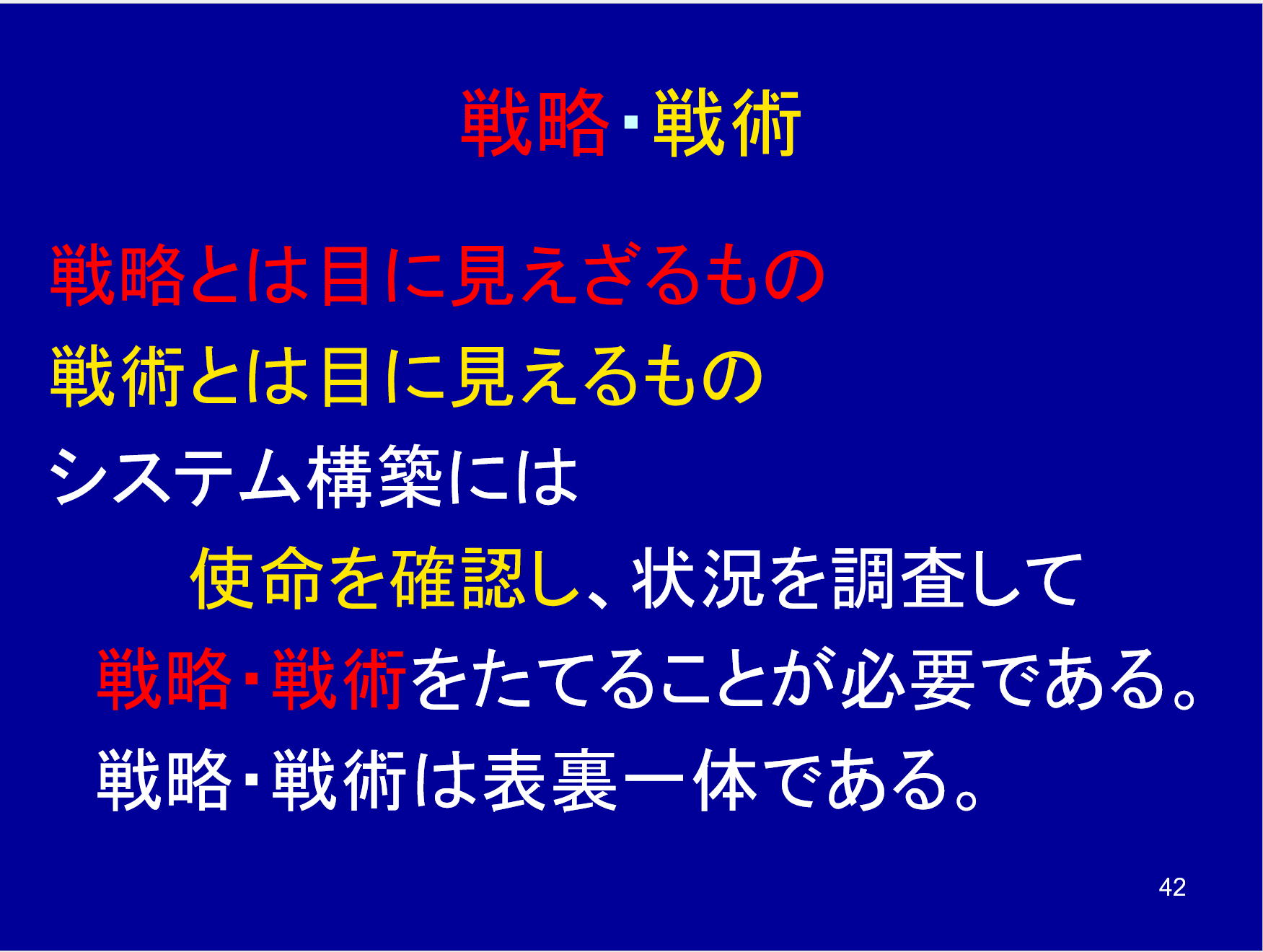
Shows the necessity of approaching from both sides: big-picture "Strategy (what to aim for)" and "Tactics (how to achieve it)" to realize it.
Dual-Wielding IE and EIQ Method
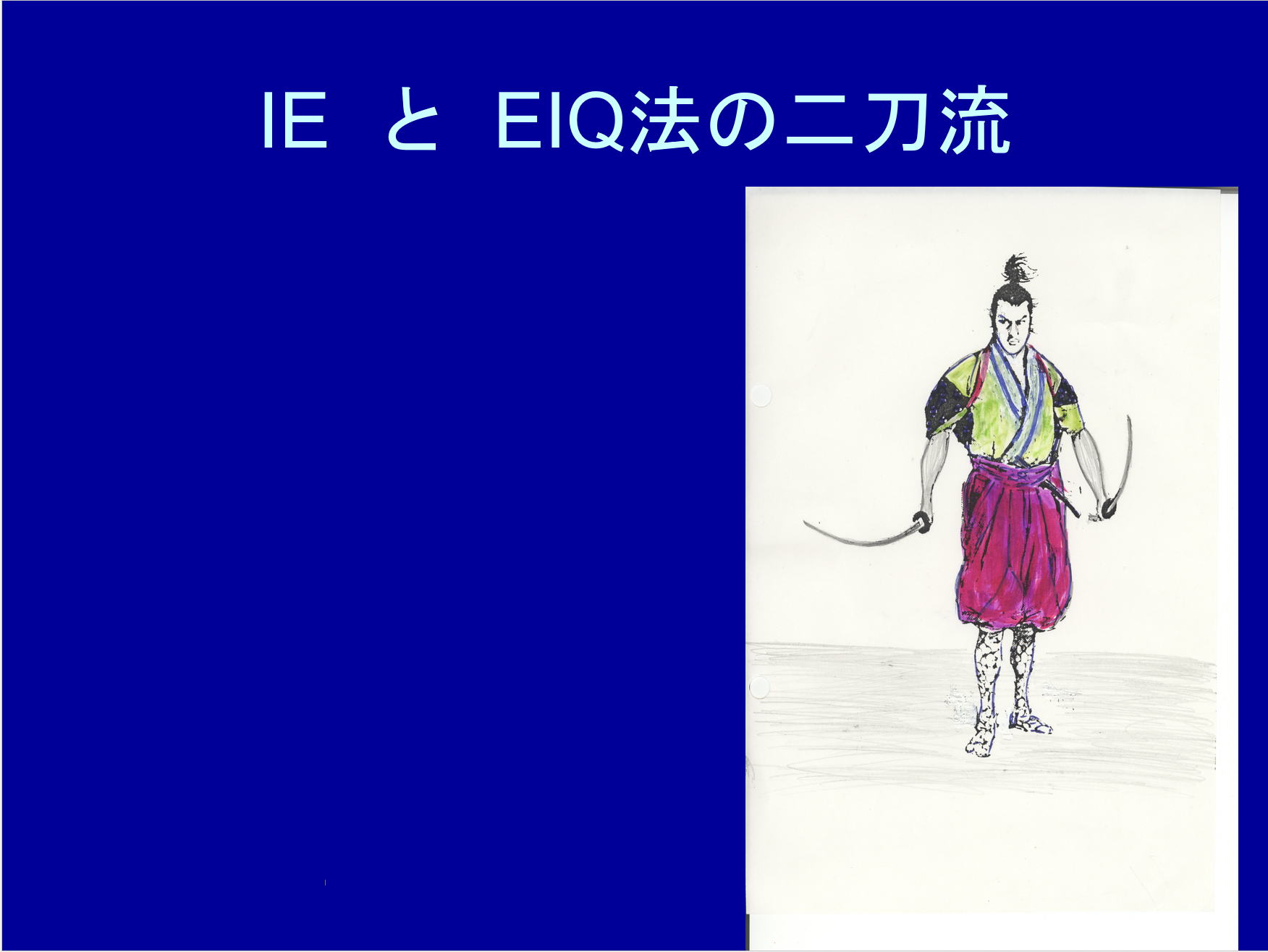
Restatement and emphasis of "III. Logistics System Techniques". Teaches that "dual-wielding"—doing overall design with EIQ and operational improvements on-site with IE—is essential.
Logistics Can Mostly Be Assessed via IQ Analysis
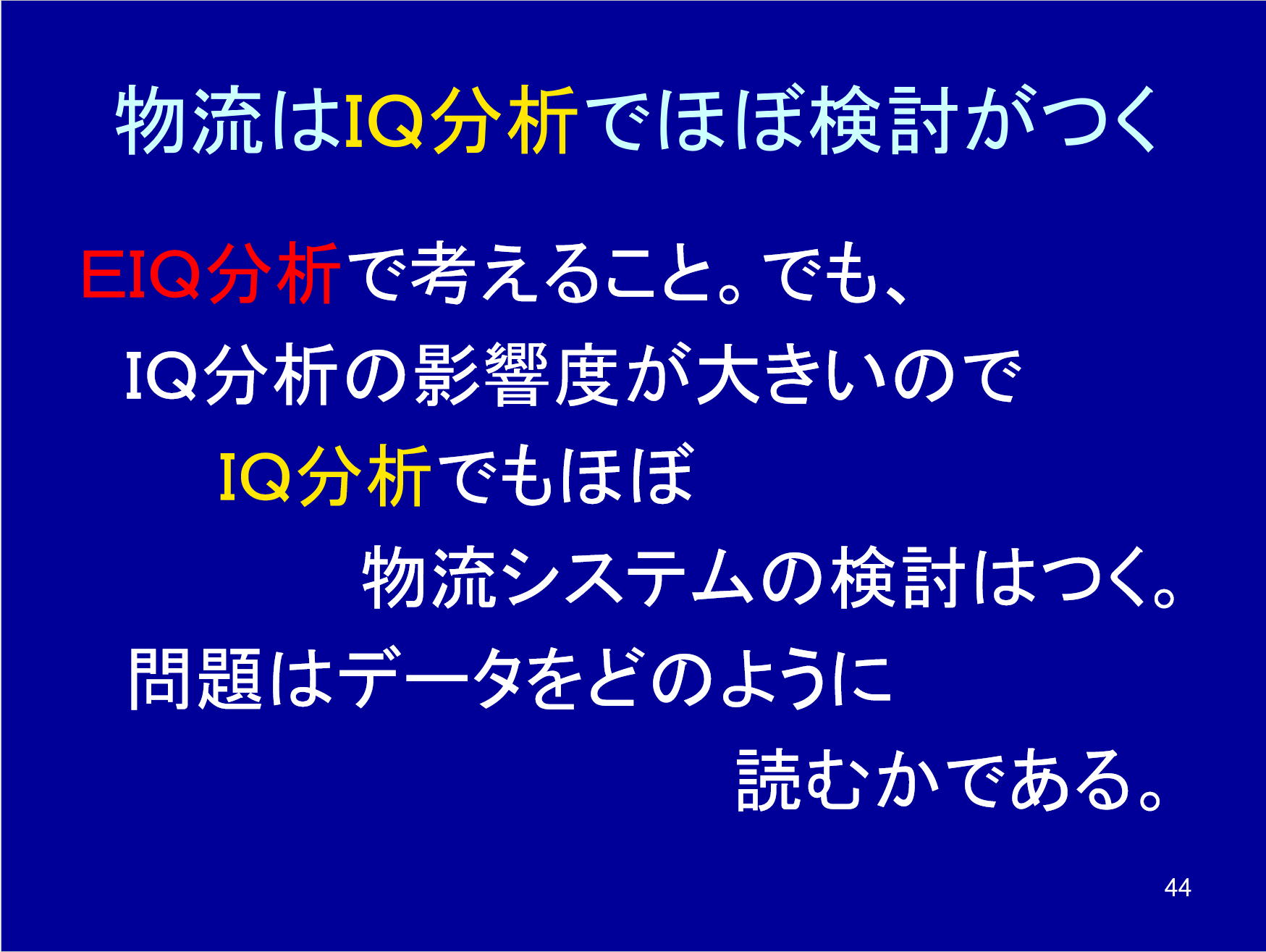
A practical golden rule stating that analyzing "shipment quantity per item (IQ)" within EIQ allows for determining most required storage spaces and optimal picking methods.
EIQ-WMS
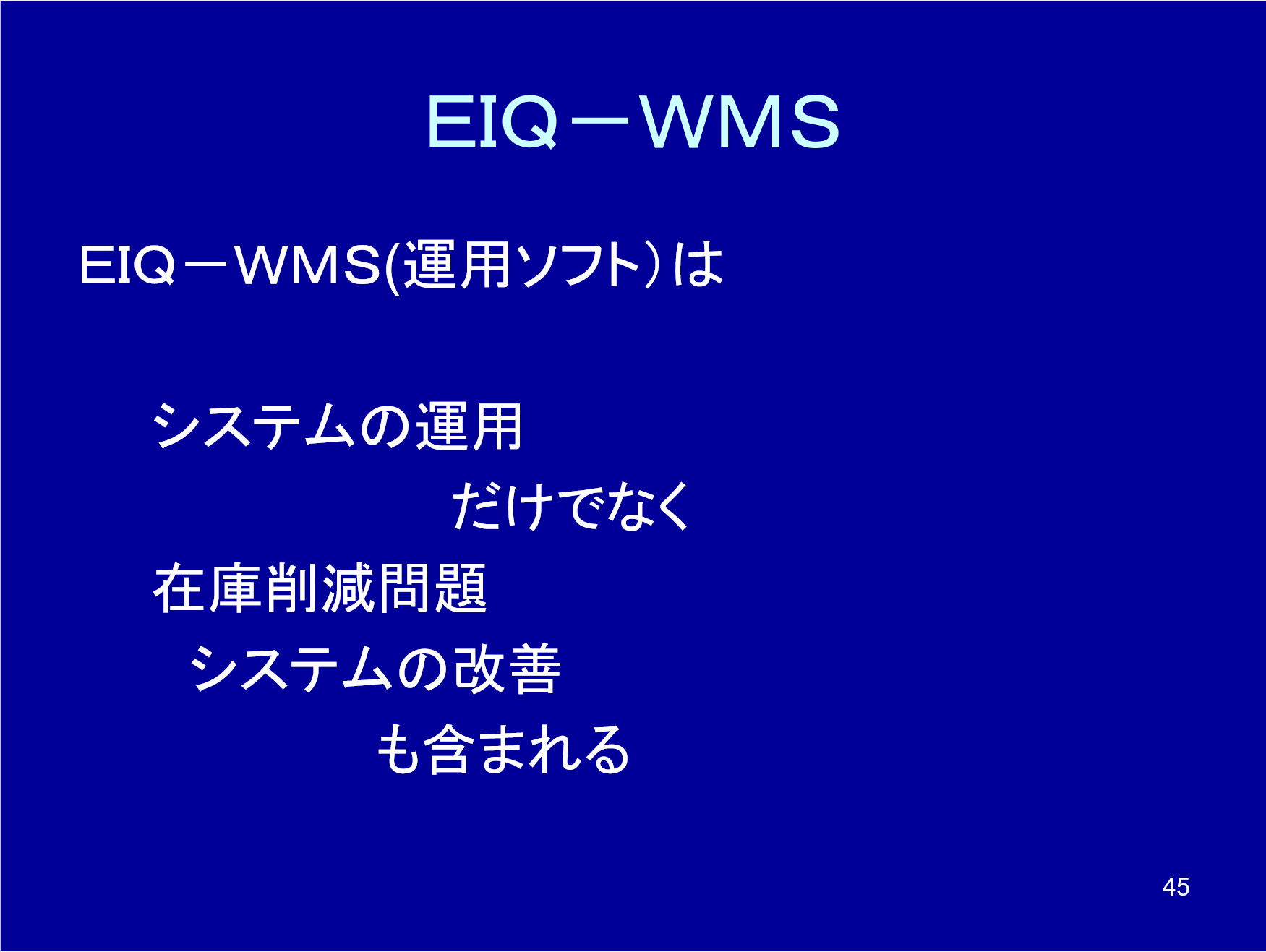
Restatement and emphasis of "VII. Operational Software". Highlight the importance of functions (EIQ-WMS) that continuously perform EIQ analysis to optimize the system even after going into operation, not just in the design phase.
Data
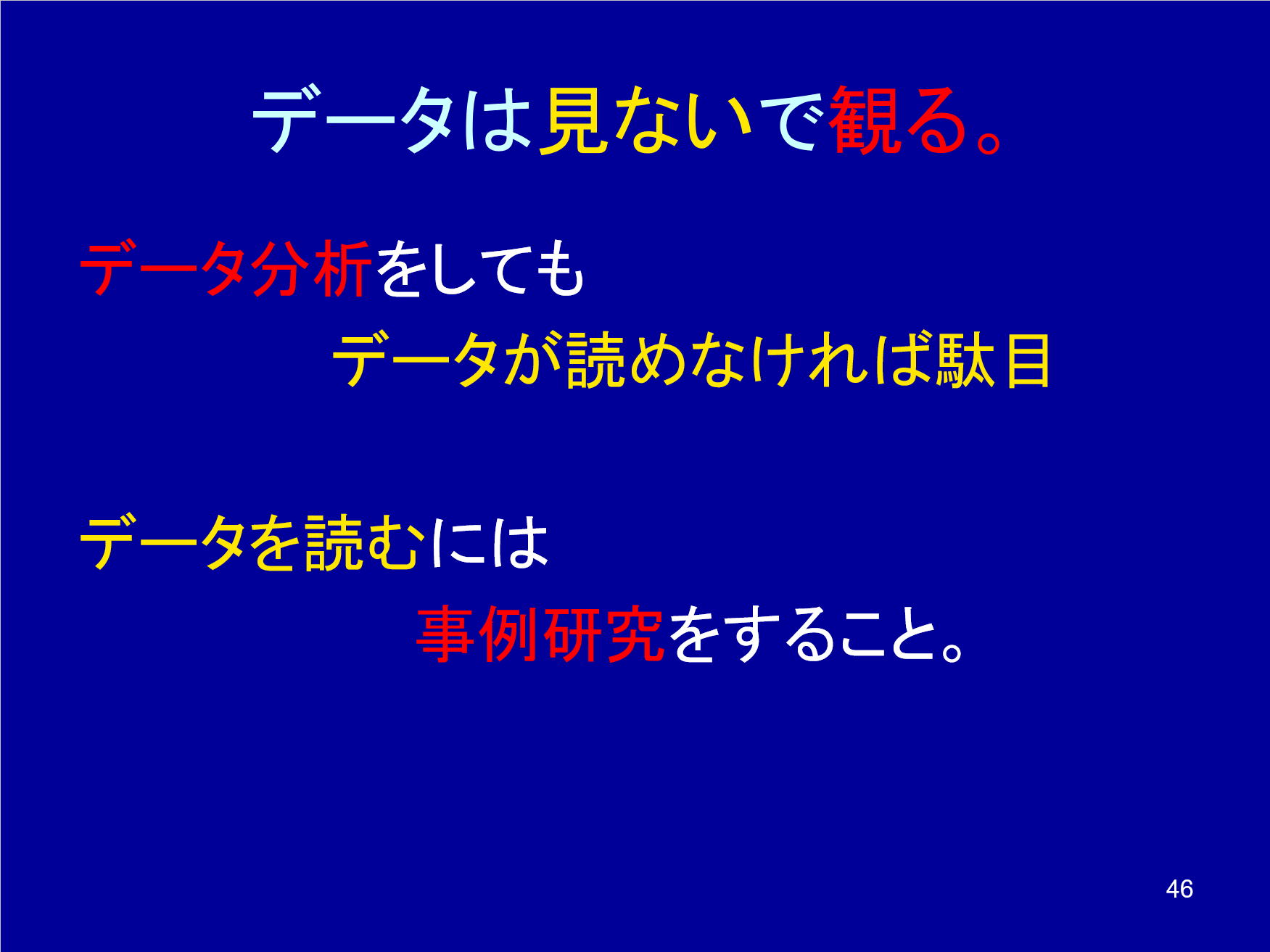
Emphasizes the accuracy of "data," which serves as the foundation for all analysis, and the importance of the ability to interpret it (data literacy).
Avoid Preconceptions

A strong message that when performing analysis, the most important thing is to set aside "past experience" and "assumptions," design the system based on objective facts shown by data, and avoid preconceptions.